The counteroffensive is taking place in the north of Donetsk, around Lyman, where the Third Army Corps claims to have recovered 125 square kilometers and liberated three localities. The operation combines drones, electronic warfare, and attacks against Russian logistics
Ukraine made public in September the existence of the Vivaldi Operation, a counteroffensive developed over months in the northern region of Donetsk, around the city of Lyman. The operation is led by the Ukrainian Third Army Corps and one of its main objectives is to halt the Russian advance towards the so-called "belt of fortresses" of the Donbas, where cities like Sloviansk and Kramatorsk are located.
The commander of the Third Corps, Brigadier General Andrii Biletskyi, initially reported that Ukrainian forces had regained control of 85 square kilometers, including 10 square kilometers liberated from Russian occupation.
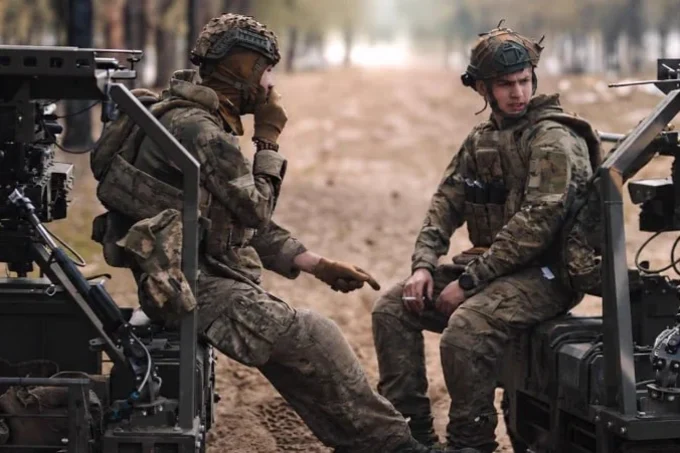
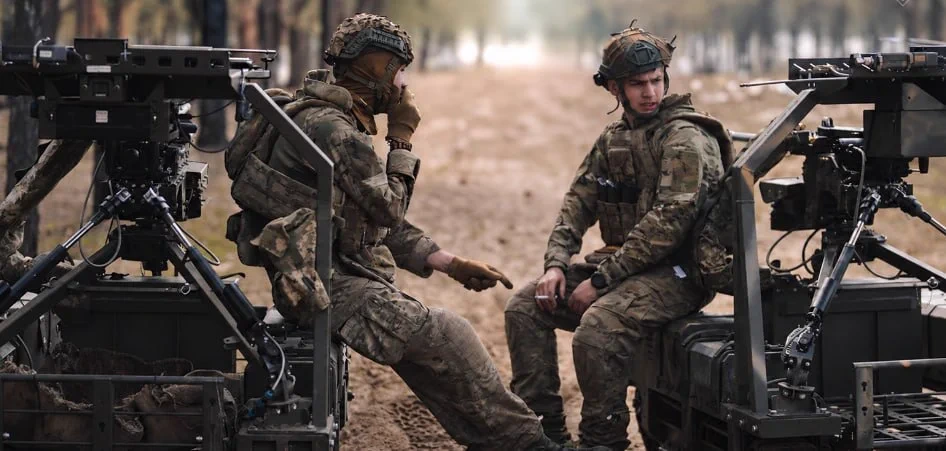
Ukrainian soldiers with a military ground drone
During the second phase, Ukrainian troops announced the liberation of Shandryholove and Derylove, as well as the establishment of full control over Drobysheve. According to Ukrainian command, these advances weakened the Russian forces in the Lyman sector and hindered Moscow's attempt to advance from the north towards the main Ukrainian defensive positions in the Donbas.
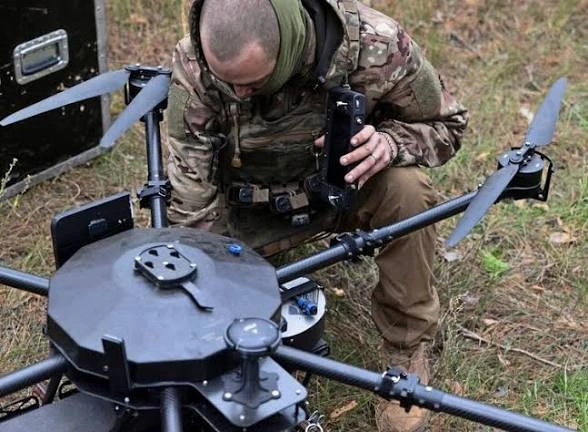
One of the central elements of Vivaldi is the massive use of drones and electronic warfare. Ukrainian forces used unmanned aircraft to locate positions, command centers, fuel depots, supply routes, and Russian drone operators.
The operation also incorporated a novel tactic: heavy bomber drones used to transport and launch unmanned ground vehicles behind Russian lines. According to the Third Corps, these robots were deployed more than 10 kilometers from Ukrainian positions to attack infiltrated forces and targets located in the Russian rear.
Logistics occupies another central place. Ukrainian forces attacked fuel and ammunition depots and routes used to supply Russian troops. Kiev claims that these attacks forced Russia to modify its supply routes and even to move part of the supplies into Russian territory.
A Ukrainian soldier with a military drone
Ukrainian command estimates that Russian forces suffered more than 3,000 casualties during the first two phases of Vivaldi. However, these figures come from Ukrainian military sources and have not been independently verified. The same applies to some of the territorial dimensions announced by Kiev.
The Vivaldi Operation continues as Russia maintains pressure in other sectors of the Donetsk front. Its importance will depend on Ukraine's ability to hold the recovered territories, disrupt Russian logistical lines, and prevent Moscow from rebuilding its positions around Lyman.