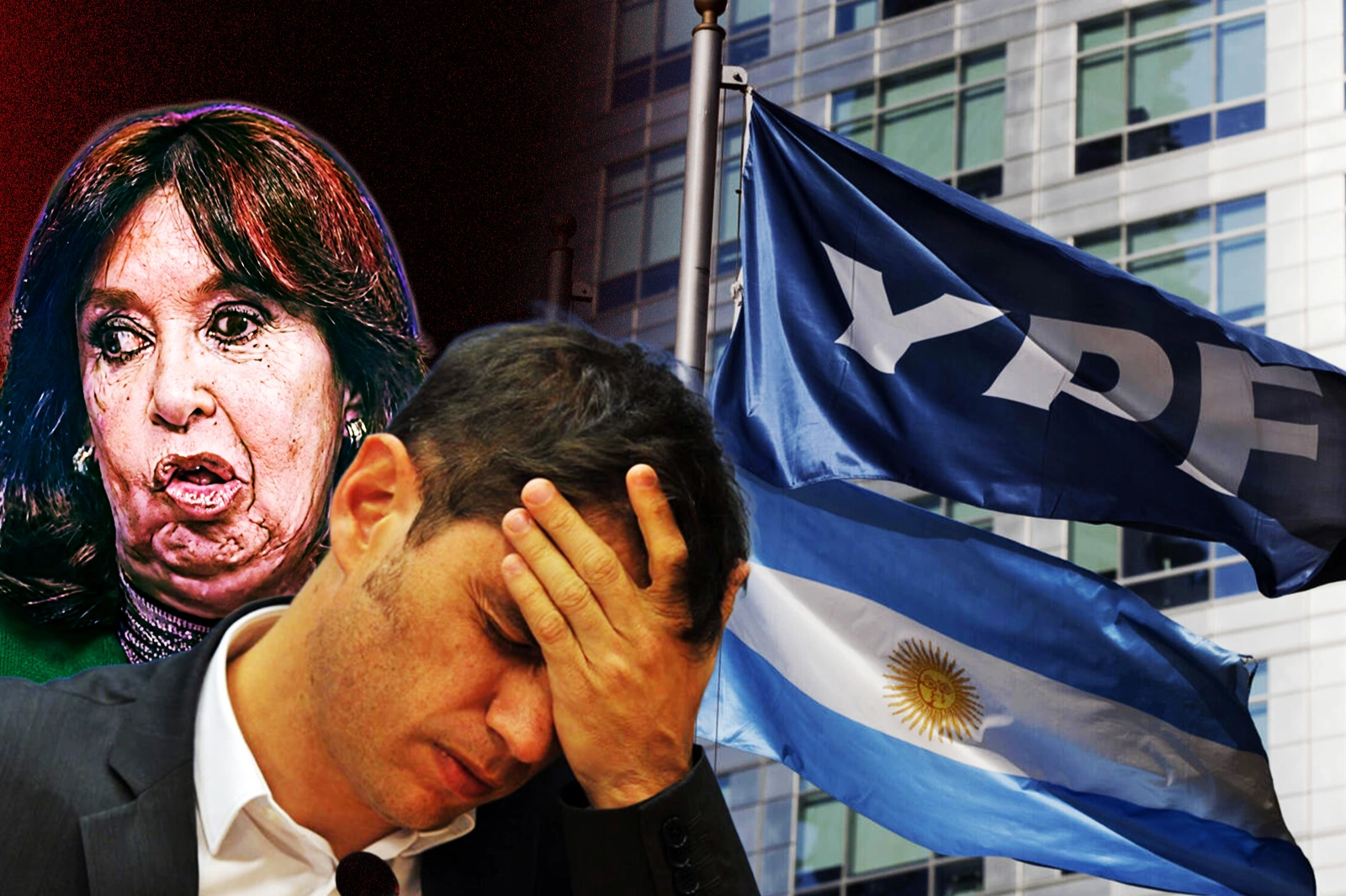
The recent ruling linked to the YPF trial marks a turning point both economically and politically. For years, Kirchnerism built a narrative around the 2012 expropriation, presenting it as an act of sovereignty against foreign interests
.
However, the evolution of the case in international courts reveals a very different reality: the problem was never the decision to expropriate, but the way in which it was carried out. To understand the extent of the current failure, it is necessary to go back to the source of the conflict
.
During the efforts of Néstor Kirchner and later Cristina Fernández de Kirchner, a reconfiguration of YPF's shareholding scheme was promoted. In this process, the Petersen Group, controlled by the Eskenazi family, acquired about 25% of the company under conditions that were far from normal in
the market.
The Petersen Group's income did not respond to a genuine investment logic. On the contrary, it was structured around a highly questionable financial scheme: the acquisition was made without a significant investment of own capital, financed through loans and with the peculiarity that these commitments would be canceled with the dividends generated by YPF itself. In concrete terms, it was a transaction in which the company ended up financing its own purchase
. Argentine and YPF flags.
This mechanism required a profit distribution policy that directly affected the company's investment capacity. Instead of reinvesting in exploration and production, YPF allocated a substantial portion of its revenues to the payment of dividends, progressively deteriorating its
operating performance.
The Kirchner expropriation
The next chapter takes place in 2012, when the government of Cristina Fernández de Kirchner decided to move forward with the expropriation of 51% of YPF, then in the hands of Repsol. The measure was presented as an act of recovering energy sovereignty, but from a legal point of view it contained a decisive flaw
.
The YPF statute established that, in the event of the takeover by a majority shareholder, a public takeover offer aimed at the rest of the shareholders must be made. This obligation was not fulfilled. This omission, which at the time was minimized in political discourse, became the central axis of subsequent litigation
.
The expropriation also had an immediate impact on the Petersen Group. When the flow of dividends was interrupted, the financial scheme that supported its participation in YPF
collapsed.
The impossibility of fulfilling the commitments made led to the group's default and the loss of its shares. However, the conflict did not end with that outcome
. Cristina Kirchner.
The trial between YPF and Burford Capital
The rights to litigate for the harm suffered were acquired by specialized funds, including Burford Capital, which brought the case to justice in the United States. The lawsuit did not question the power of the Argentine State to expropriate, but rather the non-compliance with the rules established in the company's own statute
.
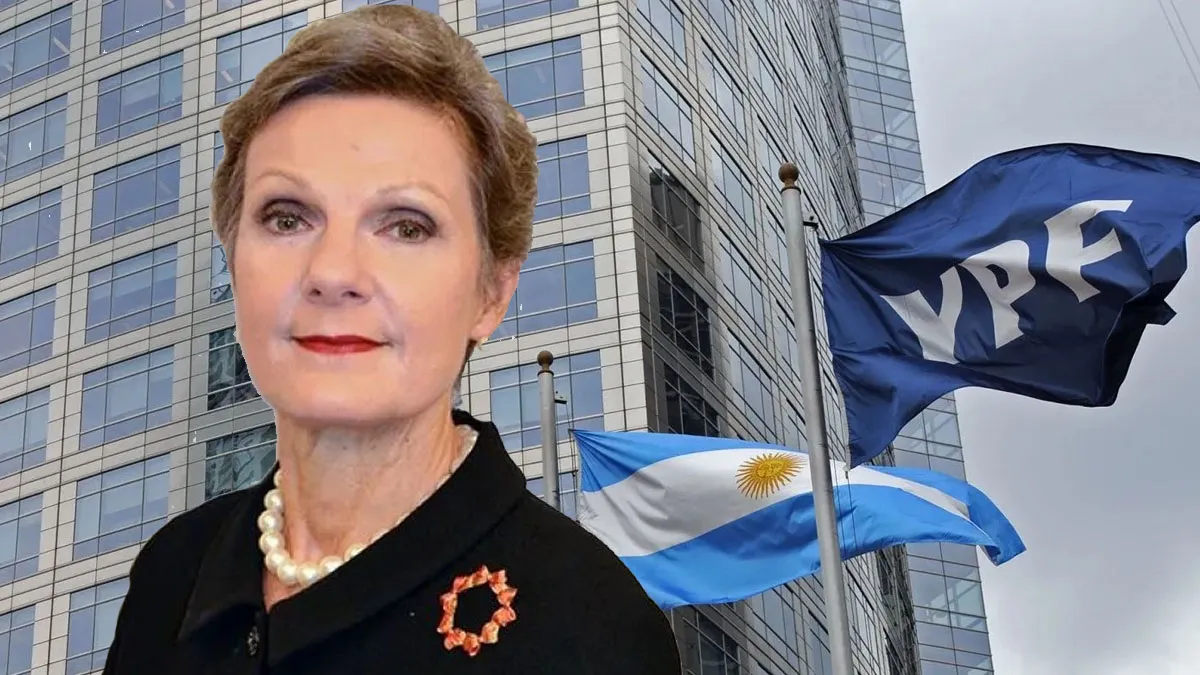
In 2023, Judge Loretta Preska ruled against Argentina, establishing compensation that exceeded 16 billion dollars. The magnitude of this figure placed the country in the face of one of the greatest financial risks in its recent history
.
The recently known flaw modifies that scenario. Although the judicial process is not completely closed, the decision represents significant relief in economic and financial terms. However, its most significant impact is at the political level.
For years, Kirchnerism maintained that the trial responded to an offensive by the so-called "vulture funds" and that it constituted retaliation against a sovereign decision. However, the development of the case demonstrates that the core of the problem lies in the breach of specific contractual obligations
.
The evidence is clear. The expropriation could have been carried out in compliance with the current regulatory framework. The omission of the takeover bid was neither an external imposition nor an inevitable consequence, but rather an internal decision that ignored previously accepted rules
. Judge Loretta Preska.
Added to this is the background of the Petersen Group's entry, which, far from strengthening the company, introduced significant distortions in its operations. Not only was the financing scheme adopted unsustainable in the long term, but it also conditioned the company's policy to the detriment of
its development.
The YPF case thus exposes a recurring pattern in Argentine economic policy: the combination of discretionary decisions, alliances with privileged actors and an underestimation of the legal consequences of these actions. The result is a conflict that transcends borders and ends up being decided in international courts
.
The recent ruling does not erase past mistakes, but it does highlight their causes. Far from being an ideological dispute, the conflict has a precise technical and legal origin. The narrative built around energy sovereignty fails to hide the fact that the central problem was the non-compliance with basic rules
.
In this context, the judicial decision acquires an additional symbolic value. Not only does it reduce Argentina's financial exposure, but it also disarms one of the discursive pillars of Kirchnerism. The idea that the country was the victim of external aggression loses support in the face of evidence of its own errors
.
The history of YPF leaves a clear lesson. Political decisions, especially those affecting property rights and contracts, cannot be separated from their legal implications. Ignoring that principle does not eliminate risks, but rather transfers them to the future, where they tend to manifest themselves more intensely
.
The case also highlights the importance of predictability and respect for rules in any economic system. The lack of consistency in this regard not only discourages investment, but also exposes the State to high-cost litigation
.
In short, the ruling on YPF should not be interpreted solely as a judicial episode, but as a closing point in a larger process. A process in which decisions adopted on the basis of political criteria ended up generating economic and legal consequences of great magnitude
.
The conclusion is inevitable. The problem was not the defense of national interests, but the way in which that defense was managed.
And in that sense, the YPF case constitutes one of the clearest examples of how the combination of improvisation, discretion and lack of adherence to the rules can result in significant costs for a country.