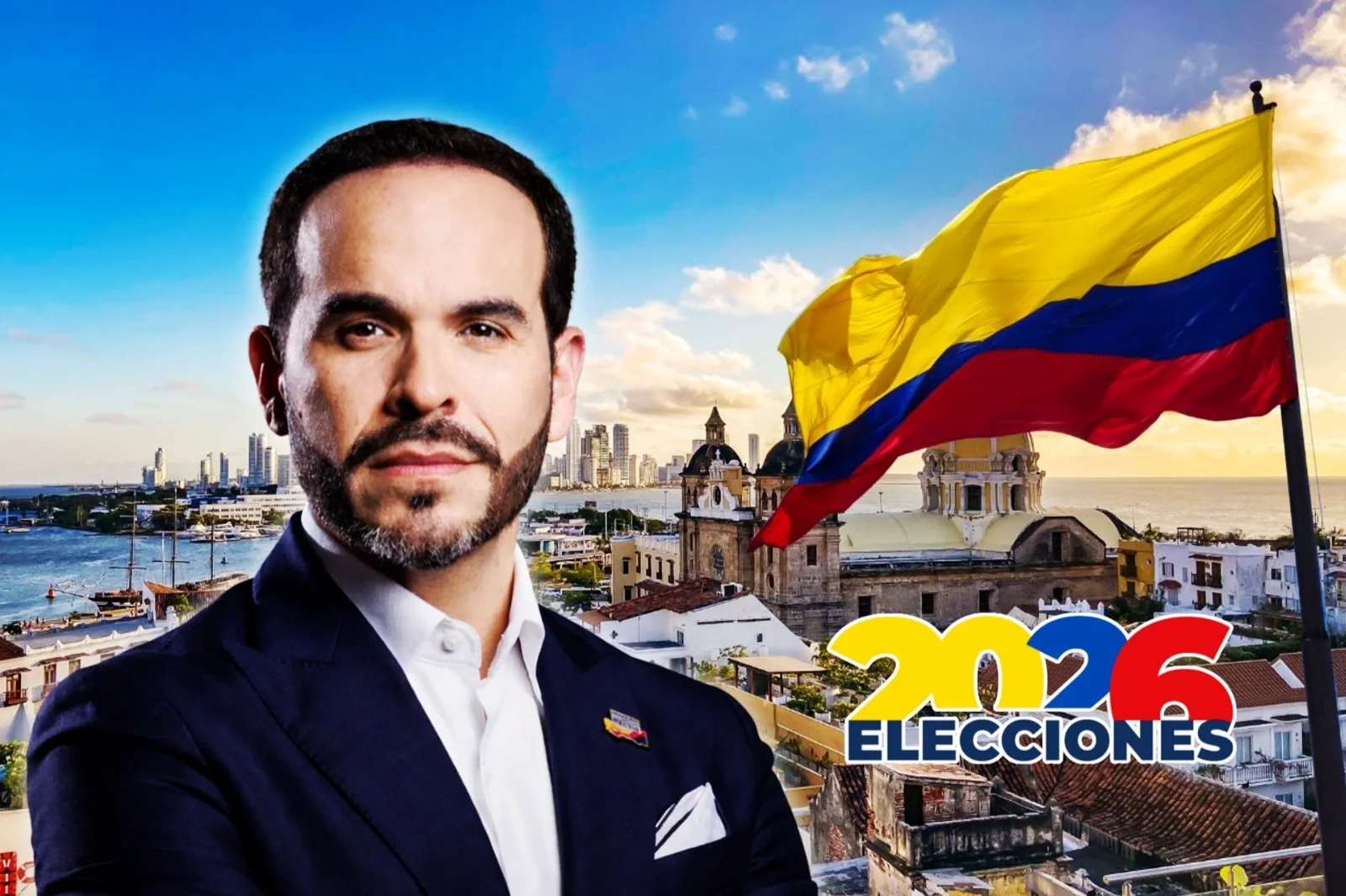
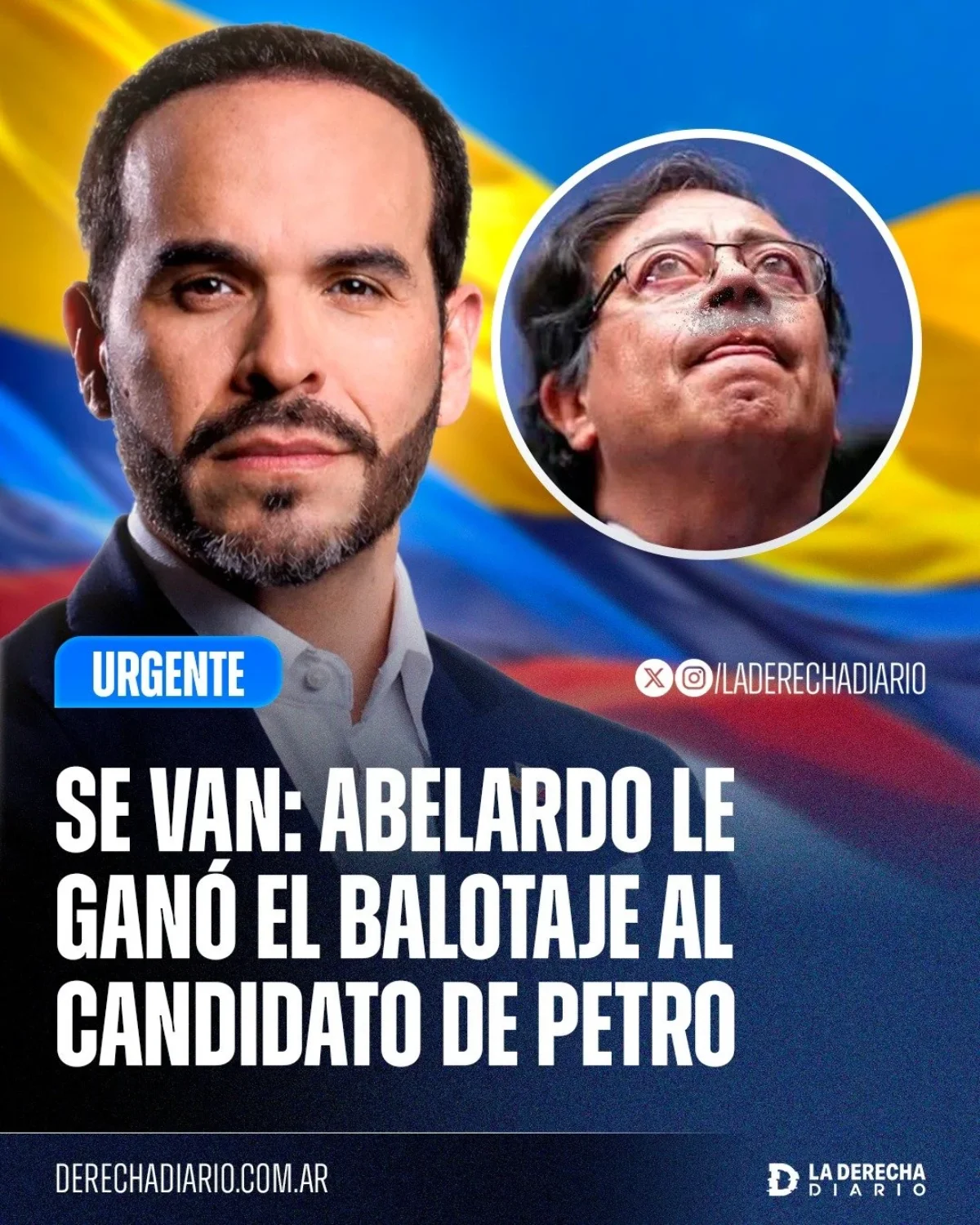
The right-wing candidate Abelardo de la Espriella won the presidential runoff in Colombia and became the new elected president of the country, in a historic election that marks a significant political blow to the leftist government of Gustavo Petro.
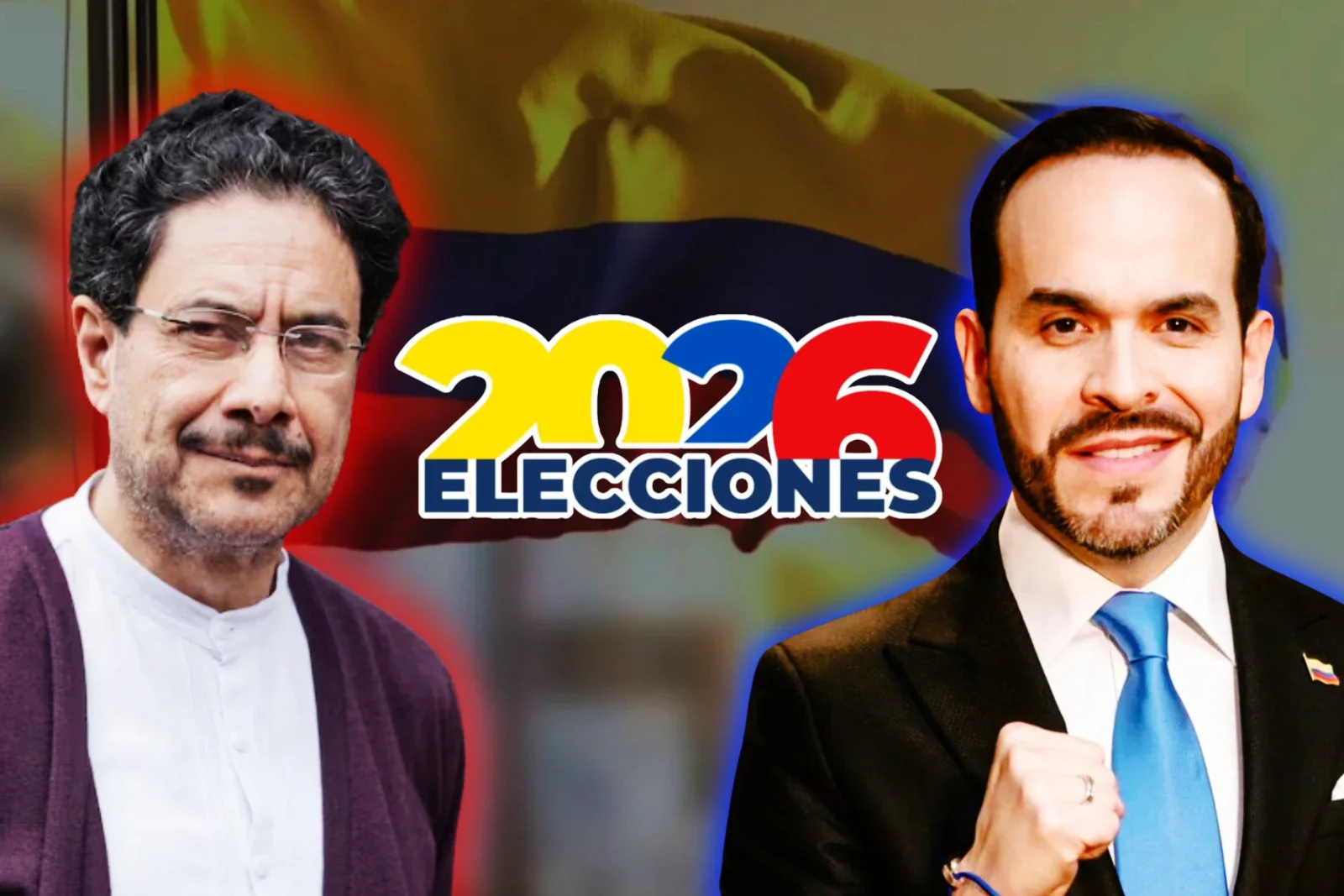
With 99.70% of the results counted, Abelardo de la Espriella received 12,927,006 votes, equivalent to 49.65%, and is declared the winner of the presidential runoff in Colombia. Despite the support of the official apparatus, in second place is the communist Iván Cepeda Castro, candidate of the Pacto Histórico, with 48.71% of the votes.
The right expels communism from Colombia
The difference between the two candidates is 245,738 votes, with a lead of 0.94 percentage points for the founder of Defensores de la Patria. With the counting practically closed, the result consolidates a political shift of enormous impact in Colombia and the region, where the electorate opted for a project focused on security, public order, and economic recovery.
De la Espriella's victory represents a severe setback for Petro's narco-state project, which aimed to retain power through Cepeda and deepen the leftist program promoted in recent years.
The runoff also showed higher participation than recorded in the first round. With 99.70% of the polling stations reported, 26,284,052 Colombians voted, equivalent to 63.45% of the electorate. In the first round, 23,978,304 voters participated, with a turnout of 57.88%. This means the runoff mobilized 2,305,748 more voters, an increase of 5.57 percentage points.
The increase in participation was also reflected in valid votes, which rose from 23,685,329 in the first round to 26,034,157 in the second. Additionally, votes for candidates increased from 23,278,359 to 25,608,274, while blank votes proportionally decreased from 1.71% to 1.63%.
Abelardo de la Espriella managed to prevail in the elections
While De la Espriella maintained his lead in the counting, the communist president Gustavo Petro came out to denounce “many irregularities” and called for the annulment of polling stations due to alleged E14 forms without signatures. The president stated on social media that “it is still not possible to know who the president is,” in an attempt to alter the democratic result.
With this result, Colombia opens a new political cycle after years marked by the deterioration of security, the advance of organized crime, and the economic strain on the population. De la Espriella will arrive at the Casa de Nariño with the challenge of restoring order, recovering the authority of the State, and addressing a reform agenda that responds to the mandate for change expressed at the polls.