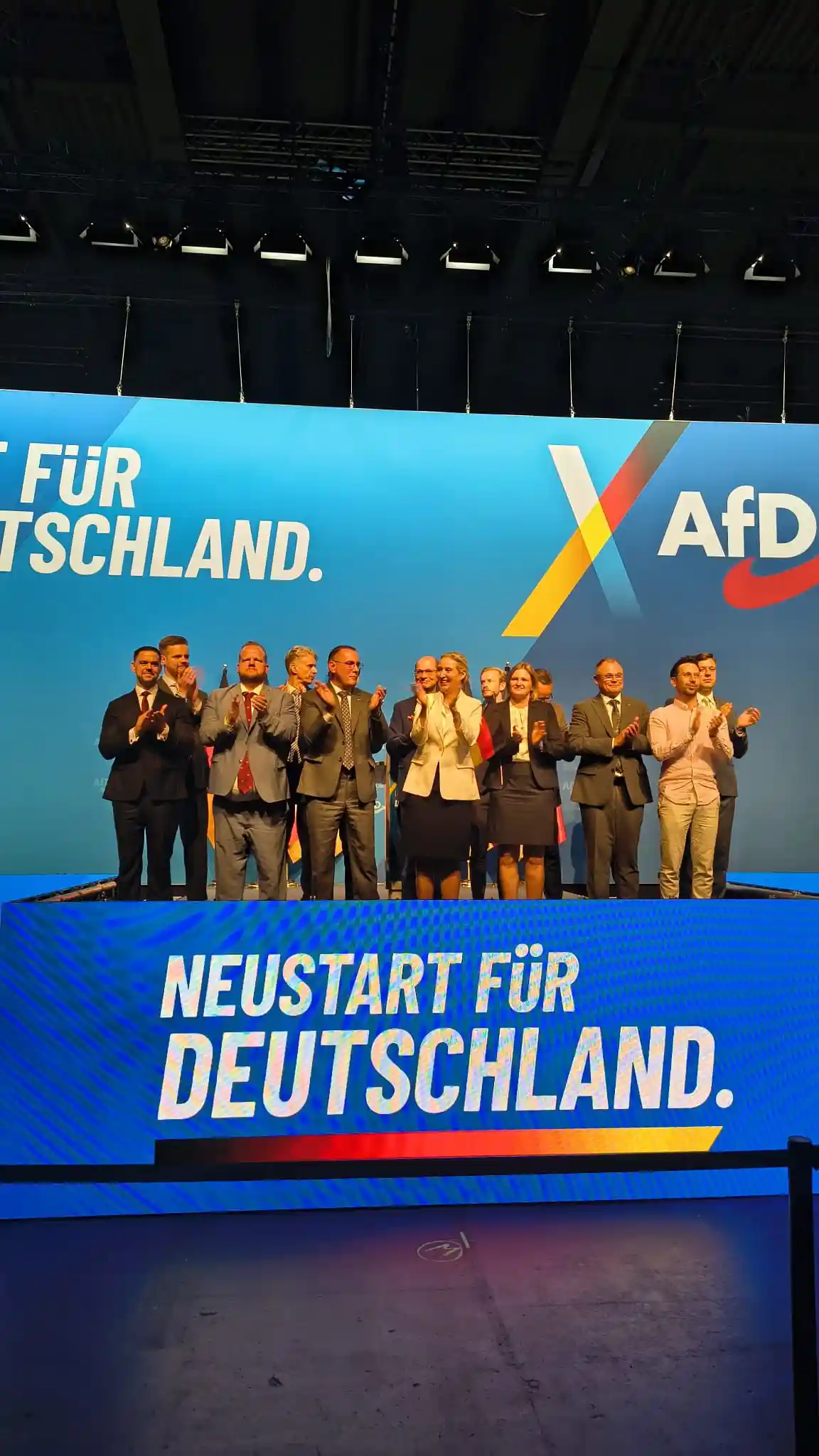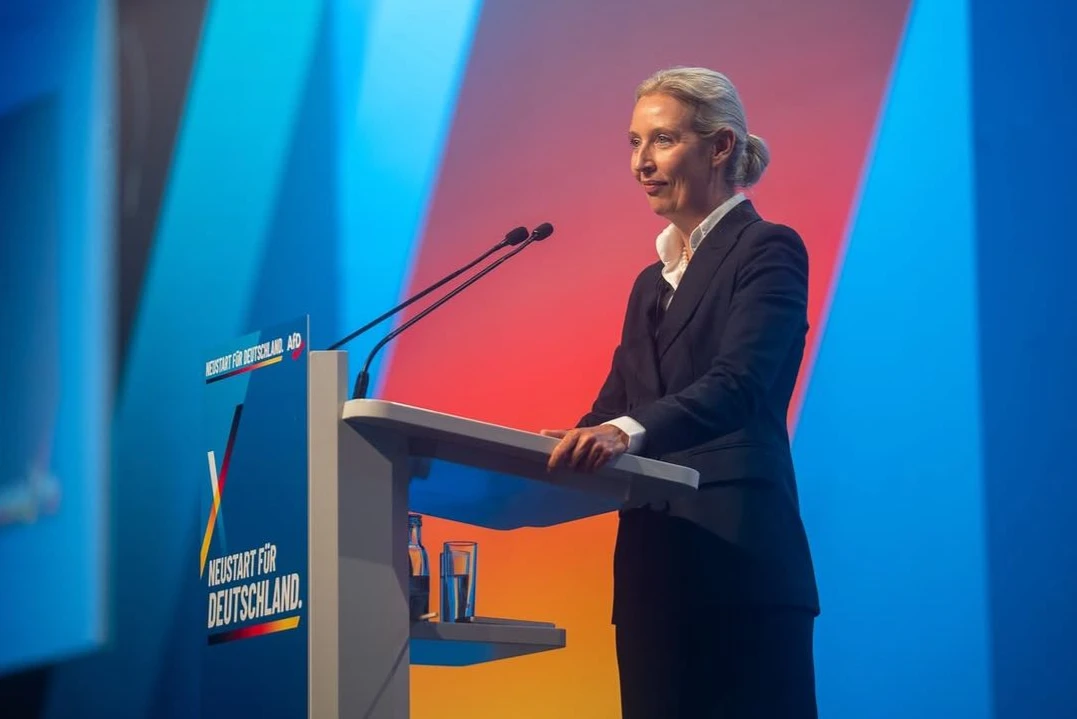

The Federal Congress of the German AfD, held last weekend in Erfurt, sent a clear message: the party is united, strengthened, and ready for a new political stage
Delegates overwhelmingly renewed their confidence in Alice Weidel and Tino Chrupalla, who were reelected as co-chairs of the AfD with 81% and 70% of the votes, respectively. This result reflects not only the internal stability of our party but also the consolidation of a political movement that continues to grow while traditional parties steadily lose the trust of German citizens. At the same time, delegates elected a significantly younger Federal Executive Committee, demonstrating that the AfD is not only preparing for the upcoming elections but also for the next political generation.
This is not a coincidence. Germany is going through a deep leadership crisis. Years of misguided policies on immigration, energy, and the economy have left many Germans feeling abandoned by the political establishment. The loss of industrial competitiveness, rising insecurity, increasing cost of living, and an increasingly intrusive European bureaucracy have fueled a growing demand for political change.
In this context, the AfD has evolved from being an emerging political force to becoming the main alternative government in Germany. National polls currently place our party around 30%, ahead of the forces that have dominated German politics for decades. What was dismissed by many just a few years ago has now become a real possibility: the next federal government of Germany will be led by the AfD.
Our growth as a party has not been easy. I have closely followed the political transformation of Argentina and remember how Javier Milei was ridiculed for years by much of the media and a political class unable to understand the deep frustration of society. The more they tried to discredit him, the more citizen support for his vision of the country grew.
Germany has undergone a similar process, although in many ways even more intense. The AfD has been the target of constant smear campaigns, repeated attempts to ban the party through legal means, the use of state institutions to discredit the country's main opposition force, and a political "cordon sanitaire" designed to isolate us despite the support of millions of voters.
Our own party congress was a demonstration of that reality. Tens of thousands of protesters, backed by NGOs, unions, and networks of leftist activists, tried to prevent the development of a perfectly legitimate democratic event. Roads were blocked, delegates were harassed, and a large police presence was necessary just to ensure our democratic right to assemble. However, despite these intimidation attempts, the congress was successfully held, and our party is more united than ever.