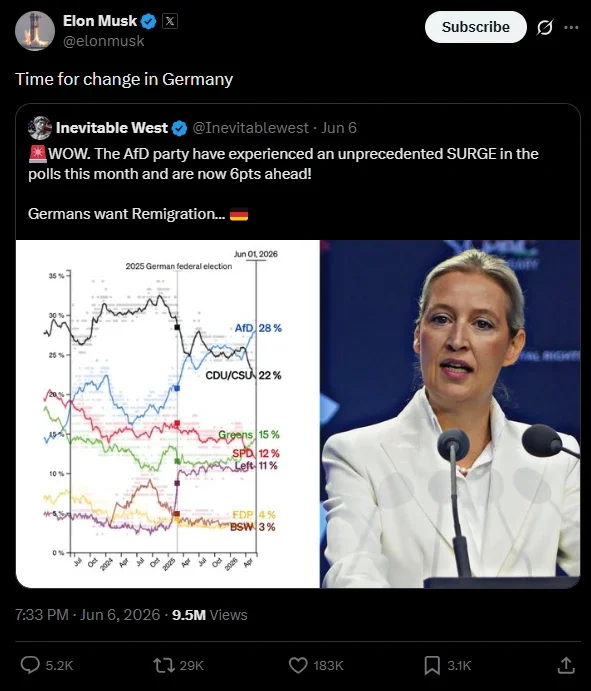
German politics is undergoing a significant reconfiguration. According to a voting intention chart shared by entrepreneur Elon Musk on social media platform X, the party Alternative for Germany (AfD) has reached 28% electoral support, surpassing the conservative bloc CDU/CSU by six points, which would be around 22%.
The American billionaire accompanied the post with a strong message: "Time for change in Germany", in support of the growth of the force led by Alice Weidel, one of the most prominent figures in the European sovereignty movement.
The post quickly accumulated millions of views and reignited the debate about Germany's political future, amid growing public concern over illegal immigration, the economic crisis, and the consequences of energy policies implemented in recent years.
AfD consolidates as the main political force
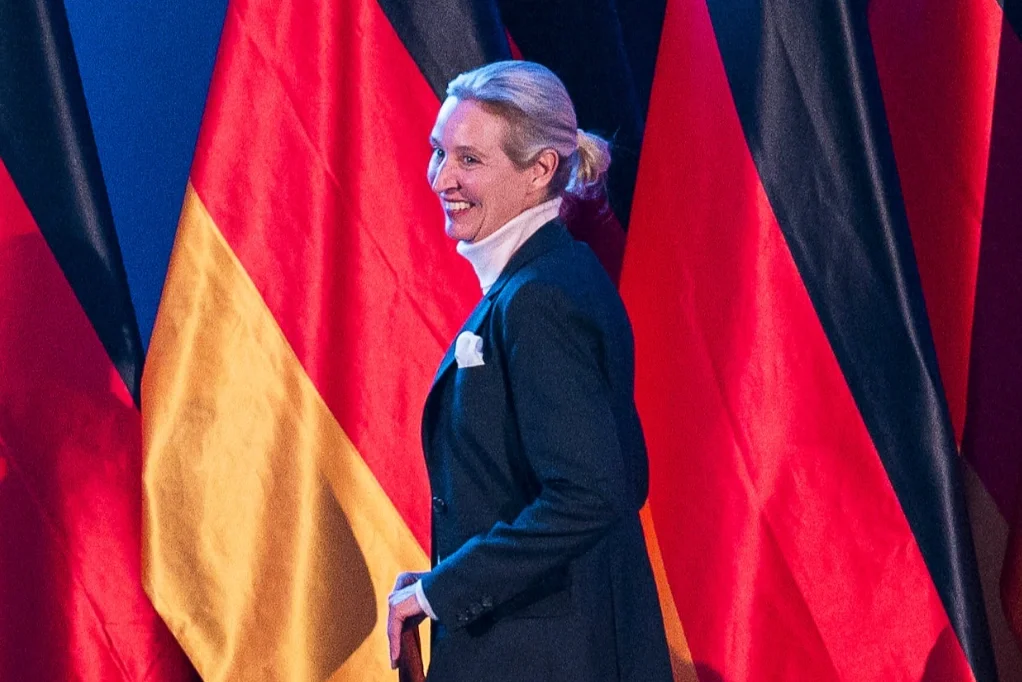
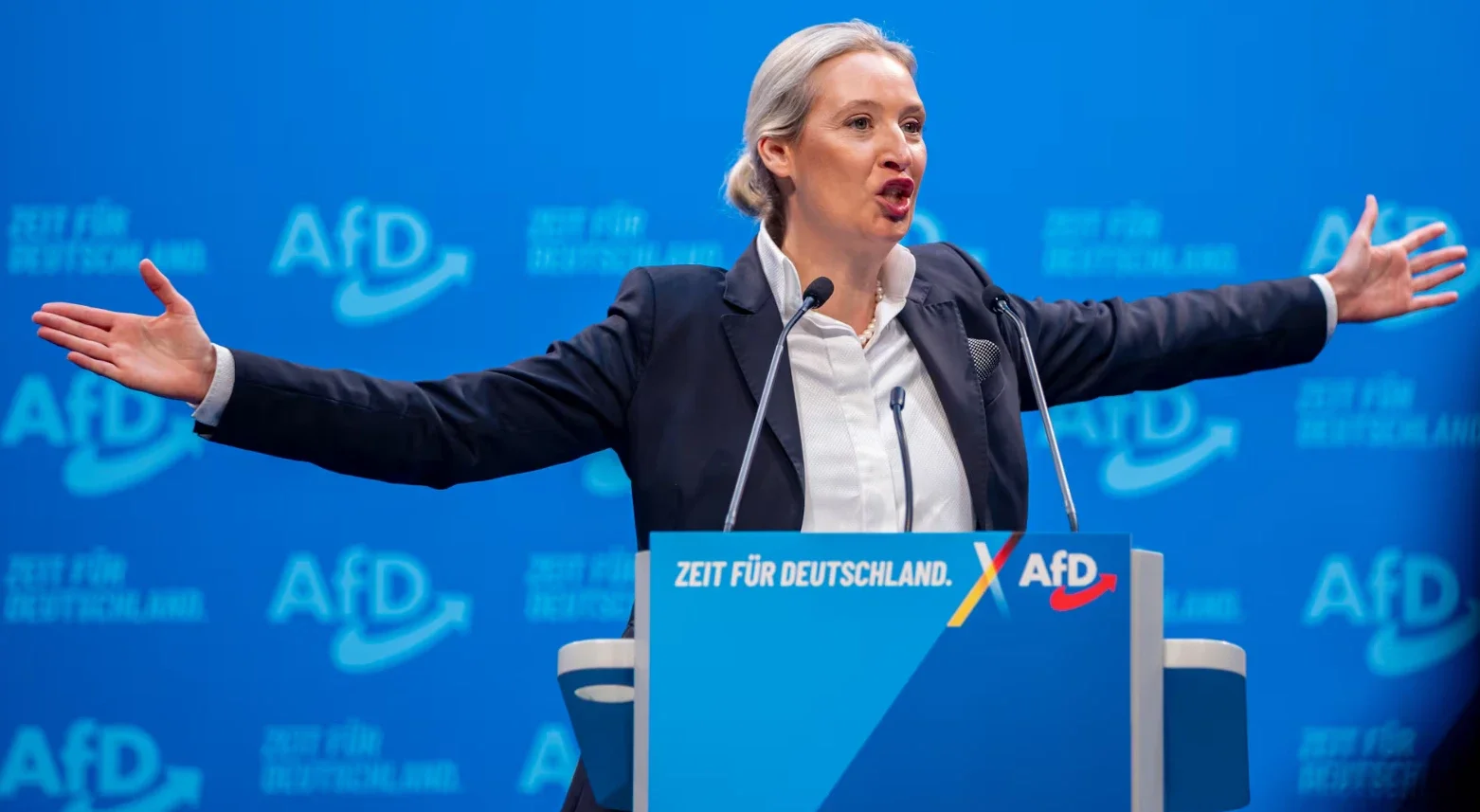
Alice Weidel leads the AfD
The data released shows a sustained growth trend for AfD since mid-2025. While traditional parties continue to lose support, the sovereignty formation has managed to capitalize on the discontent of broad sectors of German society.
The shared chart indicates the following levels of voting intention:
AfD: 28%
CDU/CSU: 22%
Greens: 15%
SPD: 12%
The Left: 11%
FDP: 4%
BSW: 3%
If this trend is confirmed in future elections, AfD would be in a privileged position to decisively influence the political direction of the largest economy in Europe.
The wear of traditional parties
In recent years, Germany has faced a combination of economic, industrial, and migratory problems that have directly impacted the popularity of historical parties.
Energy transition policies, rising production costs, loss of industrial competitiveness, and increasing migratory pressure have generated increasingly strong questioning of traditional leadership.
In this context, AfD has managed to establish itself as the main critical voice of the German political establishment, advocating for stricter positions on immigration, security, and national sovereignty.
The original post cited by Musk even highlighted that a growing portion of Germans supports remigration policies, a concept that has gained relevance in the European public debate and calls for a review of immigration policies implemented over the last few decades.
Elon Musk again supports AfD
AfD gained the support of Elon Musk
This is not the first time Elon Musk has expressed sympathy for political sectors critical of the European progressive consensus.
The entrepreneur had already made favorable comments towards leaders and movements that question the immigration and regulatory policies promoted by Brussels and several Western European governments.
His message about Germany comes at a particularly sensitive moment for the country, where polls reflect a growing distance between the public and traditional parties.
For AfD supporters, the advance in the polls represents a sign that a significant portion of Germans is seeking a profound change in the country's political priorities. Meanwhile, the German political establishment watches with concern the growth of a force that, according to the latest polls, continues to expand its electoral base and consolidate itself as a real alternative to power.