Once inside the system, the specimens are directed to an accumulation channel, where a concentration mechanism guides them to a lift chamber.





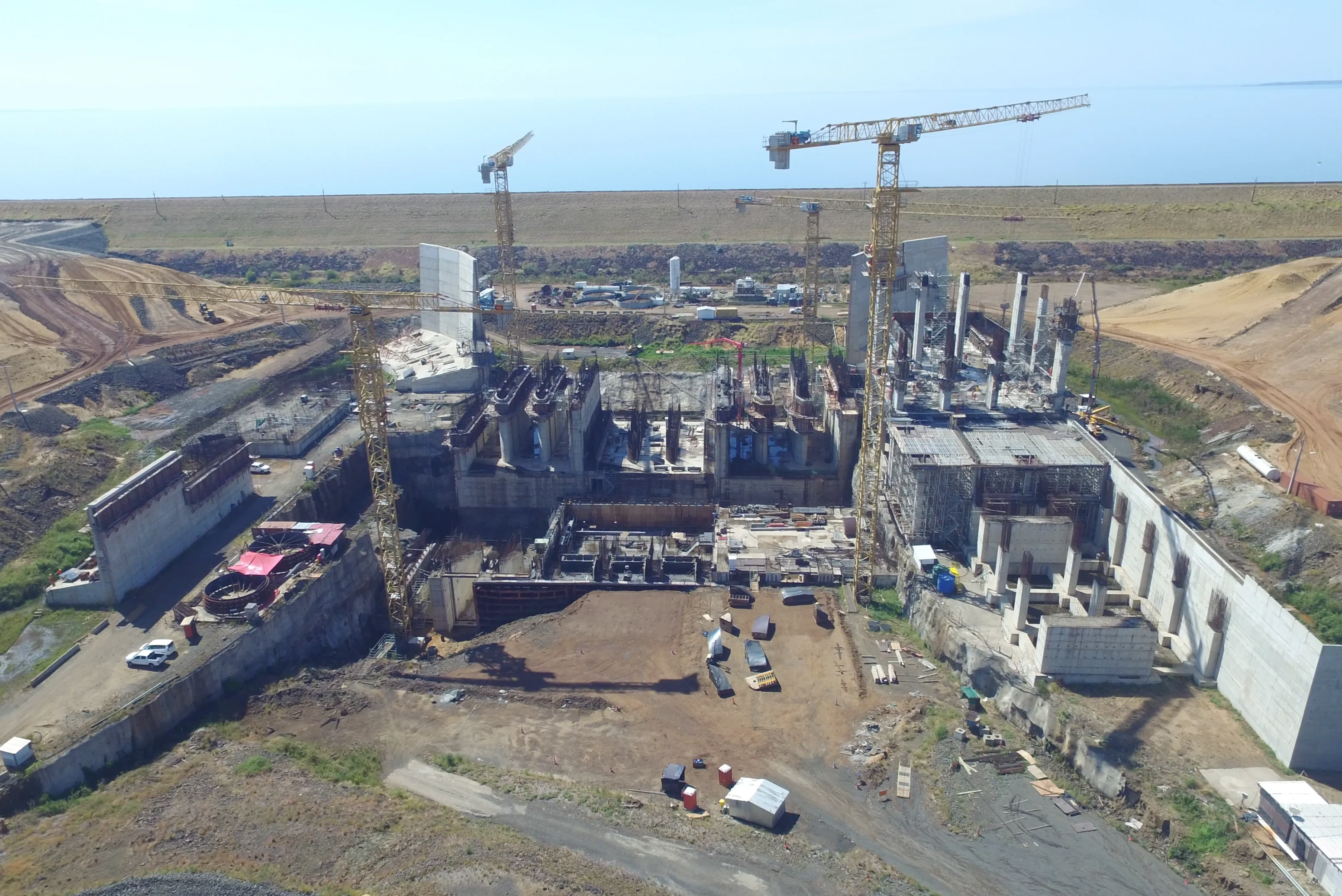

The new hydroelectric plant will incorporate technology aimed at ensuring the migration of key species.
Once inside the system, the specimens are directed to an accumulation channel, where a concentration mechanism guides them to a lift chamber.





From there, a basket with water mechanically transports them to the upper level of the reservoir. Subsequently, the fish are released into a Fish Station, where monitoring and counting tasks are performed before being reintroduced into a calm water area that favors their recovery and orientation.
The design considers emblematic species of the Paraná such as golden dorado, surubí, sábalo, pacú, manguruyú, boga, patí, and armado, among others, taking into account that each has different movement patterns and swimming speeds. This diversity was a key factor in the configuration of the system.
As detailed, the FTS was optimized based on hydraulic studies and ichthyological research, which allowed for improving the efficiency of fish entry, reducing internal travel distances, and minimizing stress during the transfer process. Structures that previously had low effectiveness in earlier designs were also eliminated.
Additionally, the project will include a Fish Station that will allow for continuous scientific monitoring, generating key information to evaluate the system's performance and apply improvements in its operation.
With this initiative, Aña Cuá aims to combine the increase in energy generation with the preservation of the natural processes of the river ecosystem.
The future Aña Cuá Hydroelectric Power Plant will incorporate a Fish Transfer System (FTS) designed to preserve the natural migration of species from the Paraná River, as part of one of the main environmental commitments related to the expansion of the Yacyretá Hydroelectric Complex.
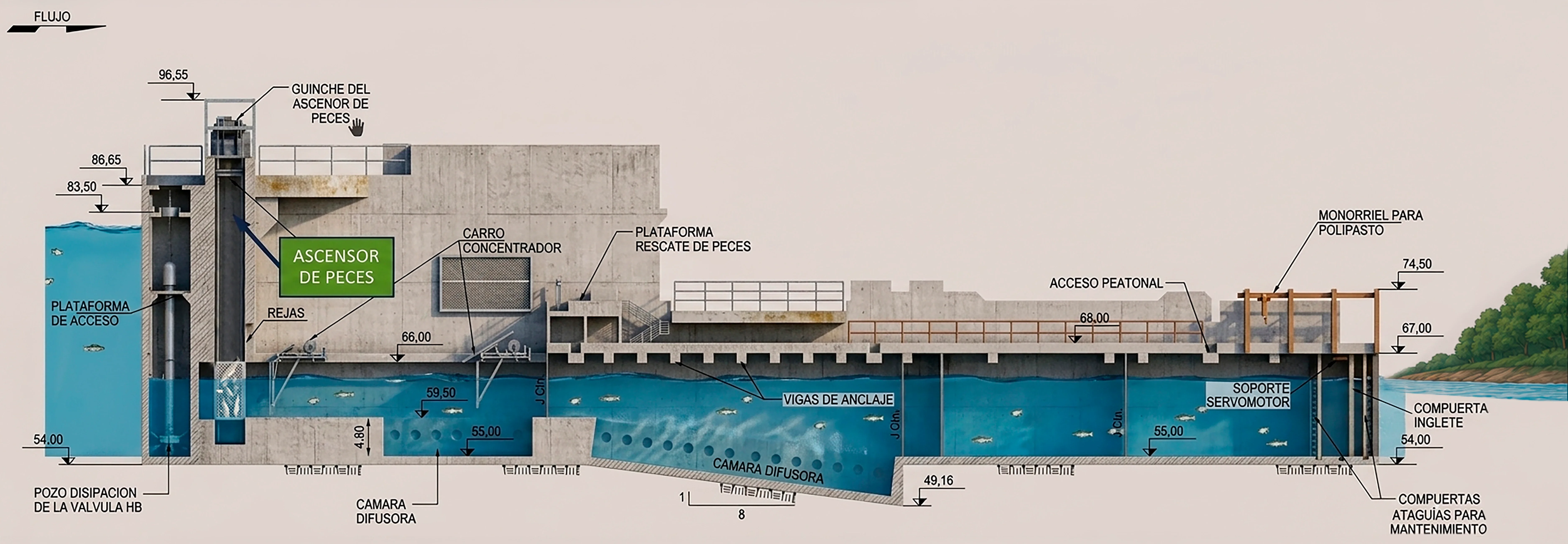
The project, currently under construction on the Aña Cuá arm, will not only increase energy generation but will also integrate specific infrastructure to mitigate the ecological impact of the project.
With three turbines of 90 MW each, the plant will contribute an additional 270 MW, representing an increase of nearly 10% in the installed capacity of the complex.
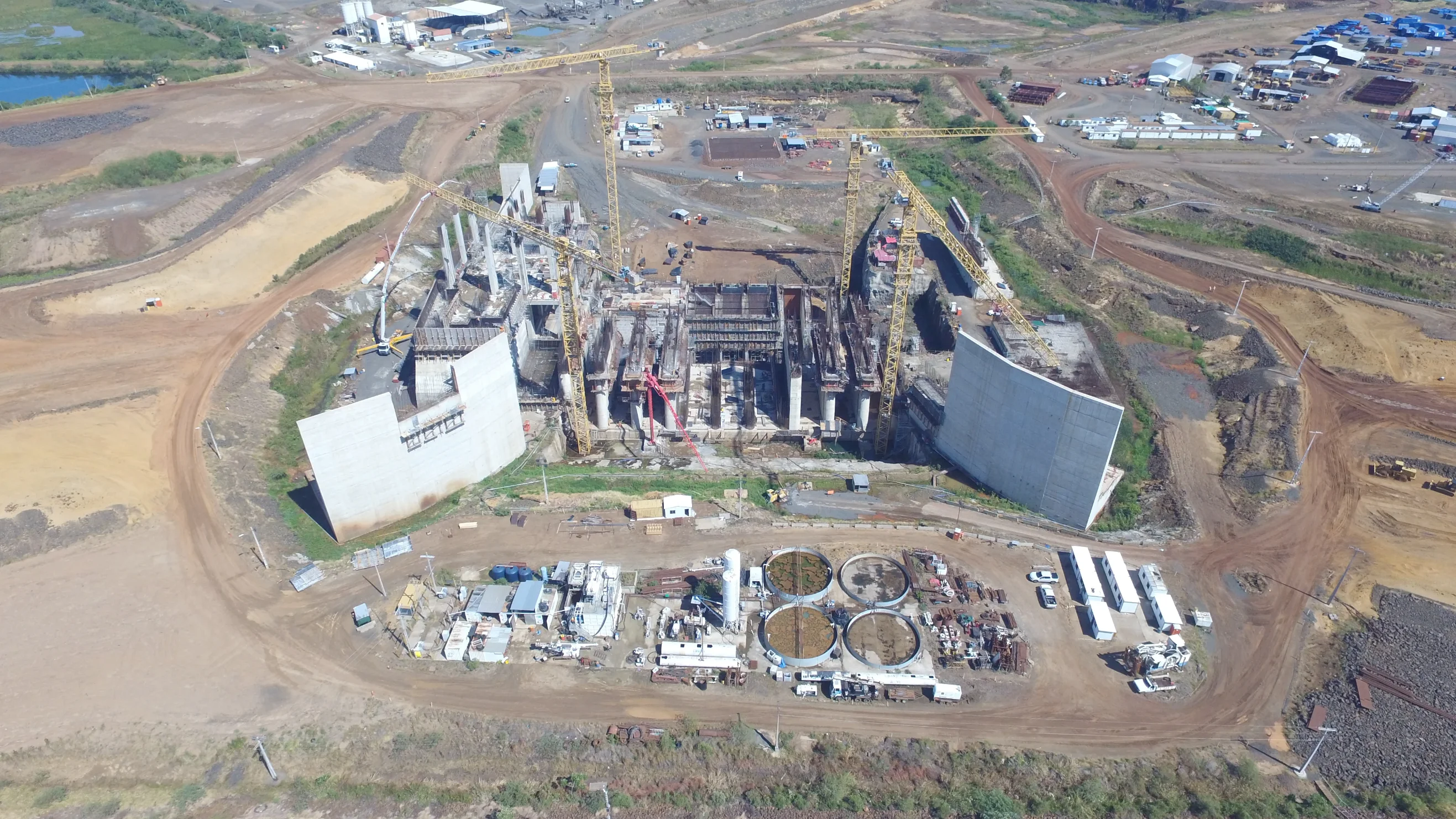
One of the main challenges of this type of development is the elevation difference created in the river's course. In this case, the height difference between the reservoir, located at 83.5 meters above sea level, and the lower channel, at 59.5 meters, creates a drop of approximately 24 meters, which can disrupt the fish migrations necessary for their reproduction and survival.
In response to this situation, the Binational Entity Yacyretá (EBY) designed a specific system based on over 30 years of experience from the main plant, incorporating technological improvements and new biological criteria.
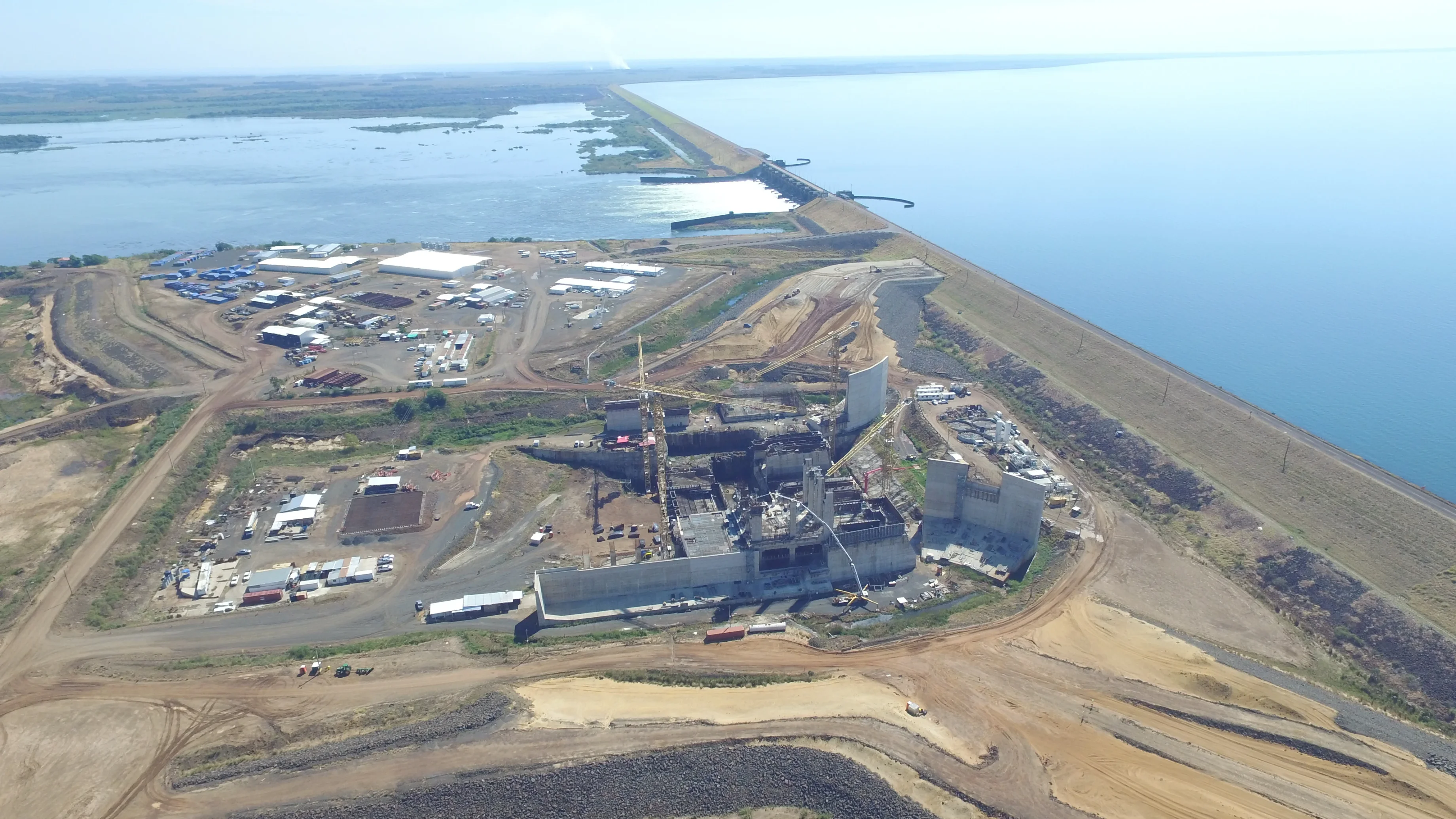
The operation of the FTS begins with attracting fish from downstream through specially designed channels, located at different depths to adapt to the behaviors of each species.