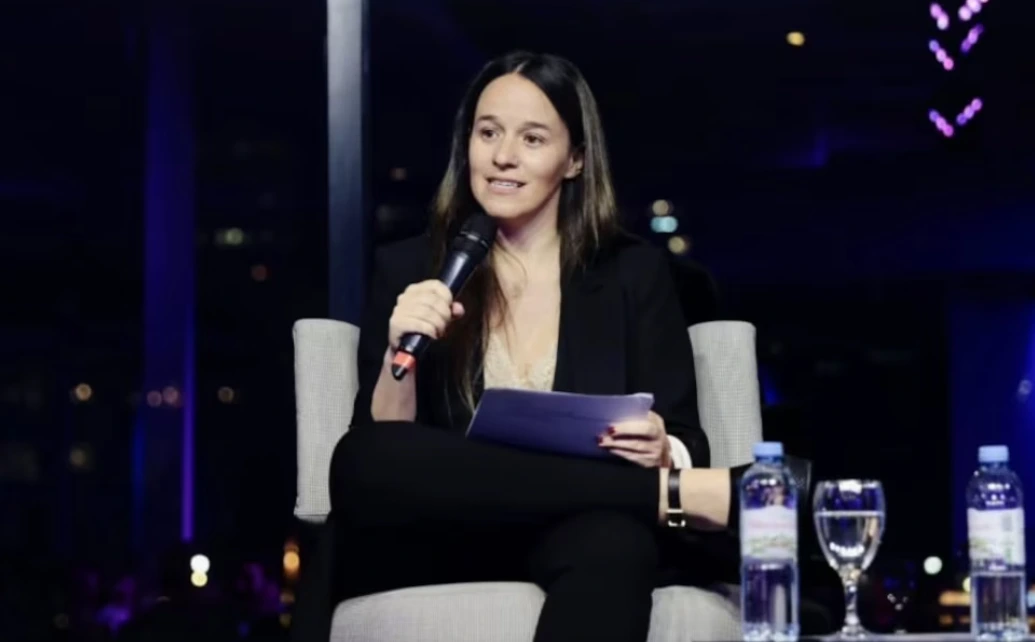
The government of Javier Milei submitted a request to the International Tribunal for the Law of the Sea to halt the Sea Lion project and protect Argentina's rights over hydrocarbon resources in the Falkland Islands
The United Kingdom also announced that it will promote secondary legislation based on the Protection of Trading Interests Act of 1980, aimed at protecting companies that could be affected by Argentine extraterritorial measures. The initiative was announced on the same October 13, although the final text had not yet been published.
How the Process Before the International Tribunal for the Law of the Sea Continues
The procedure has a legal peculiarity. Both Argentina and the United Kingdom chose different mechanisms to resolve disputes under UNCLOS. While London designated the International Court of Justice (ICJ), Buenos Aires opted for the International Tribunal for the Law of the Sea.
Due to this difference, the underlying controversy must be processed through an arbitral tribunal constituted under Annex VII of UNCLOS. While that body is being formed, ITLOS can intervene to establish provisional measures aimed at preserving the rights of the parties and preventing the situation from worsening.
Therefore, the hearings on November 10 and 11 in Hamburg do not aim to definitively resolve who exercises sovereignty over the Falkland Islands. The Tribunal must determine whether there are sufficient grounds to adopt precautionary measures while the arbitral body is constituted.
Argentina brought the dispute over oil exploitation in the Falkland Islands before the International Tribunal for the Law of the Sea (ITLOS), based in Hamburg, Germany. During the hearings that began on Tuesday, November 10, the delegation of Javier Milei's government presented the legal grounds to request that the United Kingdom suspend activities related to the Sea Lion hydrocarbon project, which aims to exploit natural resources in a territory whose sovereignty remains disputed.
The Argentine presentation seeks to prevent London from unilaterally advancing with oil exploitation in the continental shelf around the archipelago. The request is based on the United Nations Convention on the Law of the Sea (UNCLOS) and various resolutions from the United Nations (UN) that recognize the existence of a dispute between the two countries and call for the avoidance of unilateral measures that could hinder a negotiated solution.
The Argentine government formally submitted its request on October 13, invoking Article 290 of UNCLOS. The request includes four specific measures: that the United Kingdom prevent the initiation or continuation of oil exploitation through Sea Lion, that it does not grant new permits in the disputed area, that it preserves the information obtained during exploration activities, and that it guarantees the protection of the marine environment.
The Argentine delegation is led by Ambassador Mario Oyarzábal, Director General of the International Legal Advisory Office of the Foreign Ministry, and includes officials from various government sectors. Among them are María Ibarzabal, Legal and Technical Secretary of the Presidency; Bettina Pasquali de Fonseca, Argentine Ambassador to Germany; Juan Ignacio Stampalija, Legal and Administrative Secretary of the Ministry of Economy; and Santiago Castro Videla, Deputy Attorney General of the Nation.
Argentine Arguments Against British Exploitation in the Falklands
One of the main grounds of the Argentine presentation is that the United Kingdom cannot proceed with the exploitation of natural resources in a territory whose sovereignty is subject to an unresolved international dispute.
Argentine arguments against British exploitation in the Malvinas
Buenos Aires' position is particularly supported by two resolutions of the United Nations General Assembly. The first is Resolution 2065 of 1965, which recognized the existence of a sovereignty dispute between Argentina and the United Kingdom over the Falkland Islands. The second is Resolution 31/49 of 1976, which urged both parties to refrain from making unilateral decisions that would alter the situation while negotiations continue.
During his presentation, international law expert Marcelo Kohen stated that Argentina seeks to preserve its rights over maritime spaces until the territorial dispute is resolved. The lawyer, who participated in the Argentine representation during the case of the ARA Libertad frigate in 2012, emphasized that the sovereignty dispute remains open due to the British refusal to negotiate a solution.
Kohen also argued that international recognition of the dispute is a relevant element to demonstrate that Argentina's rights over the continental shelf have plausible legal foundations. In this regard, he stated that the Tribunal does not need to definitively resolve sovereignty to consider the requested provisional measures.
Another central argument is the nature of the resources involved. Oil is a non-renewable resource, and its extraction represents a modification that cannot be reversed by a subsequent ruling. If the United Kingdom proceeds with drilling and a tribunal later recognizes Argentine rights, the extracted hydrocarbons cannot be returned.
Additionally, there are the provisions of Articles 192 and 194 of UNCLOS, which establish obligations for the protection and preservation of the marine environment. Argentina argues that hydrocarbon activities must also be analyzed under these international commitments.
The United Kingdom Rejects the Tribunal's Jurisdiction and Defends Sea Lion
The British position focuses on questioning the jurisdiction of the International Tribunal for the Law of the Sea to intervene in a dispute that, according to London, involves a territorial sovereignty issue beyond its competencies. The British government maintains that the islands are sovereign territory of the United Kingdom and that its authorities have the power to regulate economic activities and grant hydrocarbon exploitation licenses.
British Attorney General Ellie Reeves traveled to Hamburg at the head of a team of lawyers to represent the United Kingdom. Before the start of the hearings, she stated that her country recognizes the authority of the international body but believes it does not have jurisdiction to resolve issues related to the sovereignty of the Falklands.
London also argues that the licenses granted for oil development are not invalidated by the Argentine presentation. In October, the Minister for Overseas Territories, Uma Kumaran, defended this position before the House of Commons and mentioned the referendum held in the islands in 2013, which resulted in a 99.8% vote in favor of remaining a British territory.
However, the controversy that Argentina brought before the Tribunal does not seek to obtain a definitive ruling on the sovereignty of the islands at this stage, but to prevent economic facts from being consolidated while the territorial dispute remains unresolved. This distinction is central to the legal strategy presented by Buenos Aires.
To do this, it must evaluate three conditions: whether the future arbitral tribunal would have prima facie jurisdiction over the dispute, whether there is an urgent situation that justifies intervention, and whether the rights that Argentina seeks to protect have reasonable grounds in fact and international law.
The schedule includes presentations from both delegations over the two days. Argentina opened the presentations on Tuesday, while the United Kingdom spoke in the afternoon. On Wednesday, November 11, there will be a second Argentine intervention, and the British representation will have the closing remarks.
A particular aspect is that Argentine Judge Frida María Armas Pfirter, Vice President of the body, recused herself from participating in the case. For this reason, the country appointed Raúl Vinuesa as ad hoc judge. The United Kingdom, which also does not have a magistrate of its nationality among the permanent members, appointed Vaughan Lowe.
The resolution on the provisional measures is expected in November. According to the procedural calendar mentioned in the case presentation, it could be known around November 13, although the Tribunal could also communicate it in the following days.
Sea Lion: The Three Scenarios Facing the Argentine Claim
Sea Lion: the three scenarios facing the Argentine claim
The Argentine government contemplates three possible outcomes for this judicial instance. The first would be for the Tribunal to fully accept the request and order the United Kingdom to suspend activities related to the oil exploitation of Sea Lion. In that case, London would have to comply with the provisional measures while the arbitral tribunal is constituted, which would subsequently have the authority to review, modify, or nullify them.
The second scenario considers a partial acceptance of the Argentine request. The body could determine that it is appropriate to establish restrictions on certain activities, without necessarily ordering a complete halt to the project. The extent would depend on which of the arguments presented by Buenos Aires it considers sufficiently substantiated.
The third scenario would be the rejection of the request on the grounds that there are insufficient grounds to recognize, at this stage, the jurisdiction of the future arbitral tribunal. If that were to occur, Argentina would have to continue defending its position before the body constituted under Annex VII.
The Sea Lion project, developed by Navitas Petroleum and Rockhopper Exploration, is located in the northern basin of the Falklands, approximately 198 kilometers north of the archipelago. The involved block covers about 541 square kilometers, and drilling was scheduled for January 2027.
The dispute represents a new international instance of the Argentine claim over the Falkland Islands and their natural resources. For Buenos Aires, the central point is to prevent the United Kingdom from advancing with hydrocarbon exploitation while the sovereignty dispute remains unresolved. The Tribunal's decision will not determine the ownership of the islands, but it may establish provisional limits on oil activities during the arbitration process.
The presentation thus constitutes a new Argentine attempt to move the discussion about the resources of the South Atlantic to the realm of international institutions, with the aim of preserving the rights that the country claims over its continental shelf.