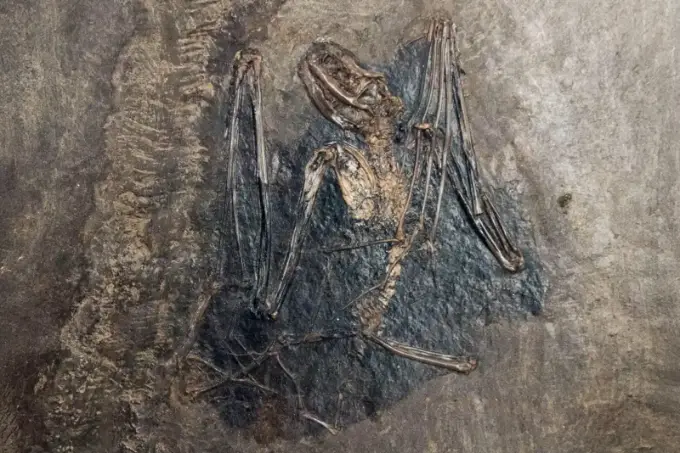
An ambitious project that combines genomes and fossils is transforming the view on the origin of bats According to the results, these flying mammals likely emerged in Europe during the late Paleocene, between 65 and 60 million years ago, before dispersing across the rest of the planet
For decades, there was debate over whether the place of origin was Africa, Asia, or North America Now, an international team of 137 researchers from 64 countries has reconstructed the evolutionary history of the only mammals capable of true powered flight. The effort is part of the Bat1K consortium, dedicated to sequencing the genomes of all living bat species
The study, published in the journal Nature, analyzed 103 bat genomes, including 42 new chromosome-level assemblies, covering the 21 recognized families. It also incorporated evidence from 44 fossils. This dataset allowed for a clearer mapping of how bats emerged and expanded around the world
The results suggest that the first bats evolved in Europe. Their descendants then moved to Africa. As they diversified, different lineages colonized America, Asia, and Australia, giving rise to the large groups that exist today
Unique traits and their early appearance
Bats represent nearly one-fifth of all living mammals and fulfill key ecological roles They are the only ones capable of sustained flight, and most navigate and hunt in the dark using sound. Many species also show an unusual resistance to diseases and a longevity greater than that of other mammals of similar size
The work provides clues about the origin of two defining traits: powered flight and echolocation The analysis of the fossil Vielasia, located in the oldest branch of the bat family tree, suggests that echolocation was already present near the beginning of their evolution
Taken together, the evidence indicates that both flight and echolocation emerged before modern groups began to diversify. These abilities may have favored the extraordinary evolutionary success of the group. Europe appears to be the most likely setting where true mammalian flight originated for the first time
The researchers also computationally reconstructed the genome of the common ancestor of all current bats. This reconstruction offers a window into the genetic makeup of one of the first flying mammals and becomes a resource for studying how they developed their exceptional diversity
A global genomic resource
The project is the largest to date that combines genomes and fossils of bats It is based on samples collected over decades from various parts of the world, including rare species from remote regions. In addition to indicating a probable geographic origin, the analysis resolves long-standing disagreements about relationships between families
Reconstructing the family tree proved especially complex because different parts of the genome can preserve contradictory evolutionary signals One possible reason is that early lineages exchanged genes among themselves. However, a portion of the X chromosome preserved a particularly clear record of the underlying relationships, which helped resolve trees that had been disputed for decades
The dataset now allows for the investigation of genetic changes associated with flight, echolocation, longevity, and disease resistance. It could also contribute to human research on aging, immunity, and response to pathogens. Bats continue to amaze as one of the great experiments of evolution
The study was supported by European and Irish organizations, along with international partners, and relied on the dedication of field researchers who collected samples from New Zealand to Madagascar