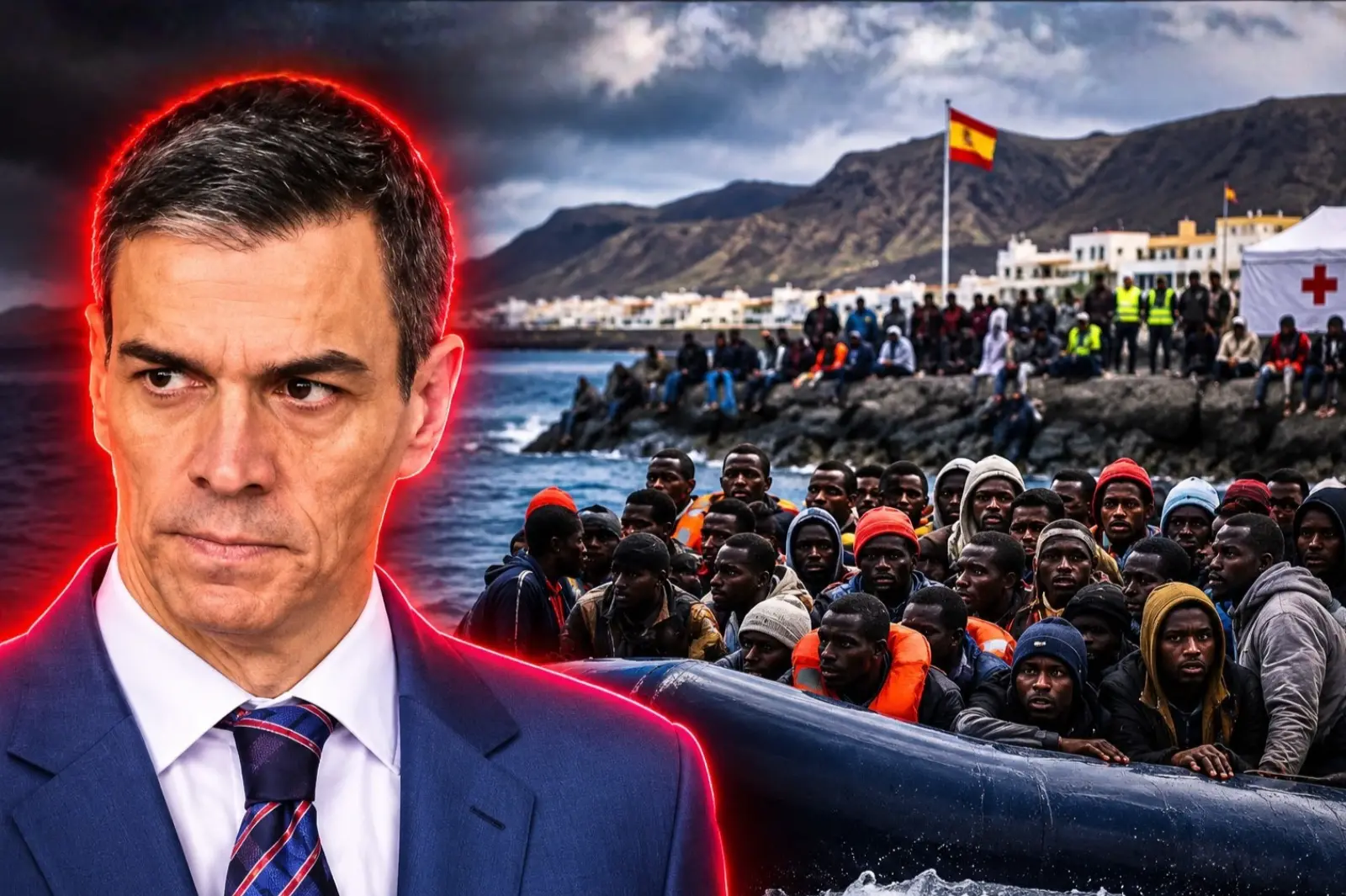
Spain is facing a new migration crisis less than two weeks before the general elections on November 29, after 3,684 immigrants from Africa arrived in the Canary Islands in just three days, amid increasing pressure on the socialist government of Pedro Sánchez and while the conservative party Vox, led by Santiago Abascal, proposes to tighten immigration policies and strengthen border controls to curb irregular entries.
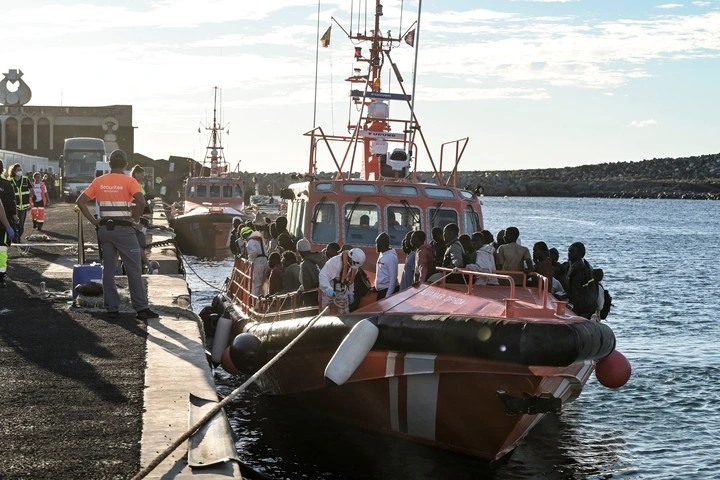
According to records compiled by the EFE agency from Maritime Rescue and emergency services, 843 people disembarked on Friday, November 13, another 1,580 did so on Saturday, and 1,261 arrived on Sunday, in a total of 29 precarious boats known as cayucos. Saturday set a new record for daily arrivals on the Atlantic route, surpassing the 1,461 recorded on November 7, 2020.
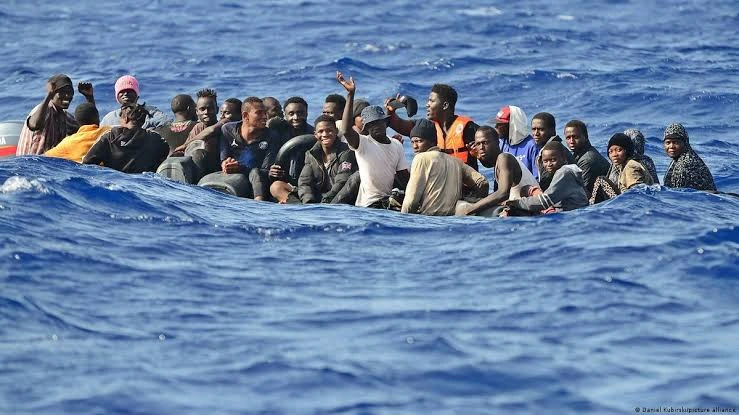
African immigrants arriving in the Canary Islands.
The situation particularly affects El Hierro, a small Spanish island with just over 12,000 inhabitants, which has become the main arrival point for migrants from West Africa. During the first fifteen days of November, the island received 96 cayucos, a figure that far exceeds the 66 boats recorded during the first ten months of the year. Disembarkations also occurred in Gran Canaria and Tenerife, testing the reception and assistance systems of the archipelago.
In response to the increase in arrivals, the government of Pedro Sánchez declared a migration emergency in the Canary Islands on November 10 and announced the allocation of an additional 15.18 million euros to expand reception places and finance transfers between the islands and to the mainland. It also provided reinforcements for Maritime Rescue and additional resources for healthcare, while the Canary authorities are calling for greater state and European intervention in response to the migration invasion from Africa.
Muslim immigrants arriving in Spain.
The crisis unfolds amid the Spanish electoral campaign, where immigration has become one of the main axes of political debate due to the social unrest generated. Vox presented a program proposing to prevent new mass regularizations, eliminate the social integration process as a regularization mechanism, repatriate foreigners in irregular situations, and deport those who commit serious crimes.
The increase in disembarkations coincides with a time of year when weather conditions usually favor navigation across the Atlantic, one of the most dangerous migration routes to Europe. The proximity of the elections and the proposals for tightening immigration policies add a new political component to the African invasion, influencing the acceleration of arrivals due to fears of a potential change in government with serious immigration policies.