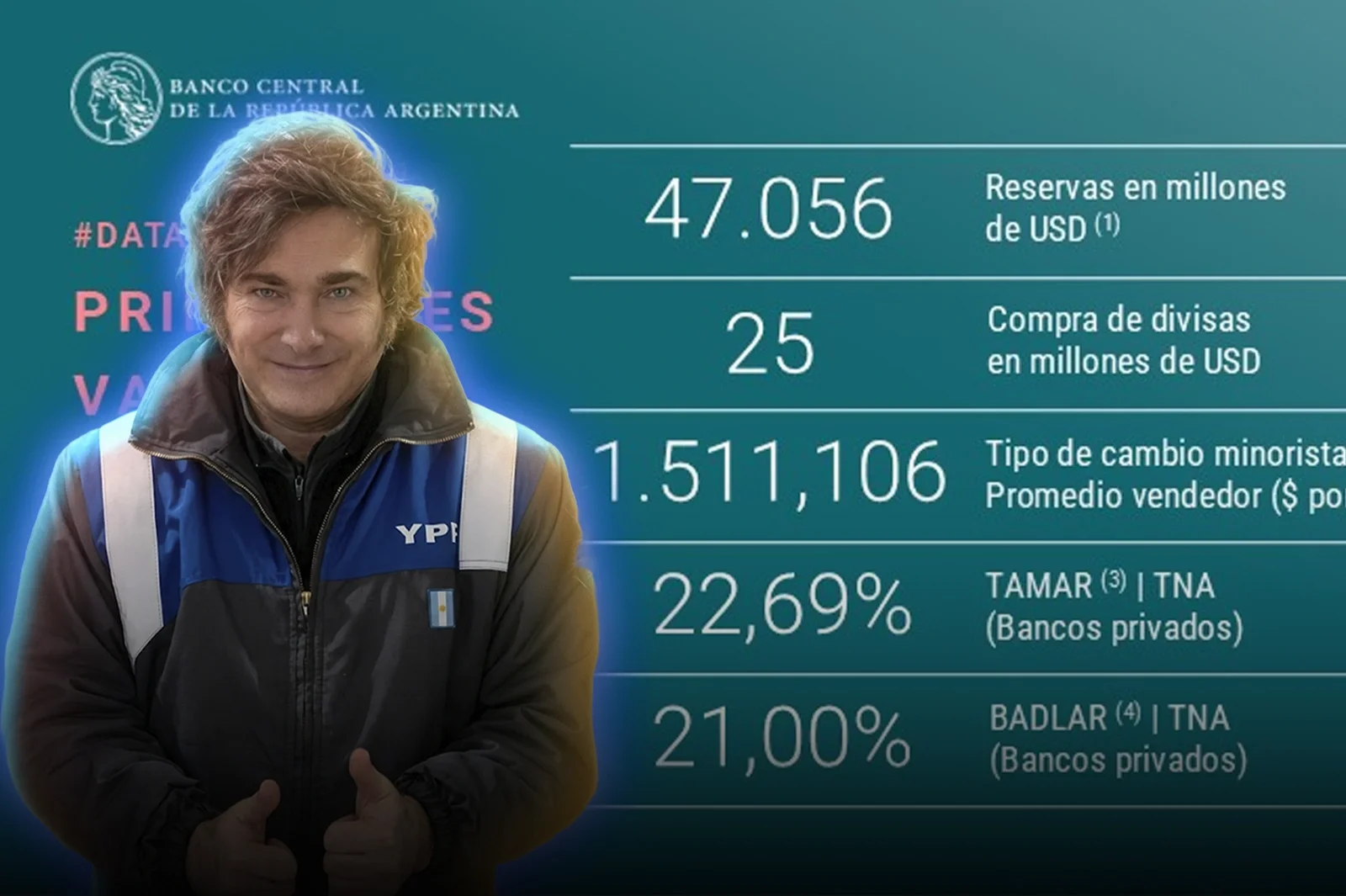
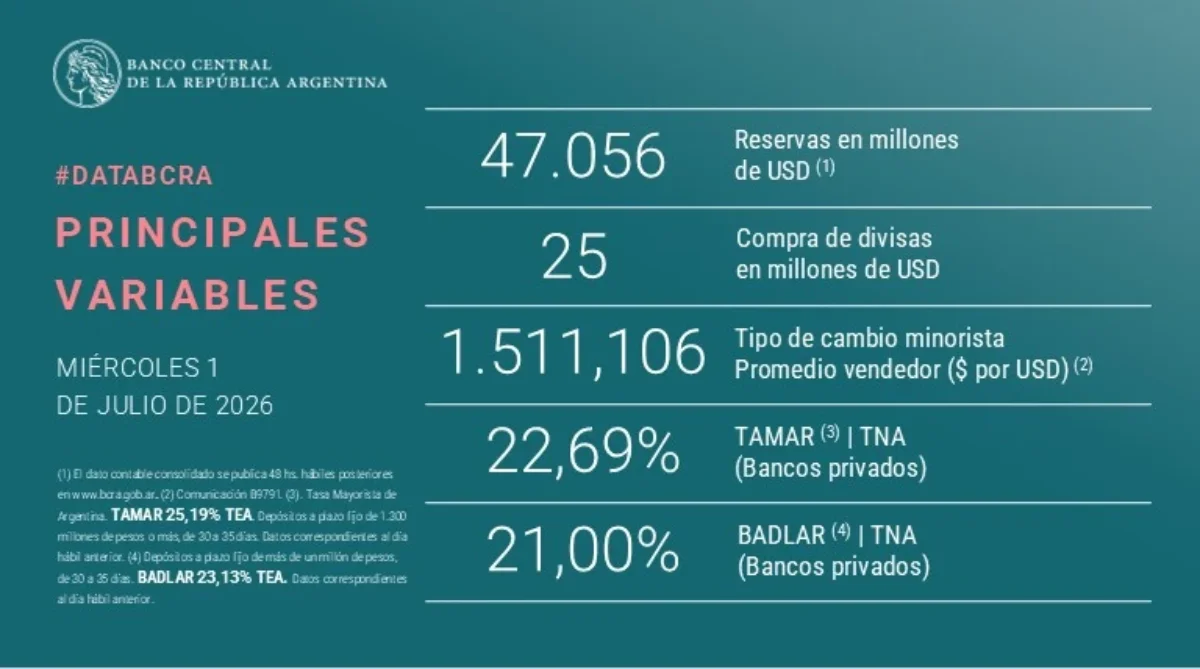
The Central Bank began July by reaffirming the buying streak in the foreign exchange market, after reporting this Wednesday, July 1, 2026 a new acquisition of USD 25 million, which marks another positive day for the accumulation of foreign currency and the strengthening of reserves.
With this result, international reserves stood at USD 47.056 billion, according to official data published by the BCRA. The number consolidates the process of rebuilding the entity's balance sheet, one of the central points of the economic program promoted by the Government of Javier Milei.
The summary of the daily report
The day also showed that the average selling retail exchange rate closed at $1,511.106 per dollar. The figure reflects a well-ordered exchange session, without significant jolts, while the economic team maintains the strategy of stability and accumulation of reserves.
In terms of rates, the TAMAR of private banks stood at 22.69% TNA, with an effective annual rate of 25.19%. Meanwhile, the BADLAR remained at 21.00% TNA, with an effective annual rate of 23.13%. Together, the data marks a favorable start to the month for the Central Bank, which has resumed buying foreign currency and extended its positive streak.
The reform of the Organic Charter, the other front of the Government
The exchange data is known in parallel to the progress of a key reform that President Javier Milei wants to take to Congress: the modification of the Organic Charter of the Central Bank. The Government's objective is to reverse the changes approved by Kirchnerism in 2012, which expanded the functions of the entity and facilitated Treasury financing through monetary issuance.
Javier Milei announced the reform of the BCRA's organic charter
The reform promoted during the government of Cristina Kirchner replaced the primary function of preserving the value of the currency to subordinate financial and exchange stability to the addiction to Peronist public spending. In practice, this expansion allowed for greater intervention by the Central Bank and weakened its specific role in defending the peso.
The most sensitive point was Article 20, related to temporary advances. With the changes of 2012, the BCRA was enabled to transfer more funds to the Treasury, which resulted in more issuance and a growing accumulation of interest-bearing liabilities. Milei seeks to cut this logic at its root and return to an Organic Charter focused on preserving the value of the currency, limiting issuance to finance the State, and rebuilding the credibility of the Central Bank.