By 2025, all jurisdictions in the country will be below the generational replacement level
Nuevo
Agregar La Derecha Diario en
Compartir:
Argentina is undergoing a concerning process of significant demographic change, reflected in a sharp decline in the birth rate recorded over the past two decades.
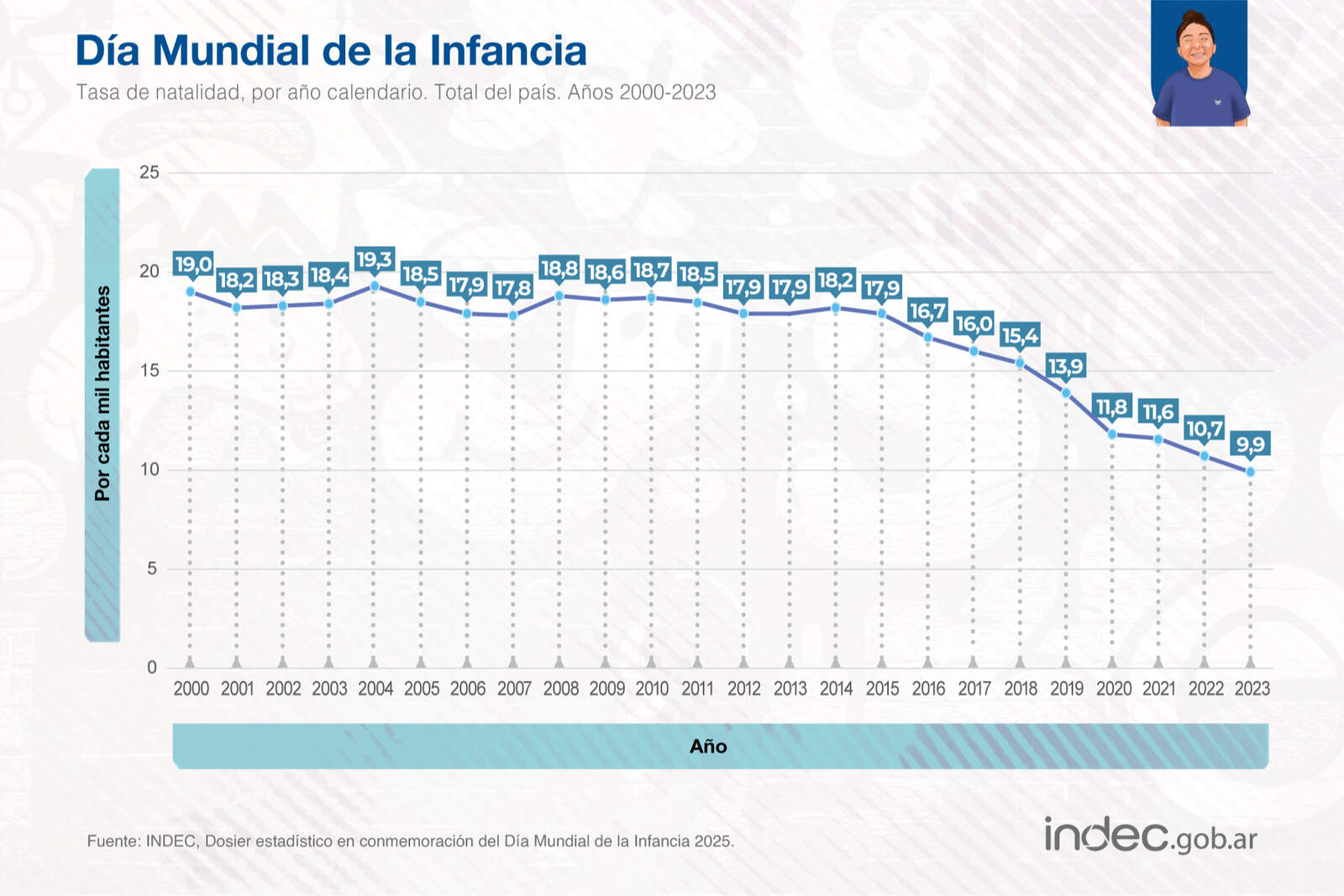
According to new data published by INDEC, the country went from 19 births per thousand inhabitants in 2000 to 9.9 in 2023, a reduction that marks a historic low and confirms the sustained advance of population aging.
The decline in the birth rate is also reflected in household composition. In 1991, 56% of Argentine families had at least one member under 18 years old. By 2022, that proportion had dropped to almost 45%, and the trend continues.
According to data for 2024, even within households that do have children or adolescents, the presence of siblings is increasingly rare: in 43% of those households, only one member under 18 years old lives there.
Datos del INDEC.
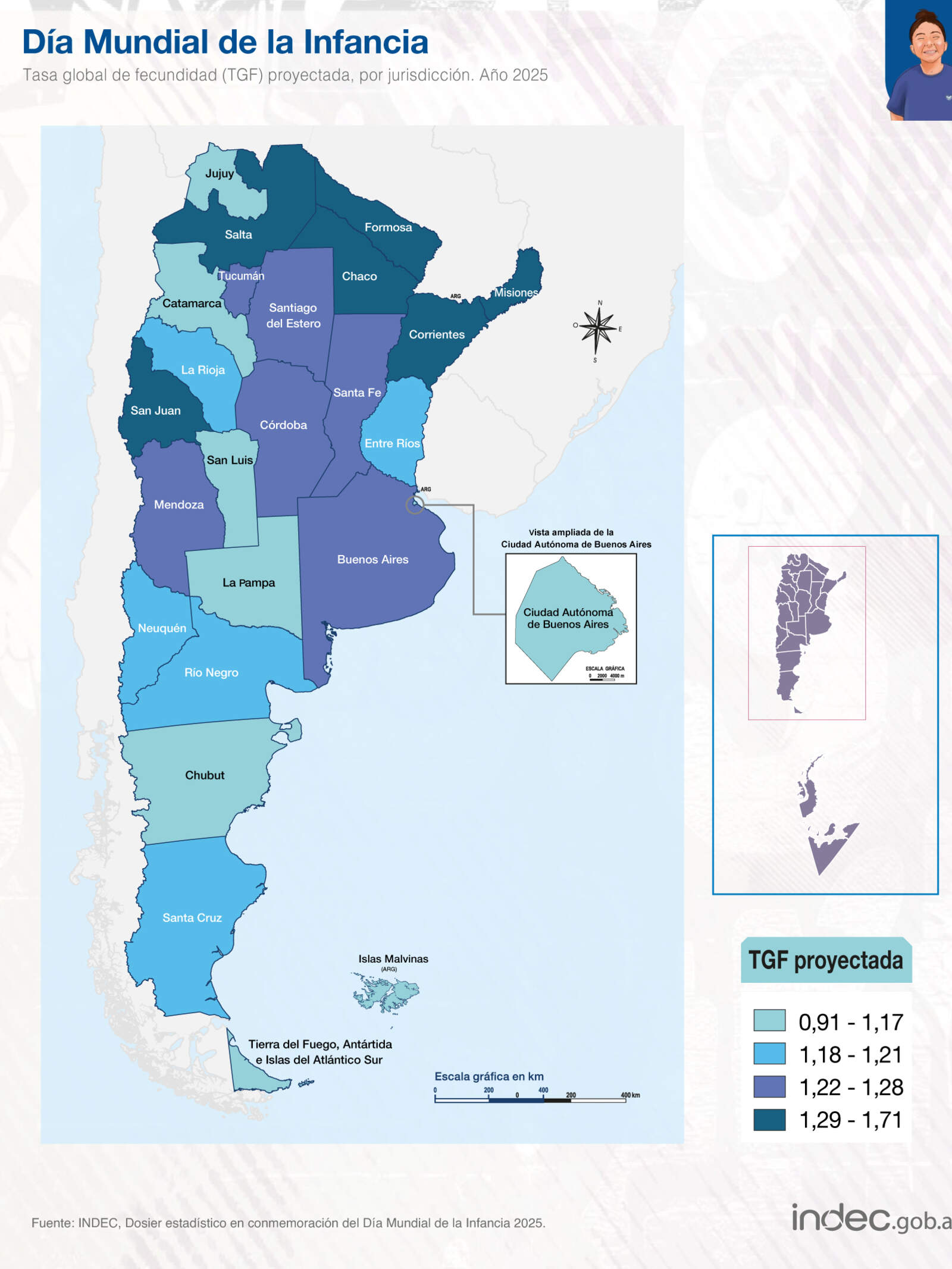
Official projections indicate that this trend will deepen. By 2025, all jurisdictions in the country will be below the generational replacement level, estimated at 2.1 children per woman. This threshold is considered key to sustaining the population size over time without relying exclusively on immigration.
The drop below that level, a phenomenon that is already a reality in much of the developed world, anticipates an older Argentina, with fewer births and growing challenges in terms of economic and social sustainability.
Causes of death in minors
The report also details the causes of infant and adolescent mortality, which show significant differences depending on the stage of growth. Among children under 4 years old, deaths are mainly related to perinatal conditions, that is, problems arising from pregnancy, childbirth, or the first weeks of life.
Datos del INDEC.
Meanwhile, in the 5 to 14 years old group, the main cause of death is malignant tumors. The situation changes again in adolescence: among youth aged 15 to 19, one in five dies from an accident.
Taken together, INDEC data reveal a country with fewer births, households with fewer children, and health challenges that vary by age. This new demographic map, if the trend doesn't change, anticipates future impacts on the economy, society, the labor market, and the pension system.