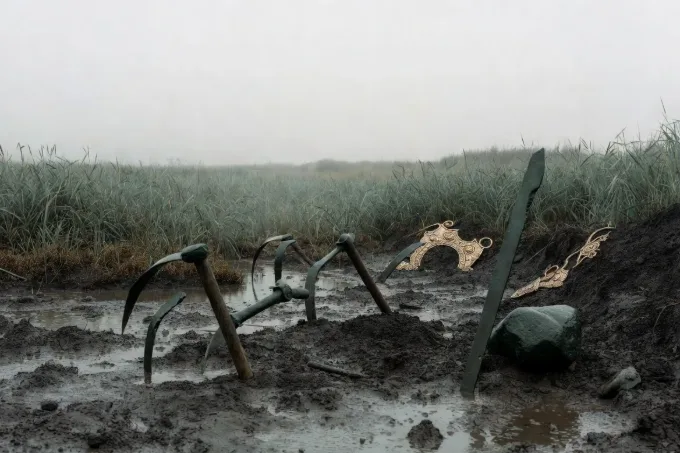
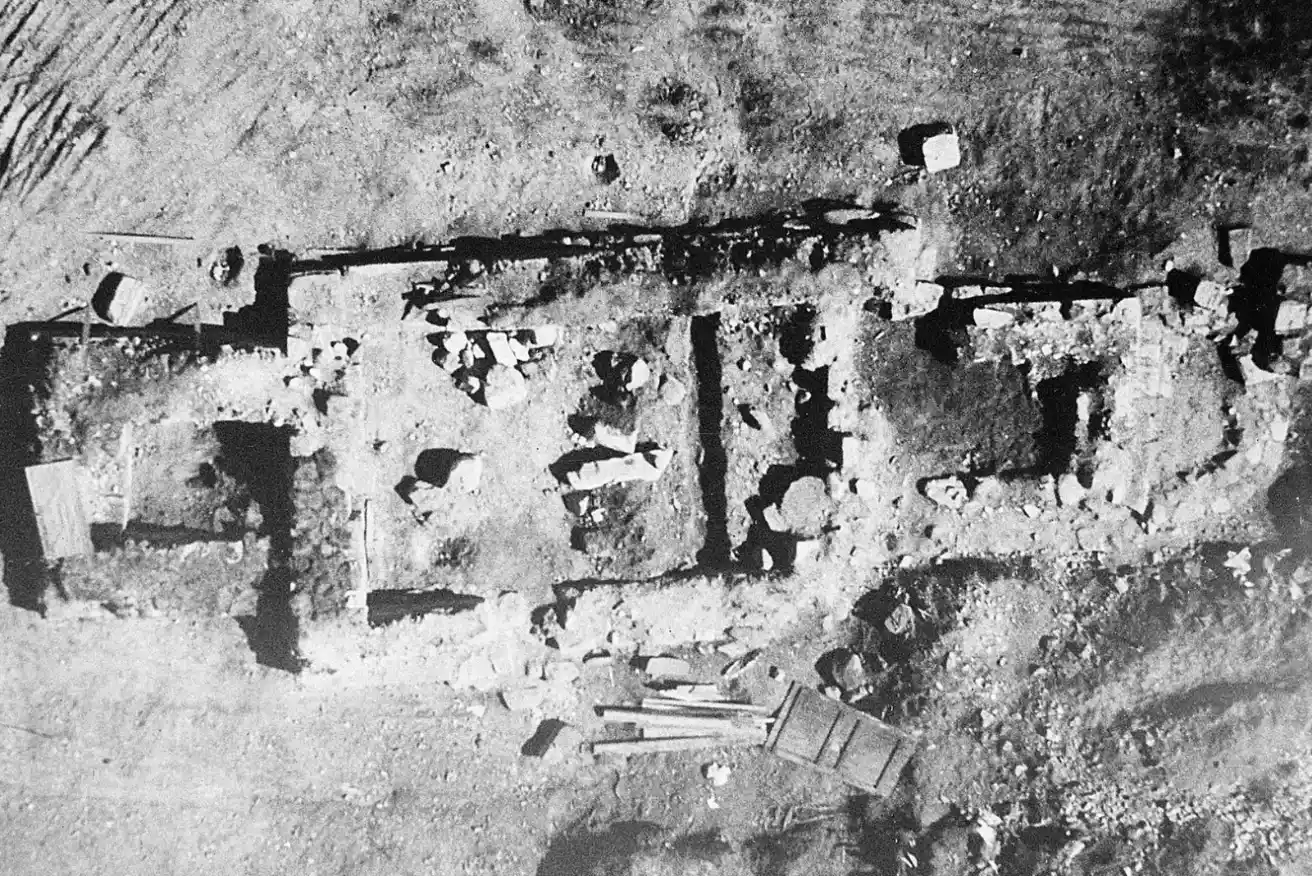
A team from the Olomouc Archaeological Center recovered an exceptional set of bronze objects in an ancient wetland located on the outskirts of Kojetín, in the Central Moravia region of the Czech Republic. The discovery occurred while specialists were supervising construction work along the Brno–Přerov railway line.
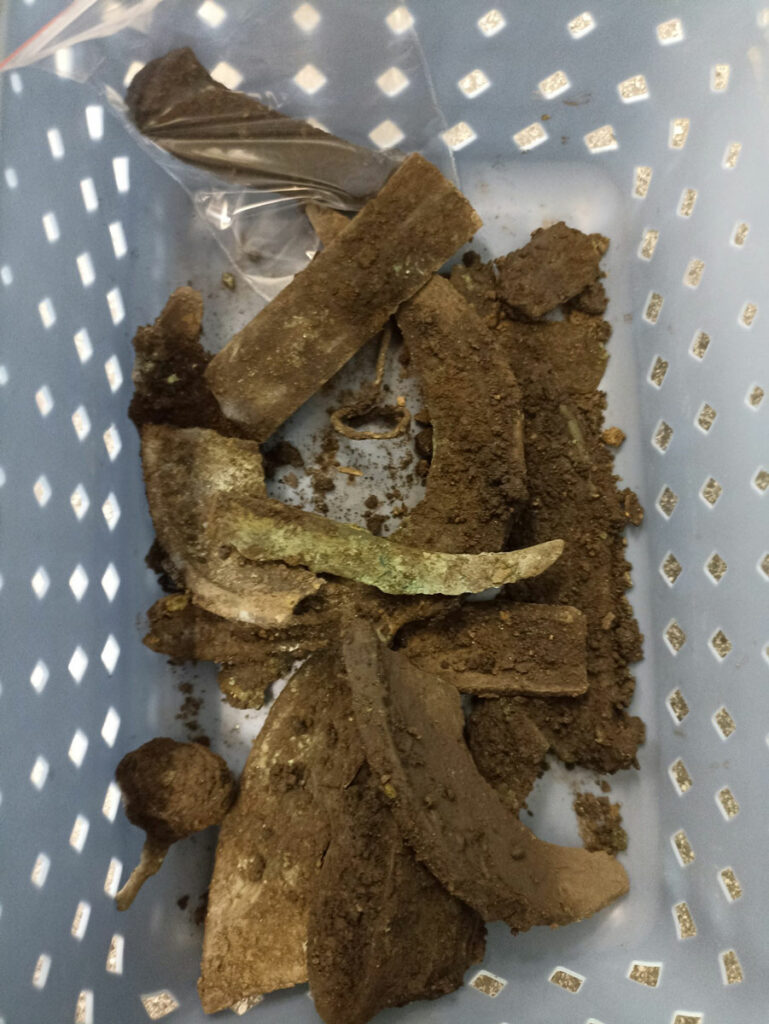
The specialists identified dozens of bronze pieces that had been intentionally deposited by members of the Urnfield culture over three thousand years ago. Among the items found are bronze ingots, fragments of various decorative ornaments, and several tools, including sickles and swords.
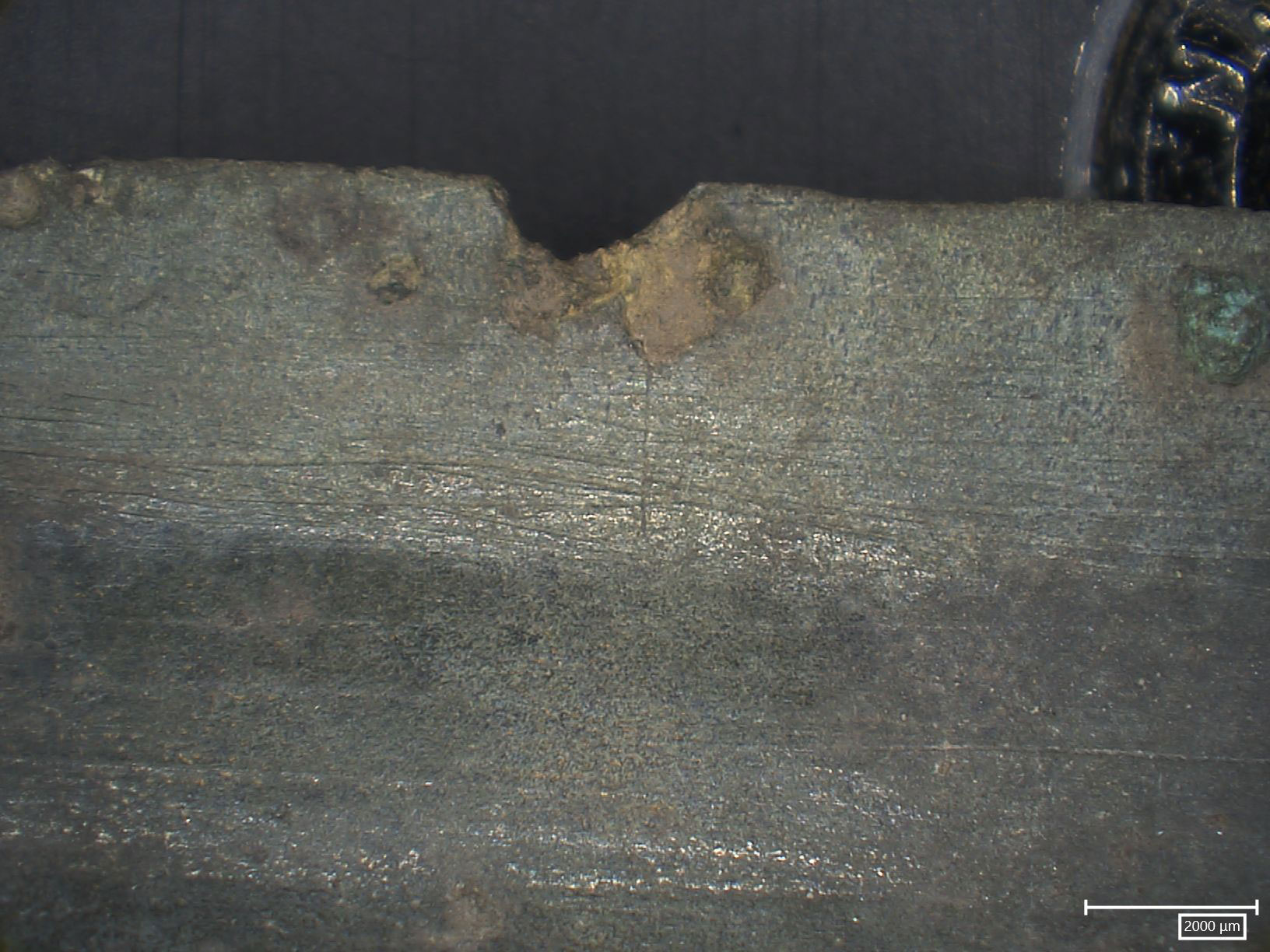
Many of these objects show clear signs of having been deliberately damaged before their burial. Eight sickles were intentionally bent, and the blade of a sword appears shattered from a strong blow dealt with a chisel or an axe. These details are central to interpreting the meaning of the deposit.
Experts dismiss the idea that the collection was buried as a precautionary measure or with the intention of recovering it later to reuse the metal. Instead, they propose that the objects were part of a ritual ceremony conducted in the wetland.
A ritual deposit in an aquatic environment
The location in a moist environment reinforces the hypothesis of a ceremonial act. In various European Bronze Age societies, wetlands and watercourses were often associated with votive practices aimed at establishing connections with supernatural forces linked to water.
Researchers suggest that the deposit may have aimed to appease water spirits or commemorate a significant event for the community. The prior destruction of the pieces, far from diminishing their value, was part of the rite itself: by rendering them unusable, they were transformed into definitive offerings.
The Urnfield culture, widespread across much of Central Europe during the late Bronze Age, is characterized precisely by this type of practice. Its communities typically cremated the dead and deposited the ashes in urns, but they also made metal offerings in special natural contexts.
The exceptional nature of the find lies both in the quantity of pieces and in the condition in which they were found. The combination of ingots, fragmented ornaments, and broken tools provides a complete picture of a complex ritual act, not a simple hiding place for valuable objects.
Context of the discovery and its importance
The archaeological supervision of the railway works allowed for the documentation of the site before machinery affected the terrain. This type of preventive control is essential for recovering information that would otherwise be lost irreversibly.
The analysis of the objects and the sedimentary environment of the wetland will provide additional data on the metallurgical techniques of the time and on the ritual choices of those who deposited the collection. The presence of damaged sickles and swords, along with the ingots, suggests that both everyday tools and weapons and raw materials were selected.