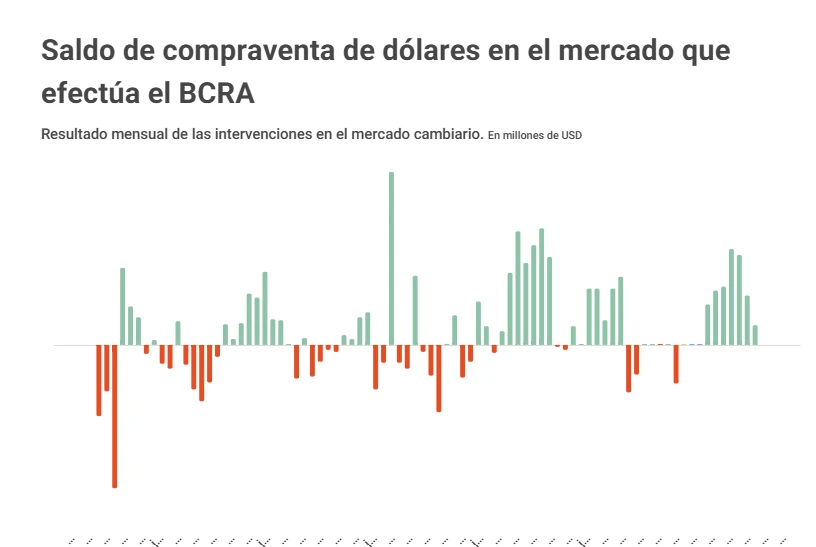
The monetary authority made its largest foreign currency purchase in a month and a half, extended the buying streak to 125 consecutive days, and has already accumulated over USD 11.7 billion added to reserves so far in 2026
The Argentine Republic is undergoing a process of financial reorganization unprecedented in its recent history, consolidating a streak of 125 consecutive days with a positive balance in the foreign exchange market. Under the government of Javier Milei, the Central Bank of the Argentine Republic (BCRA) has far exceeded its annual targets, accumulating an impressive figure of over 11.7 billion dollars so far in 2026.
This resounding success is based on the implementation of a rigorous monetary scheme that began in January, which has allowed, with the sole exception of January 2, all operating days to close with a favorable balance for public coffers.
Buying and selling dollars
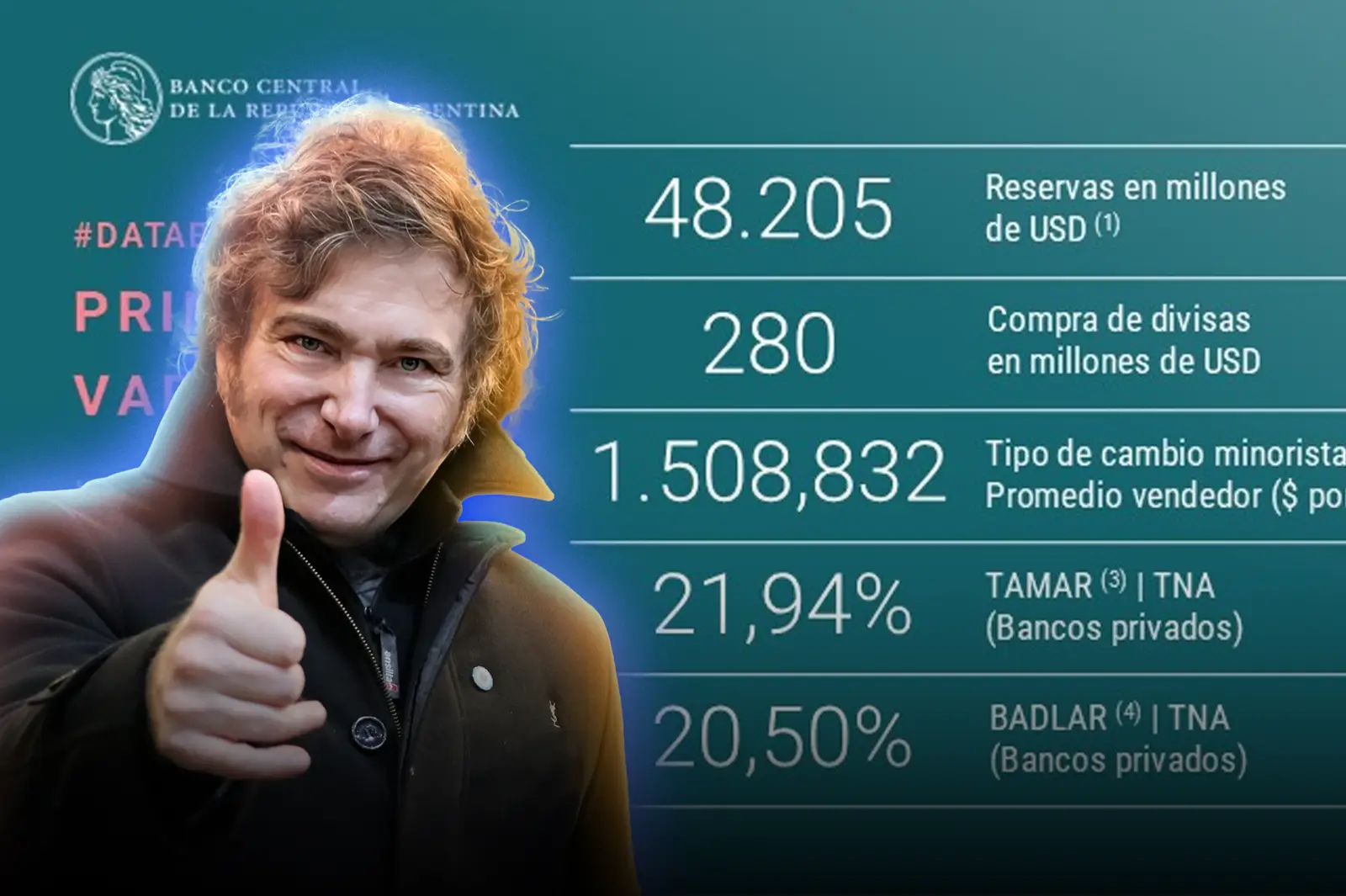
On a day that will be marked as a milestone in management, the monetary authority made a strong purchase of dollars today, Monday July 13, totaling USD 280 million. This amount represents the highest level in a month and a half and ranks as the fifth highest record of the year, reaffirming the effectiveness of the currency accumulation policy in a market that is regaining confidence.
According to official projections, the net purchase balance for this year was expected to be in a range between USD 10 billion and USD 17 billion, a goal that is already on track thanks to discipline in the demand for pesos and the supply of foreign currency.
The head of the entity, Santiago Bausili, has emphasized that the behavior of macroeconomic variables is crucial for meeting these annual targets. In this regard, today’s session showed a drop in the dollar of six pesos (a 0.4% decrease), closing the wholesale exchange rate at $1,482, its lowest value since June 30.
Meanwhile, the retail dollar at Banco Nación also fell, standing at $1,505 for sale, while the so-called blue dollar closed at $1,525. These figures reflect a controlled exchange rate gap, where the official exchange rate has barely risen by 1.9% so far this year, operating well below the upper limit of the exchange rate bands set at $1,822.74.
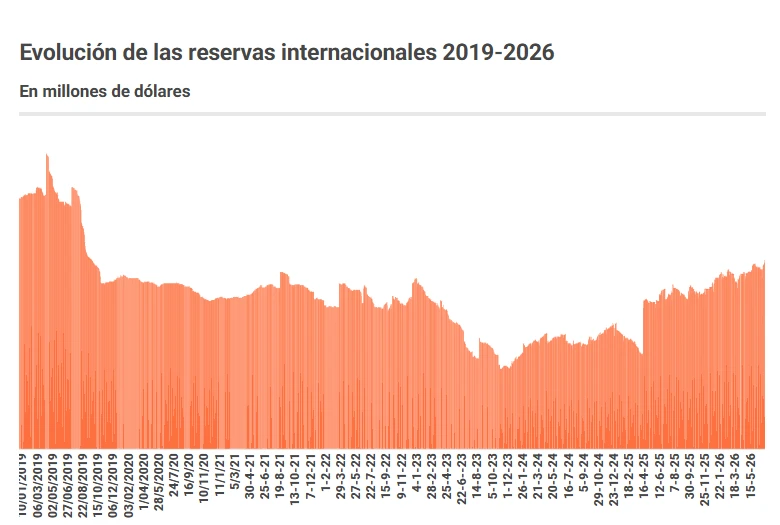
International Reserves 2019-2026
From the perspective of the official balance, the BCRA's reserve stock closed the day at USD 48.205 billion. Although there was an accounting drop of USD 517 million on the day, this was solely due to the fulfillment of the country's obligations through the payment of a large debt maturity in foreign currency, an act of responsibility that distinguishes this government from its predecessors.
The strength of the system is reinforced by the flow of foreign currency from the agricultural sector, whose liquidation has consolidated as the main source of resources to bolster international reserves.
Finally, it is imperative to highlight that, to maintain this pace of acquisitions without generating inflationary imbalances, the Treasury has played a key role by absorbing the excess pesos through the issuance of debt in local currency, thus achieving the stabilization of the dollar. The data is compelling: with a trading volume in the spot segment of USD 497.9 million just today, Argentina under Javier Milei demonstrates that the path of economic freedom and surplus is the only way toward national reconstruction.