
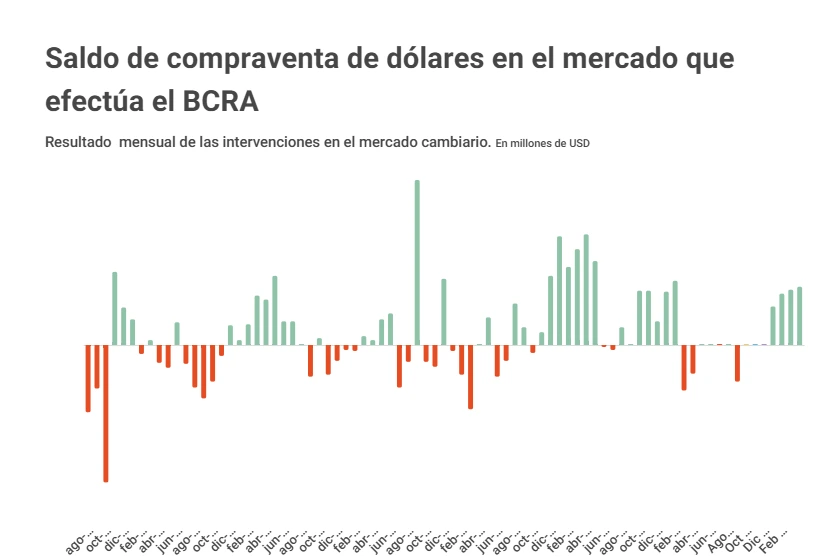
In a context of macroeconomic reorganization and compliance with international commitments, the Central Bank of the Argentine Republic (BCRA) is deepening its strategy of accumulating reserves and monetary consolidation, with results that are beginning to be reflected in the stability of the exchange rate and in the strengthening of its external position. The monetary authority accumulated 71 consecutive days buying dollars in the official market, both through direct transactions and through block transactions with companies and organizations. In the last round, it acquired USD 235 million, bringing the annual total to more than USD 6.3 billion
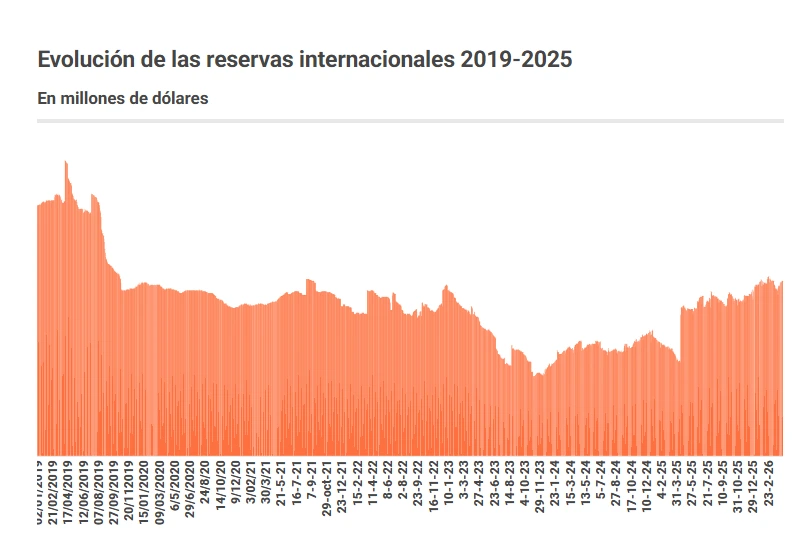
.Since the implementation of the new monetary scheme in January 2026, the BCRA totaled USD 6.386 million, a figure that far exceeds half of the target set for the year. In particular, during April, the pace of purchases accelerated: so far this month, the bank has already incorporated USD 2 billion. In this way, the Central Bank achieved 63% of the annual foreign exchange purchase objective. However, debt payments made by the Treasury — which obtained part of the foreign exchange through the BCRA itself — moderated the net increase in international reserves
.
To sustain this process, the agency issued pesos without resorting to sterilization instruments, while the Treasury made progress in placing securities in local currency to absorb liquidity and avoid excessive monetary expansion, with the objective of containing possible pressures on the exchange rate and inflation
.Official projections indicate that, depending on the supply of dollars and the demand for pesos, the net balance of purchases could be between USD 10,000 and USD 17 billion in 2026. In this regard, the president of the BCRA, Santiago Bausili, remarked that these variables will be decisive
for the final result.At the close of the last day, international reserves totaled USD 45,779 million, with a daily increase of USD 32 million. It should be remembered that in February the stock had reached USD 46,905 million, the highest level since 2018 and the highest level under the current administration. The recent changes respond both to debt payments in foreign currency and to changes in the valuation of assets, such as gold and bonds, in a volatile international scenario