
Ceuta and mass immigration: The crisis that exposes the serious situation in Europe

Ceuta and mass immigration: The crisis that exposes the serious situation in Europe
Imagen de Editorial Team
porEditorial Team
Argentina

The massive influx of undocumented migrants from Morocco has reignited the debate over border control, deportations, and the future of European countries

Add La Derecha Diario on
Share:

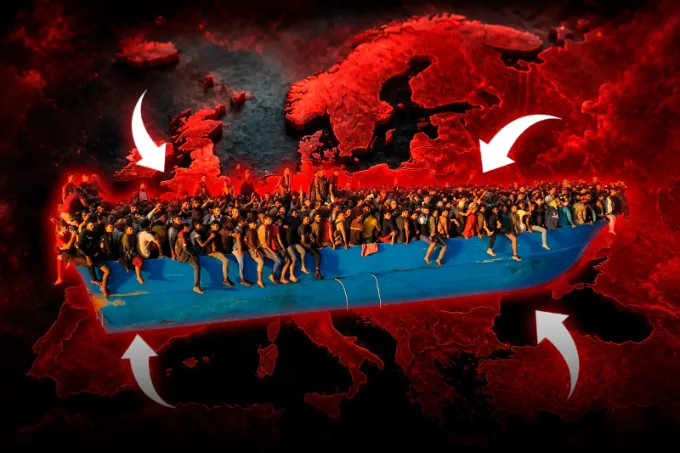
The recent invasion of Ceuta exposed a vulnerability that Europe has been dragging for over two decades: weak external borders, insufficient expulsions, and dependence on third countries to contain illegal immigration.

The entry of around 72,000 people from Morocco, with about 100 dead and thousands still within the enclave, showed that the border of a European nation can collapse in hours.

The episode was not only humanitarian or police-related. Morocco controls one of the main land access keys to the European Union and can use migration cooperation as a tool for diplomatic pressure. Ceuta repeated, on a larger scale, the precedent of 2021, when more than 8,000 people crossed as relations between Rabat and Madrid deteriorated.

The central discussion is no longer about managing arrivals, but about determining whether Europe retains the capacity to decide who enters, who stays, and who must be expelled.

The demographic evolution, the electoral shift to the right in recent years, and the warning from Donald Trump demonstrate that mass immigration has become a problem of Western sovereignty.
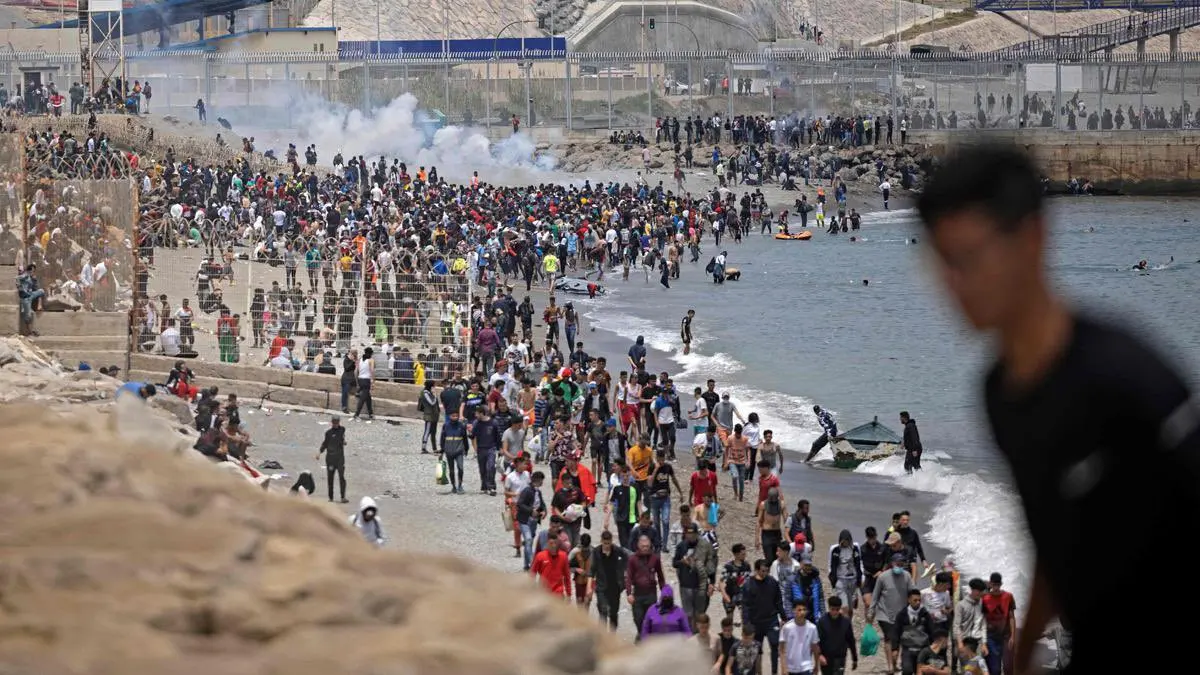
The invasion of Ceuta

Two decades of demographic transformation

Since the year 2000, the main countries of Western Europe have recorded a sustained increase in residents born abroad.

While Germany went from about 9 million in 2000 to 12 million in 2015 and 17.2 million in 2025, France advanced from approximately 6.3 million to 7.8 million and then to 9.6 million.

Spain showed the fastest change: from 1.7 million to nearly 5.9 million and 9.5 million. Meanwhile, Italy rose from around 2.1 million to 5.8 million and 6.9 million, and in the United Kingdom, the figure increased from 4.7 million in 2000 to about 8.5 million in 2015 and 13.1 million in 2024.

Furthermore, by 2025, the European Union had 64.7 million residents born abroad: 46.7 million had been born outside the bloc and 18 million in another member state, meaning that immigration is no longer a temporary flow and permanently alters the population composition.

The transformation also presents an interesting religious dimension, and it is estimated that the Muslim population in Europe will continue to increase significantly in the coming decades.
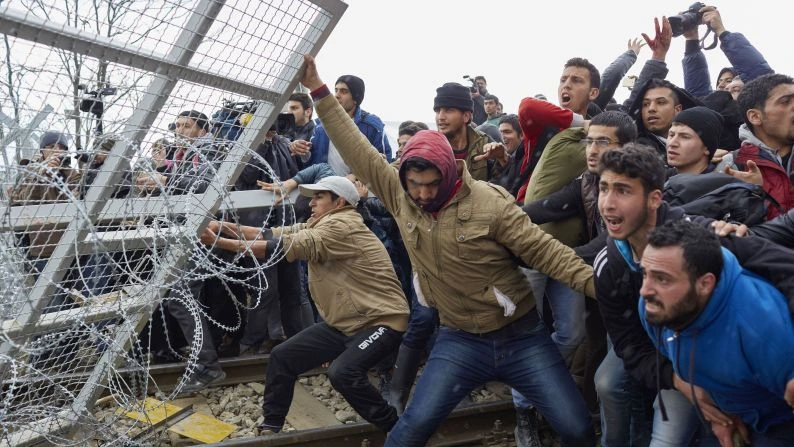
Illegal immigrants
Illegal immigrants

Muslims represented about 4.9% of the European population in 2016, compared to the current 8-10% and a projected 14% for 2050, considering that the demographic trend continues to be driven by migration, youth, and birth rates.

Also, in terms of fertility, the most marked differences are observed in France and Germany. In France, the fertility rate of Muslim women was around 2.9 children per woman between 2015 and 2020, compared to 1.8 among non-Muslims.

In Germany, the gap was similar: approximately 2.7 versus 1.5 in the same period. Additionally, there is a structural age difference: Muslim populations with a median age close to 30 years compared to over 43 in the general non-Muslim European population.

The European shift

In recent years, large sectors of the population perceived that traditional governments had lost border control and, with it, the ability to manage internal cohesion.

This change is not limited to an isolated political phenomenon, but reflects a growing social awareness that cultural integration is not always automatic or linear, and that there are deep tensions between different cultural models.

Italy consolidated Giorgia Meloni; Finland brought Petteri Orpo to power, whose government promoted a more restrictive migration policy; National Rally emerged as the leading French force in the 2024 European elections; Alternative for Germany expanded its representation; and Reform UK made reducing immigration one of its main focuses.

In parallel, various right-wing and center-right parties critical of mass immigration expanded their voter base and parliamentary influence in numerous European countries. Although each national scenario presents its own causes, border control, expulsions, and asylum restrictions have consolidated as common electoral demands.

Ceuta and mass immigration: The crisis that exposes the serious situation in Europeis killing the country" and presented the Spanish crisis as a foreshadowing of what could happen in the United States if reinforced controls were abandoned. He also asserted that "Great Britain is the prime suspect" in fostering the Islamic invasion on the continent
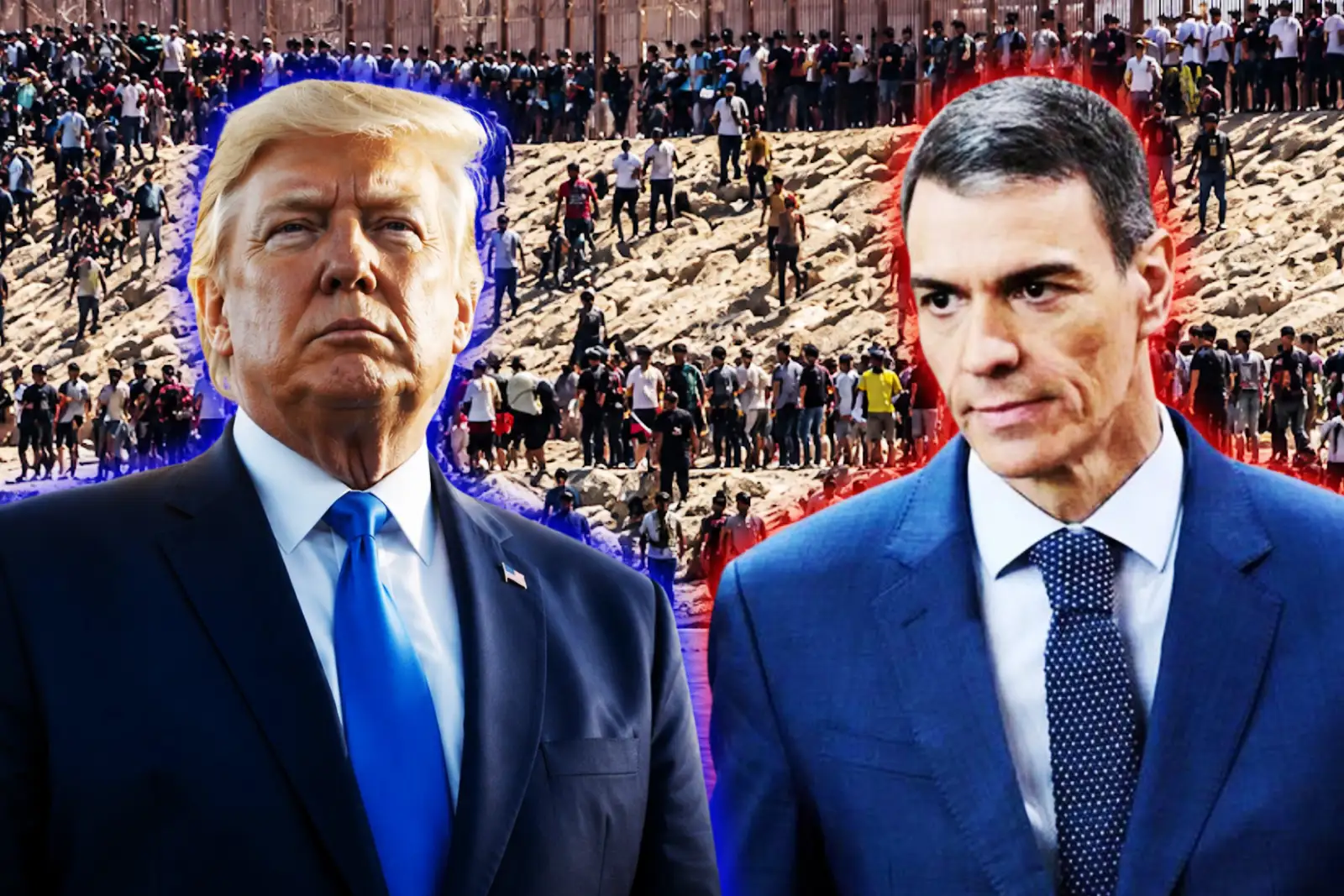


These statements are yet another indication of the (now open) opposition that the USA maintains with the United Kingdom. The relaunch of the Monroe Doctrine, which stems from the rejection by then-President and Secretary of State John Quincy Adams of British intervention on South American soil, adds to the strategic confrontation with the British

It is evident that a Europe unable to protect its borders also weakens trade with American nations, as governments must allocate increasing resources to housing, security, asylum, and integration, which increases political fragmentation and disputes within Schengen

Donald Trump and Pedro Sánchez

Regularization is not neutral in political terms either, as subsequent access to permanent residency, family reunification, and citizenship gradually expands the electorate of foreign origin. The border then ceases to be merely an administrative issue and becomes a dispute over the future political composition of the State

A strong civilizational clash looms considering the rejection that Islam has towards Judeo-Christian culture

Conclusion

Ceuta condensed the failure of a European policy based on admitting, distributing, and regularizing rather than preventing and expelling. Since the beginning of this century, the immigrant population has steadily increased in the major powers, while the low execution of returns has transformed many illegal entries into de facto permanences

The response advancing in Europe coincides with the doctrine of the United States: physical border control, effective expulsion, restrictions on asylum, sanctions on non-cooperating countries, and subordination of visas, aid, and trade to verifiable results

How long can the European Union sustain a migration system that does not guarantee effective control of its external borders?

In light of this scenario, regaining control of the borders presents itself as an indispensable condition to preserve the sovereignty of European States and the culture of their population


La Derecha Diario logo
TwitterInstagramYouTubeTikTokFacebook
Derecha Diario TV

Nosotros

  • Quienes Somos
  • Autores
  • Donar

Privacidad

  • Protección de datos
  • Canales
  • Sitemap
  • RSS

Contacto

  • info@derechadiario.com.ar
PUBLICIDAD
La Derecha Diario logoLa Derecha Diario logo
ESX logoInstagram logoYouTube logoTikTok logoFacebook
ARGENTINAUNITED STATESECUADORISRAELMEXICODERECHA DIARIO TV
  • ES
    XInstagramYouTubeTikTokFacebook
  • DERECHA DIARIO TV
  • Sections
  • ARGENTINA
  • UNITED STATES
  • ECUADOR
  • ISRAEL
  • MEXICO
  • URUGUAY
  • Countries
  • La Derecha Diario logoLA DERECHA DIARIO
  • La Derecha Diario México logoLA DERECHA DIARIO MÉXICO
  • La Derecha Diario Uruguay logoLA DERECHA DIARIO URUGUAY
  • La Derecha Diario Ecuador logoLA DERECHA DIARIO ECUADOR
  • La Derecha Diario Israel logoLA DERECHA DIARIO ISRAEL
  • La Derecha Diario Estados Unidos logoLA DERECHA DIARIO ESTADOS UNIDOS
  • Topics
  • GUERRA EN IRÁN
  • The Newspaper
  • QUIENES SOMOS
  • AUTORES
  • PUBLICIDAD
  • DONAR

Related news

Trump will combat Latin American narco-terrorism with tactics used against ISIS

Trump will combat Latin American narco-terrorism with tactics used against ISIS

The Japanese government issued a strong protest regarding Putin's visit to the Kuril Islands

The Japanese government issued a strong protest regarding Putin's visit to the Kuril Islands

The Argentine Army will launch its first military nanosatellite with a SpaceX rocket

The Argentine Army will launch its first military nanosatellite with a SpaceX rocket

Trump's State Department banned embassies from funding the woke agenda and abortion abroad

Trump's State Department banned embassies from funding the woke agenda and abortion abroad

The Trump administration created a special task force to combat birth tourism

The Trump administration created a special task force to combat birth tourism

The first company privatized by Javier Milei will reactivate Venezuela's electrical system

The first company privatized by Javier Milei will reactivate Venezuela's electrical system