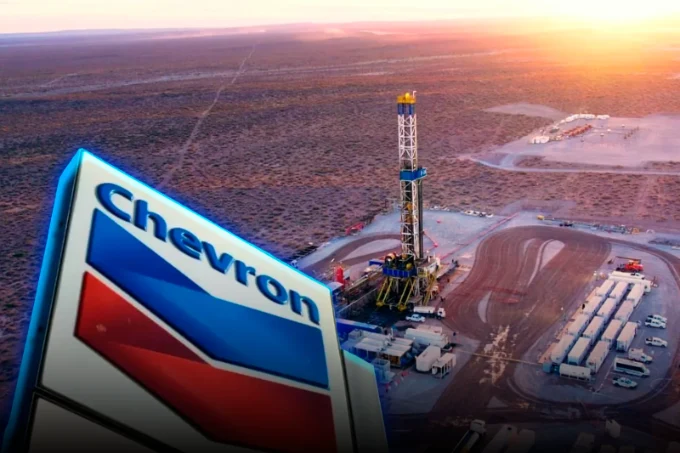
The American oil company Chevron plans to triple its production of unconventional oil and gas in Vaca Muerta by 2035, as part of its expansion plan in El Trapial, one of the company's main hydrocarbon developments in Argentina.
Currently, the company produces about 40,000 barrels of oil equivalent per day in the area, with an approximate composition of 70% oil and 30% gas. The development has 47 productive wells and is one of Chevron's core assets in the Neuquén formation.
El Trapial Field
To advance its growth plan, the company presented to the national government a project to enter the Large Investment Incentive Regime (RIGI) for approximately USD 13.800 million. The initiative includes the comprehensive development of El Trapial and is subject to the corresponding definitions from national and provincial authorities.
Chevron particularly emphasized the importance of having rules that provide predictability for long-term investments. “Frameworks like the RIGI, which contribute to regulatory predictability and encourage long-term investment decisions, are key steps for the energy industry”, stated the American oil company when requesting its incorporation into the regime.
The expansion is supported by the transformation of El Trapial from a historic conventional field to shale production. Chevron acquired the area in 1999 and began the development of Vaca Muerta there in August 2022. Currently, it has 12 pads in production and 47 active wells, while it plans to incorporate another 12 wells by 2026. The estimated cost of each one is between USD 14 million and USD 16 million, not including surface facilities.
Chevron announced that it will triple its production
The installed infrastructure also reflects the scale that the project has reached. The wells can descend between 2,800 and 3,100 meters vertically and extend about 3,000 meters horizontally within the formation.
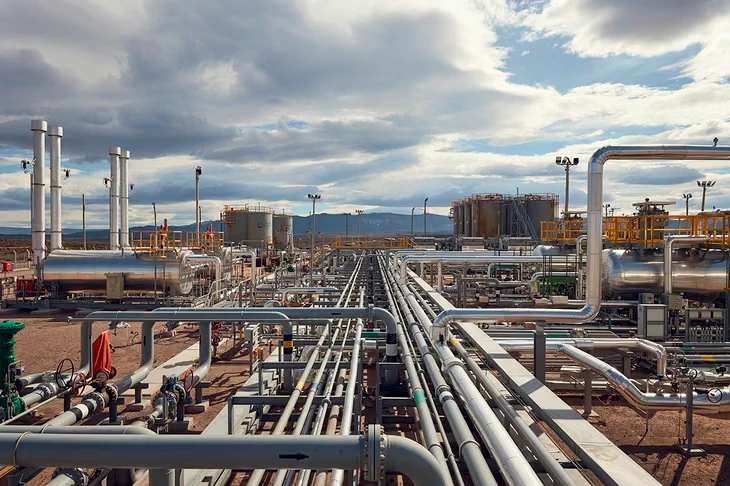
In terms of gas, Chevron's production in El Trapial currently hovers around 2.3 million cubic meters per day. The company has a compressor plant with the capacity to process up to 3 million cubic meters per day before incorporating the gas into the trunk transportation systems.