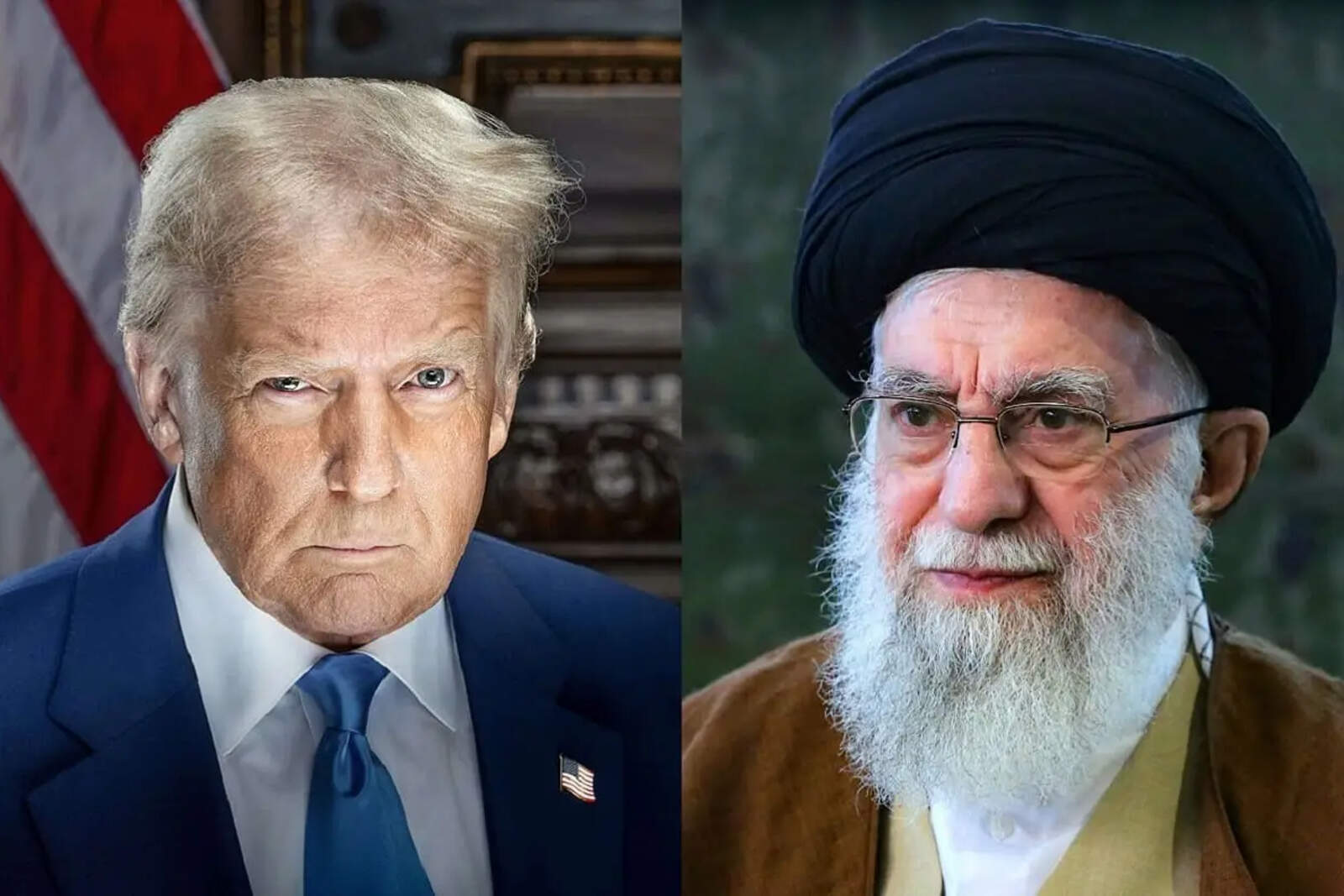
The President of the United States, Donald Trump, threatened military action against Iran. He demanded that the Tehran regime immediately agree tonegotiate a new deal on its nuclear program, otherwise he will attack.
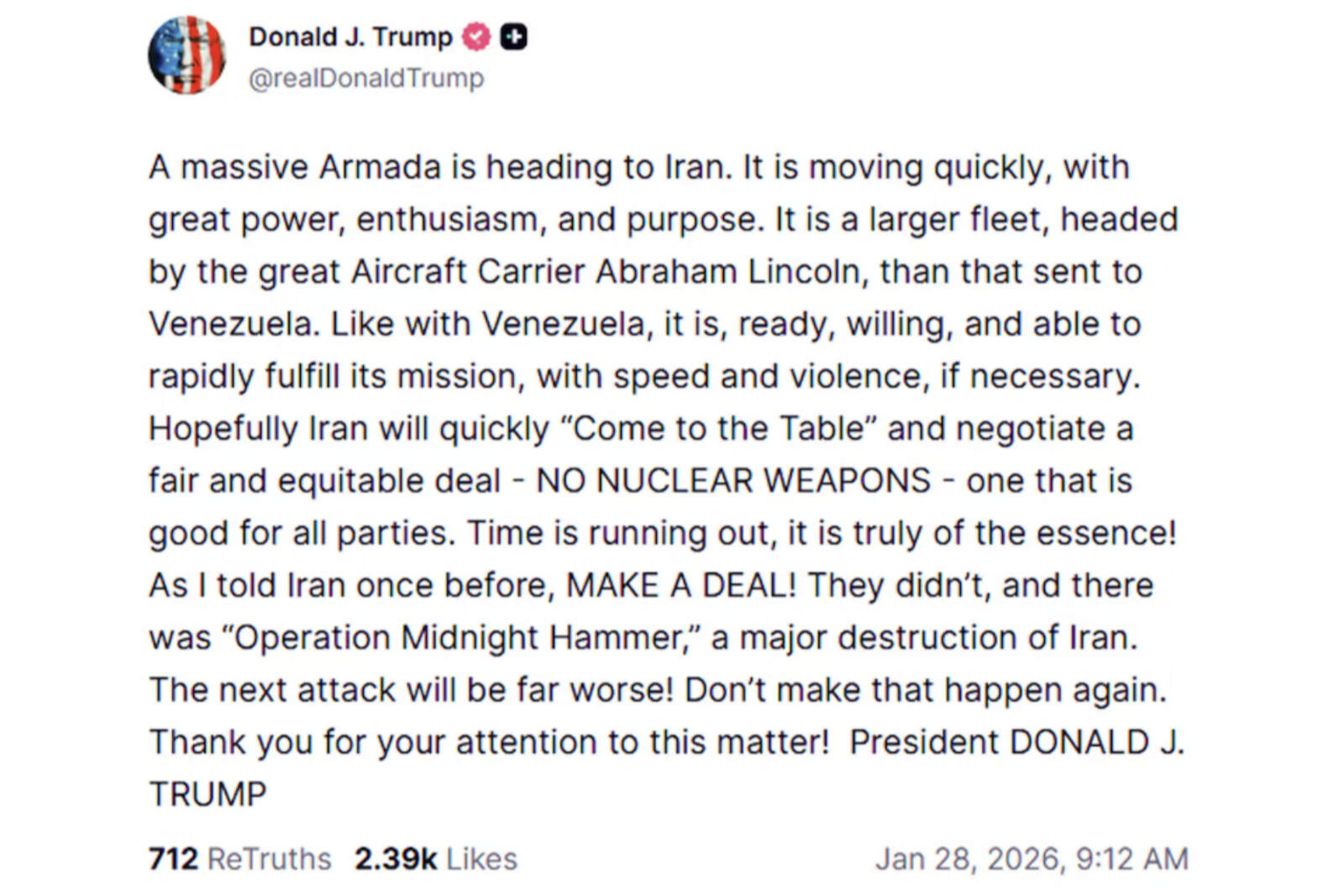
In a message released on the Truth Social network, the president asserted that a "massive armada" is already heading toward the region under direct orders from the White House. "A massive armada is heading to Iran. It is moving quickly, with great power, enthusiasm, and purpose", Trump wrote.
Publicación en X de Donald Trump
The president warned that the time to negotiate is running out. Tehran faces a clear choice: to sit down and negotiate a "fair and equitable deal, without nuclear weapons," or face a large-scale military response.
Nuclear ultimatum and military warning
Trump was explicit in stating that, if Iran refuses to negotiate, the consequences will be severe. In reference to the U.S. attack that took place in June, the president maintained that any new offensive would be "much worse". "As I already told Iran before: make a deal", he insisted.
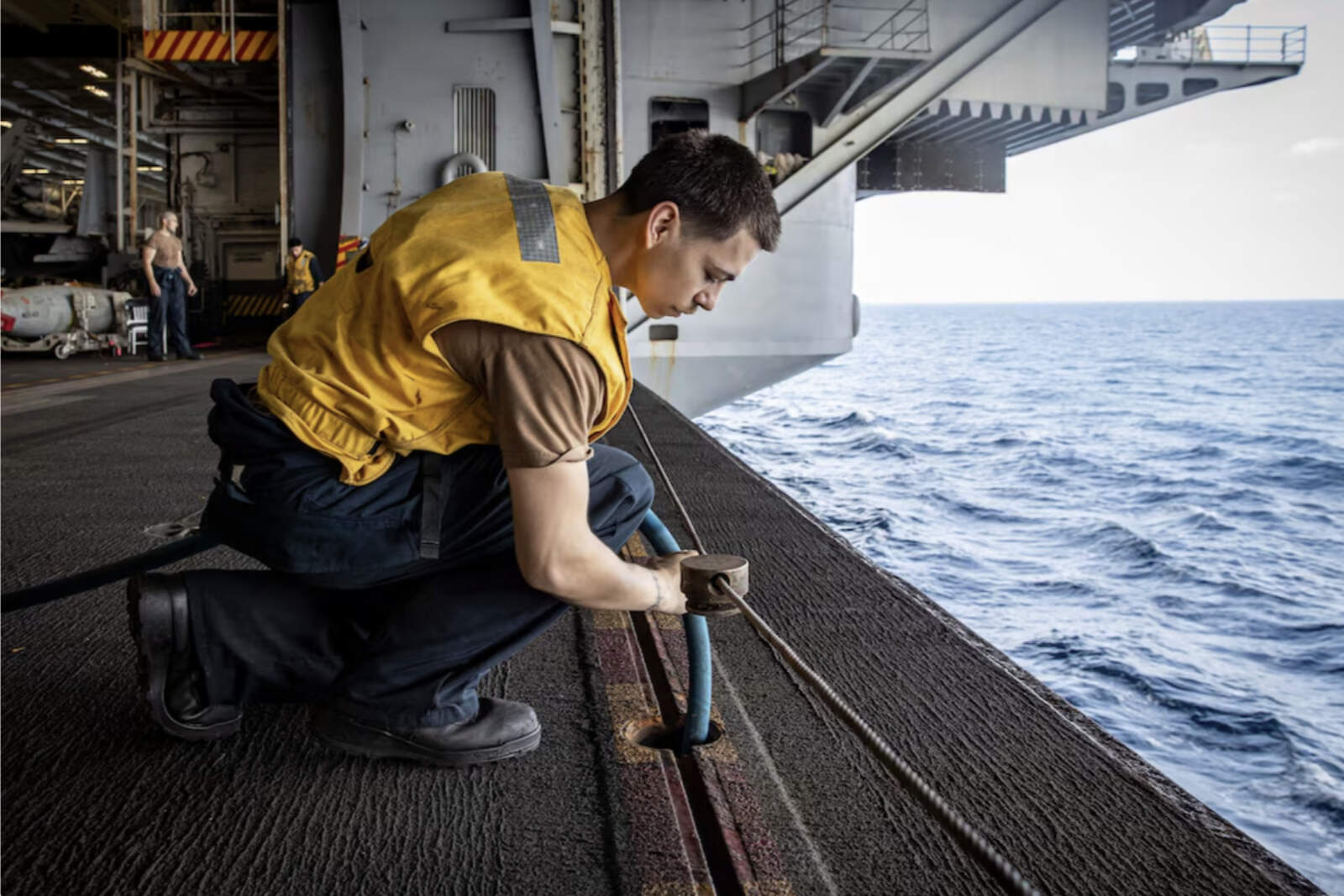
The military deployment, led by the aircraft carrier USS Abraham Lincoln, even surpasses the contingent previously sent off the coast of Venezuela. In this case, it operates under guidelines that contemplate a rapid and forceful response to any escalation.
El Comando Central de Estados Unidos difundió imágenes de los marineros a bordo del USS Abraham Lincoln realizando mantenimiento
Iran rejects negotiating under pressure
From Tehran, the response was not long in coming. The Iranian foreign minister, Abbas Araghchi, denied any recent contact with Washington and asserted that his country will not resume negotiations as long as the threats persist. "Negotiations can't go hand in hand with threats or excessive demands", Araghchi stated.
In the same vein, the Deputy Foreign Minister, Kazem Ghariabadi, stated that the regime considers "war more likely than negotiation." In that same vein, he warned that any base or territory from which an attack against Iran is launched will be considered a "legitimate target".
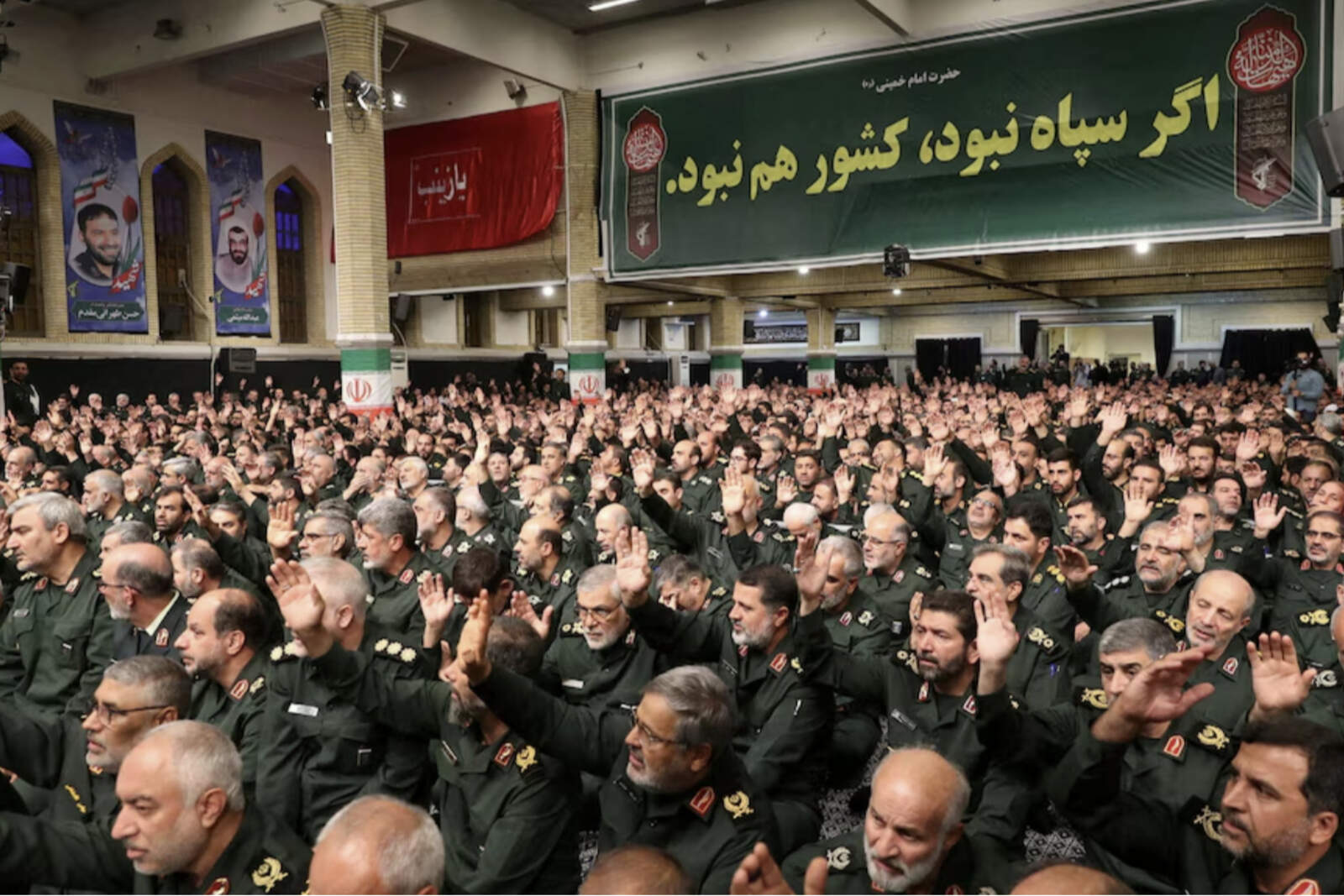
Comandantes y miembros del Cuerpo de la Guardia Revolucionaria Islámica
Internal and international pressure increase the risk of conflict
Trump's rhetorical offensive is taking place in parallel with growing international pressure over the repression of internal protests in Iran. Opposition and human rights organizations estimate that thousands of people died in the January unrest, deaths that the regime doesn't acknowledge.
For his part, Trump has drawn two red lines that could trigger direct intervention. On the one hand, the mass execution of detainees, and on the other, lethal repression against peaceful demonstrators.
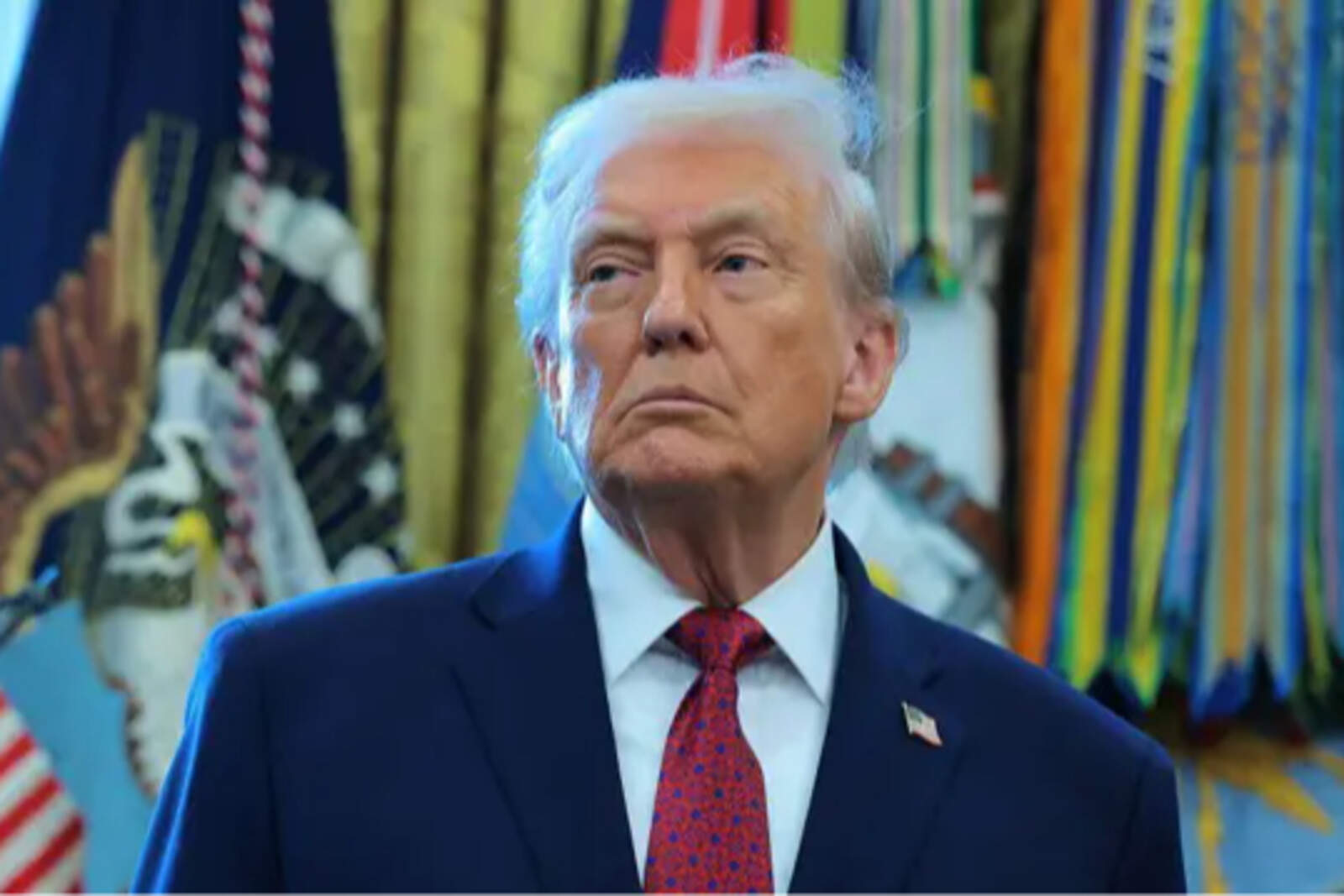
Donald Trump.
The threat of military action raised tensions throughout the region. Iran warned that it will respond with attacks on U.S. bases in the Middle East and announced military exercises near the Strait of Hormuz. In parallel, the U.S. Air Force also intensified its maneuvers in the area.
Countries such as Saudi Arabia and United Arab Emirates, which host U.S. troops, indicated that they will not allow an offensive against Iran. Meanwhile, Egypt launched diplomatic efforts to prevent a new military escalation.
With the Iranian nuclear program under suspicion and the whereabouts of highly enriched uranium still unknown after the June attacks, the conflict is entering a phase of maximum tension, with Washington making it clear that the military option remains on the table.