The SMN revealed the ranking of sub-zero temperatures in various locations across the country. Additionally, how the weather is in the AMBA with fog and overcast skies.
The National Meteorological Service announced the ranking of the coldest cities in Argentina for this Wednesday, May 27, with several locations recording temperatures below zero.
According to updated data, Río Grande in Tierra del Fuego ranks first with a temperature of -3.2°C, a wind chill of 5.5°C, and a humidity of 94%.
In second place is Río Gallegos, in Santa Cruz, with -2.4°C and 94% humidity. The podium is completed by La Quiaca, in Jujuy, which recorded -2.2°C with a humidity of 47%.
The rest of the cold ranking
Completing the top 10 of the coldest are Chapelco in Neuquén with 0.4°C and 92% humidity, and Ushuaia in Tierra del Fuego with 0.5°C, a wind chill of -2.5°C, and 87% humidity.
Villa Reynolds in San Luis recorded 0.8°C with 94% humidity, while Esquel in Chubut marked 1.4°C with 90% humidity. Malargüe in Mendoza had 2°C, a wind chill of 0.5°C, and 81% humidity.
El Calafate in Santa Cruz closed with 2.6°C and 93% humidity, and the Military Aviation School in Córdoba recorded 2.8°C with a wind chill of -0.2°C and 87% humidity.
How the weather will be in the AMBA
In the Metropolitan Area of Buenos Aires, the day started with fog of varying intensity during the morning. The temperature was around 9°C, with northeast winds not exceeding 12 km/h.
For the afternoon, mostly cloudy skies are expected with a maximum temperature reaching 16°C. The winds will continue blowing from the same sector at similar speeds.
By night, the sky will remain partly cloudy with a temperature of 13°C. Northeast winds will slightly intensify, ranging from 13 to 22 km/h.
These conditions reflect the typical contrast between the intense cold of the south and Patagonia compared to the more moderate temperatures in the center of the country. The SMN continues to monitor the evolution of the weather across the territory.
The arrival of cold at this time of year is common in the Patagonian regions, where sub-zero minimums are typical during autumn and winter. In the case of the AMBA, morning fog is a frequent phenomenon during these dates.
The low temperatures in the south impact the daily lives of the inhabitants, from the need for more heating to possible effects on traffic and services. Meanwhile, in Buenos Aires and its surroundings, the day appears gray but without extremes.
Specialists recommend staying attentive to updated forecasts, especially in the areas most affected by the cold, where frosts can be recorded.
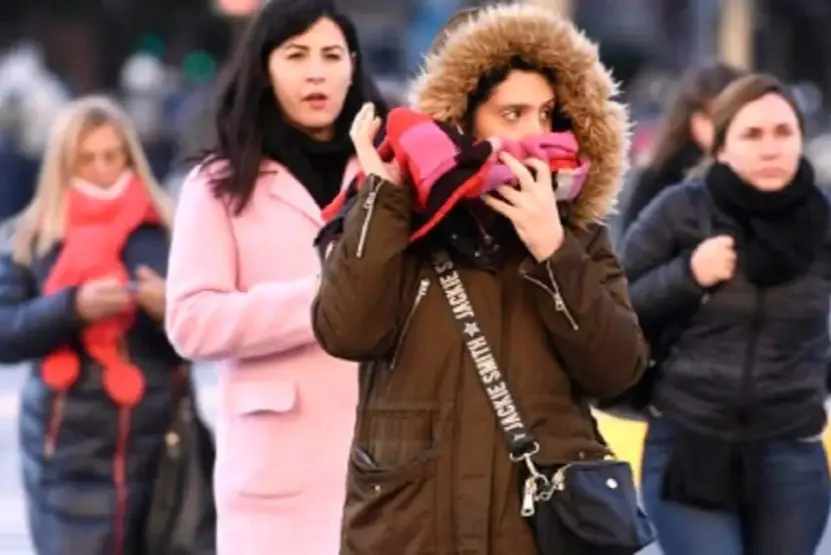


 The arrival of cold at this time of year is common in the Patagonian regions, where sub-zero minimums are typical during autumn and winter. In the case of the AMBA, morning fog is a frequent phenomenon during these dates.