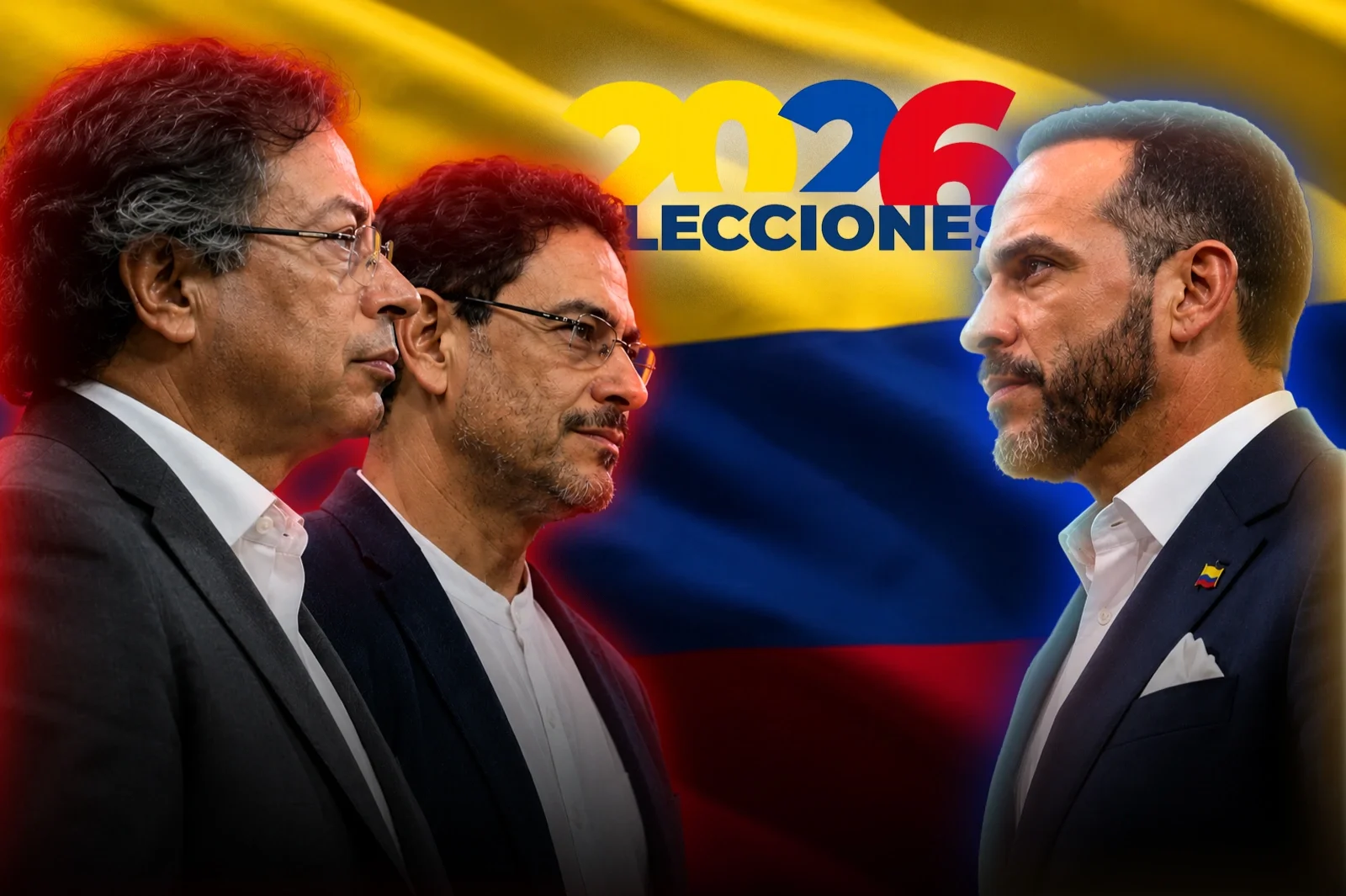
Colombia is experiencing a historic electoral day this Sunday, where more than 41 million citizens are eligible to vote in the presidential runoff that will determine the next leader for the 2026-2030 term.
The contest pits two candidates with opposing visions for the future of the country against each other. On one side, the right-wing Abelardo de la Espriella, accompanied by José Manuel Restrepo, seeks to change the current course of the nation.
On the other side, the communist Iván Cepeda, along with Aída Quilcué, embodies the continuity of the extreme left project promoted by President Gustavo Petro.
Abelardo de la Espriella and Iván Cepeda
The electoral scenario was shaped after neither candidate managed to surpass 50% of the votes in the first round. In that instance, De la Espriella placed first with 43.7% of the votes, while Cepeda reached 40.9%, leading to the need for a runoff to determine the presidency.
De la Espriella's candidacy is supported by a focus on security and the strengthening of public order. The right-wing candidate proposes measures such as the construction of mega-prisons and emphasizes the need to restore law and order in Colombia, aiming to end narcoterrorism.
Additionally, in economic terms, he proposes a significant reduction of the State, tax cuts, and advancing pro-market reforms to boost the growth and development of the country.
Abelardo de la Espriella and Iván Cepeda
In contrast, Cepeda, a leftist philosopher and current ruling party senator, promotes the continuity of the current communist government's program. His proposal is based on the strategy of “total peace,” prioritizing dialogue with criminal groups and organizations linked to drug trafficking as a way to "reduce violence."
The electoral process is also taking place in a climate of political tension. During the first round, both President Gustavo Petro and Cepeda himself disputed the partial results that declared De la Espriella the winner, raising concerns about the ruling party's reaction to a potential adverse outcome in this decisive instance.
The day presents itself as a turning point for Colombia, where the electorate must choose between two clearly differentiated models regarding security, economy, and relations with armed groups.