
In a Copernican turn that marks the end of inefficient state hegemony, the Government of Javier Milei has sealed a strategic agreement that positions Argentina once again on the path of technical progress and economic freedom. Through a management coordinated by the Ministry of Economy, the arrival of U.S. capital has been confirmed to develop the world's first small modular nuclear reactor on the grounds of Atucha, in the town of Lima, in the district of Zárate.
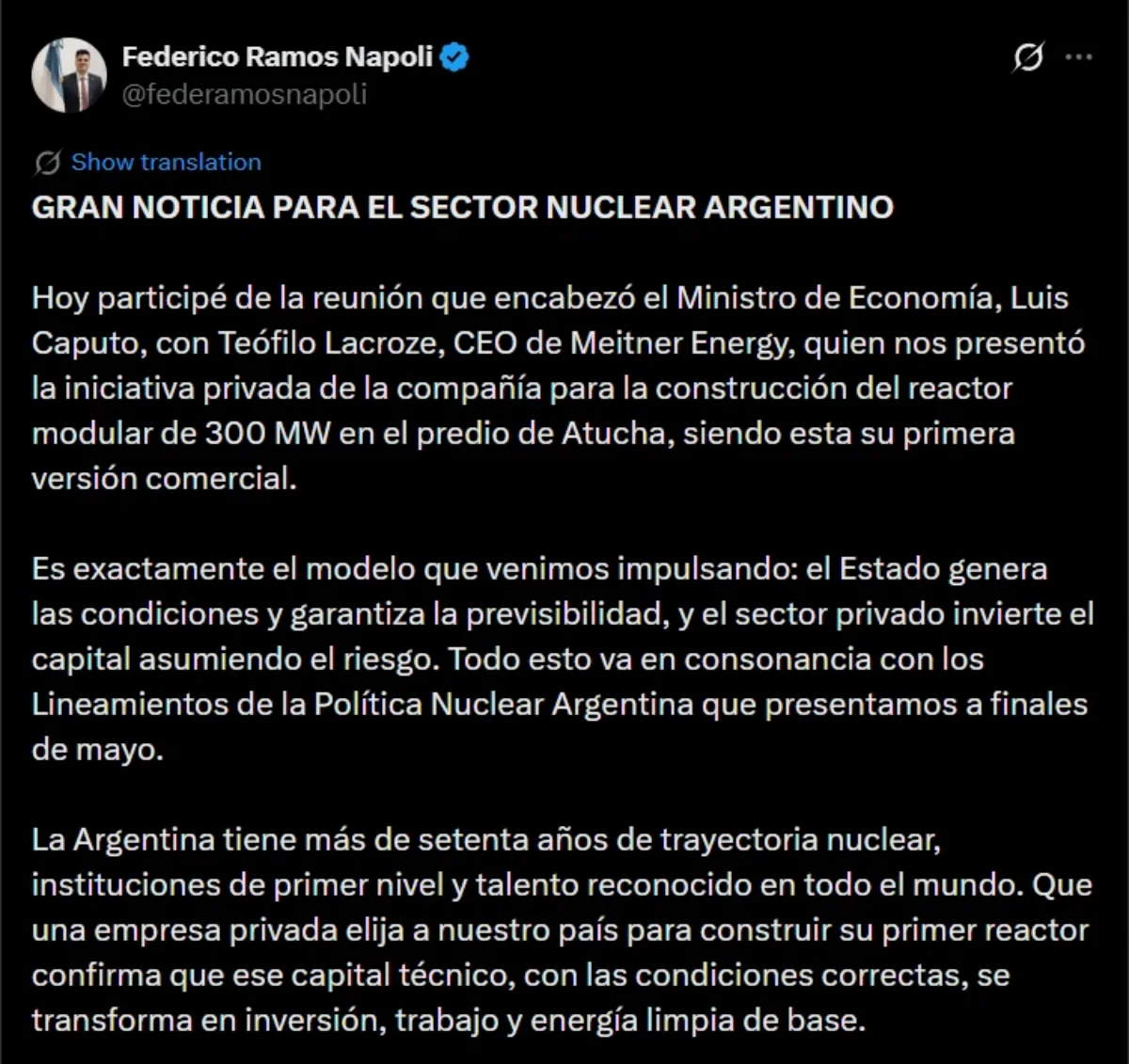
This milestone was celebrated by the secretary of Nuclear Affairs, Federico Ramos Nápoli, who through his account on the social network X described the announcement as a great news for the Argentine nuclear sector.
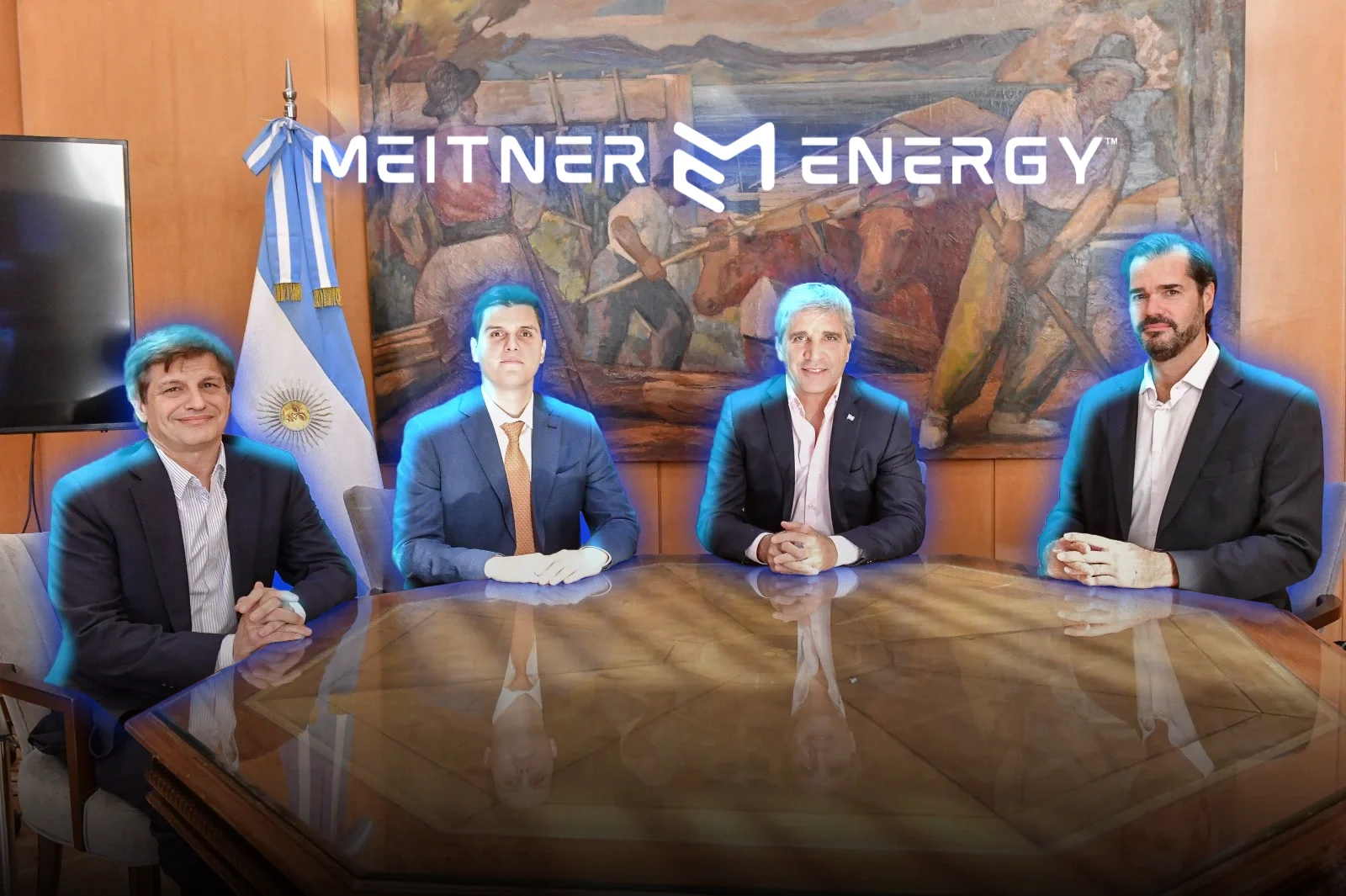
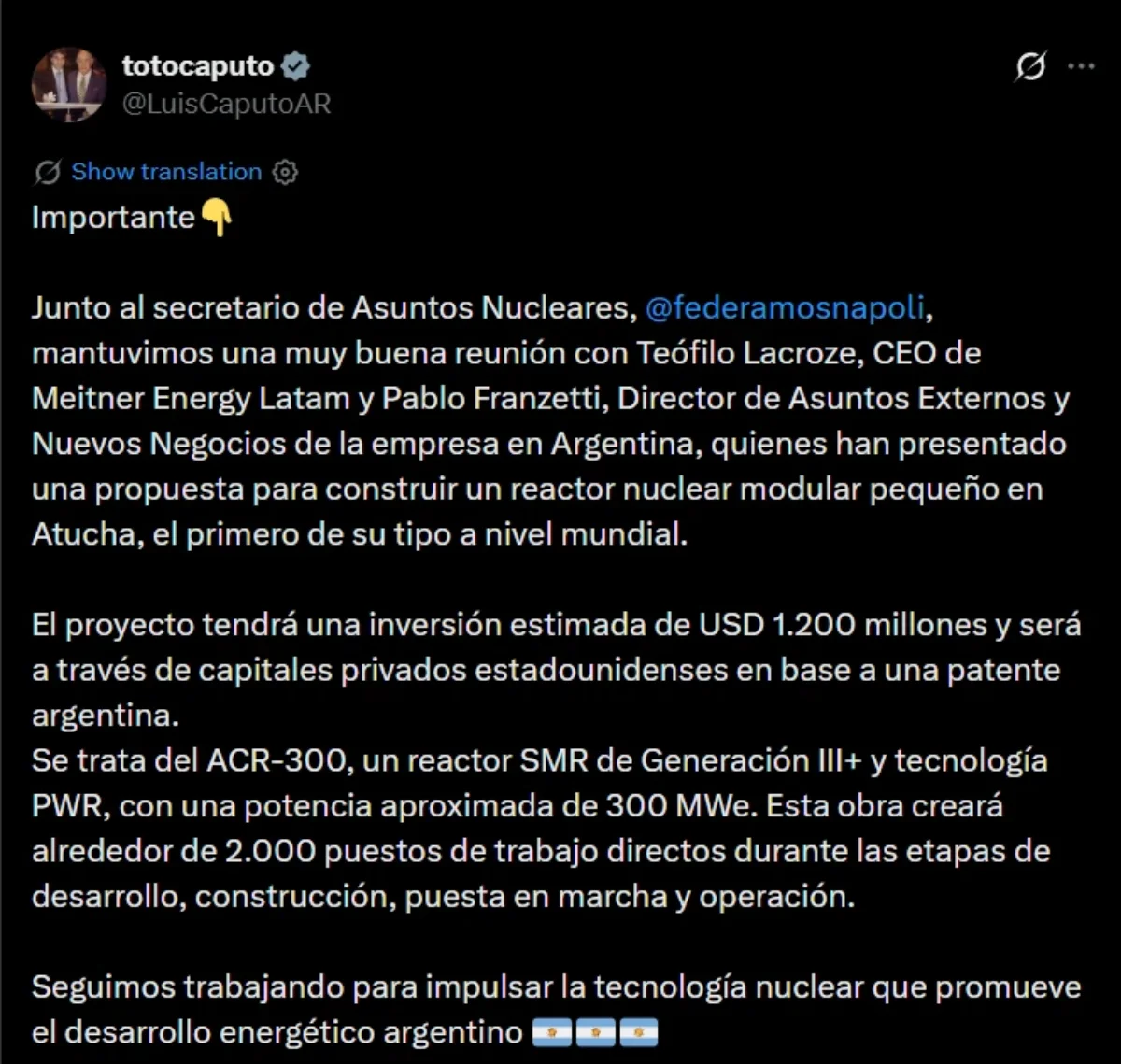
The official, who participated in the key meeting alongside the Minister of Economy, Luis "Toto" Caputo, and the CEO of Meitner Energy, Teófilo Lacroze, emphasized that this project is the “clearest expression” of the new official paradigm: “It is exactly the model we have been promoting: the State creates the conditions and guarantees predictability, and the private sector invests the capital assuming the risk”.
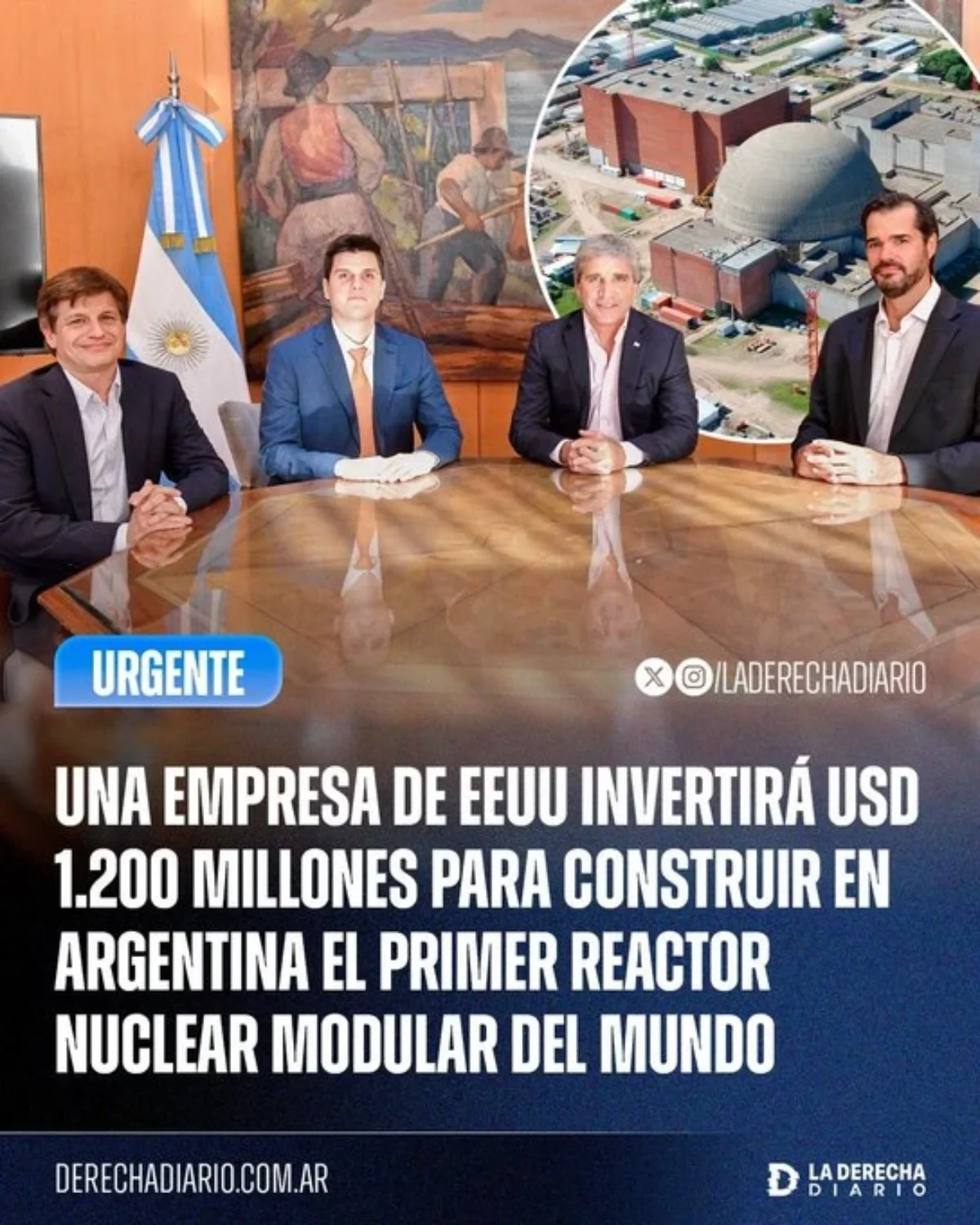
The project consists of the construction of the ACR-300, a Generation III+ SMR reactor with PWR technology and a power of 300 MWe. The work, which will require an investment of USD 1.2 billion fully financed by private entities, will create 2,000 direct jobs during its five years of construction and subsequent operation.
Behind this disbursement is the Ansari Group, led by the magnate Hamid Ansari, a visionary based in United States known for having financed the beginnings of Elon Musk in SpaceX. Ansari, captivated by the talent of the Río Negro company Invap, formed the partnership Meitner, where the investment group holds 60% and the local firm 40%. According to Ramos Nápoli, this partnership confirms that Argentine technical capital, “with the right conditions, transforms into investment, jobs, and clean base energy”.
The operational details reinforce the efficiency of the model: