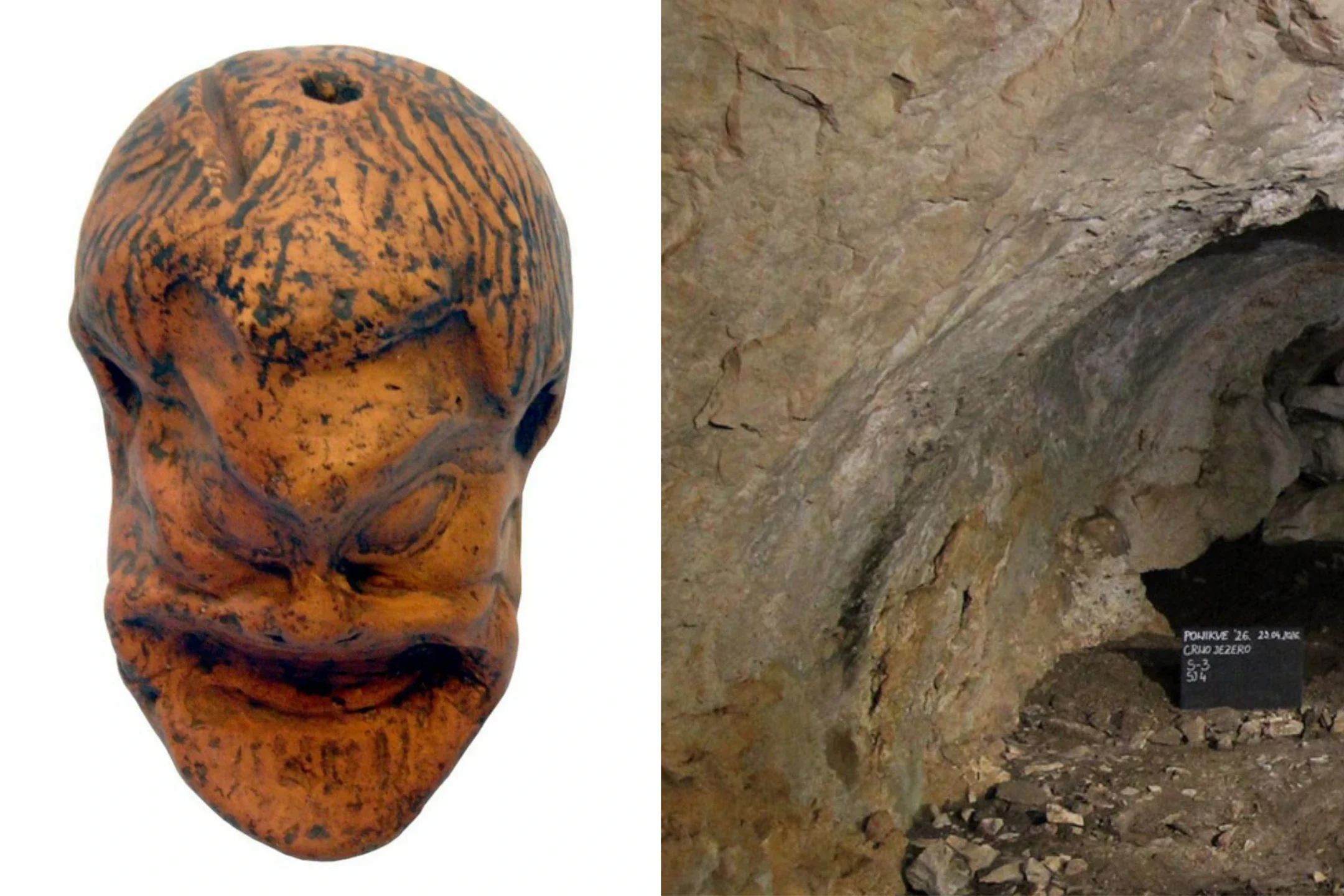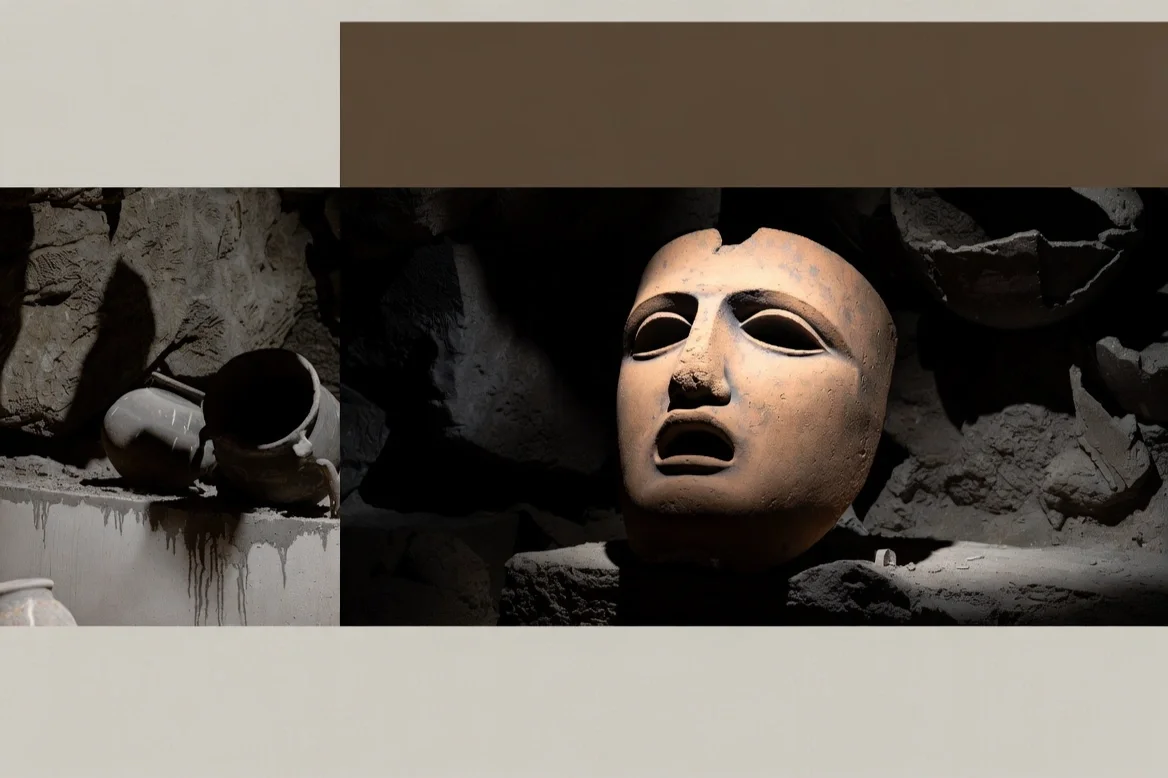

In southern Croatia, specifically in the Crno Jezero cave, archaeologists discovered a terracotta head representing a Greek theater mask. The finding, dated between the 3rd and 4th centuries BC, suggests that the piece was designed to be hung on a wall.
Domagoj Perkić, from the Dubrovnik Museum, indicated that the cave likely served as a sanctuary where rituals were performed. This sculpture adds to another discovery from last year: a figure that could represent a Greek deity.
“It remains open to interpretation whether Dionysus, or his Illyrian equivalent, can be linked to the wine vessels and the mask found in the cave,” Perkić noted. Most of the objects related to the sanctuary appeared at the entrance and the side sections, which had remained hidden until recent excavations.
Evidence of a ritual site
Other findings confirm that the cave functioned as a sanctuary from the 4th to the 1st century BC. Among them are luxury imported Greek ceramics, such as amphorae, bowls, and kantharoi, drinking cups. Local ceramic pieces were also found that may have been left as votive offerings.
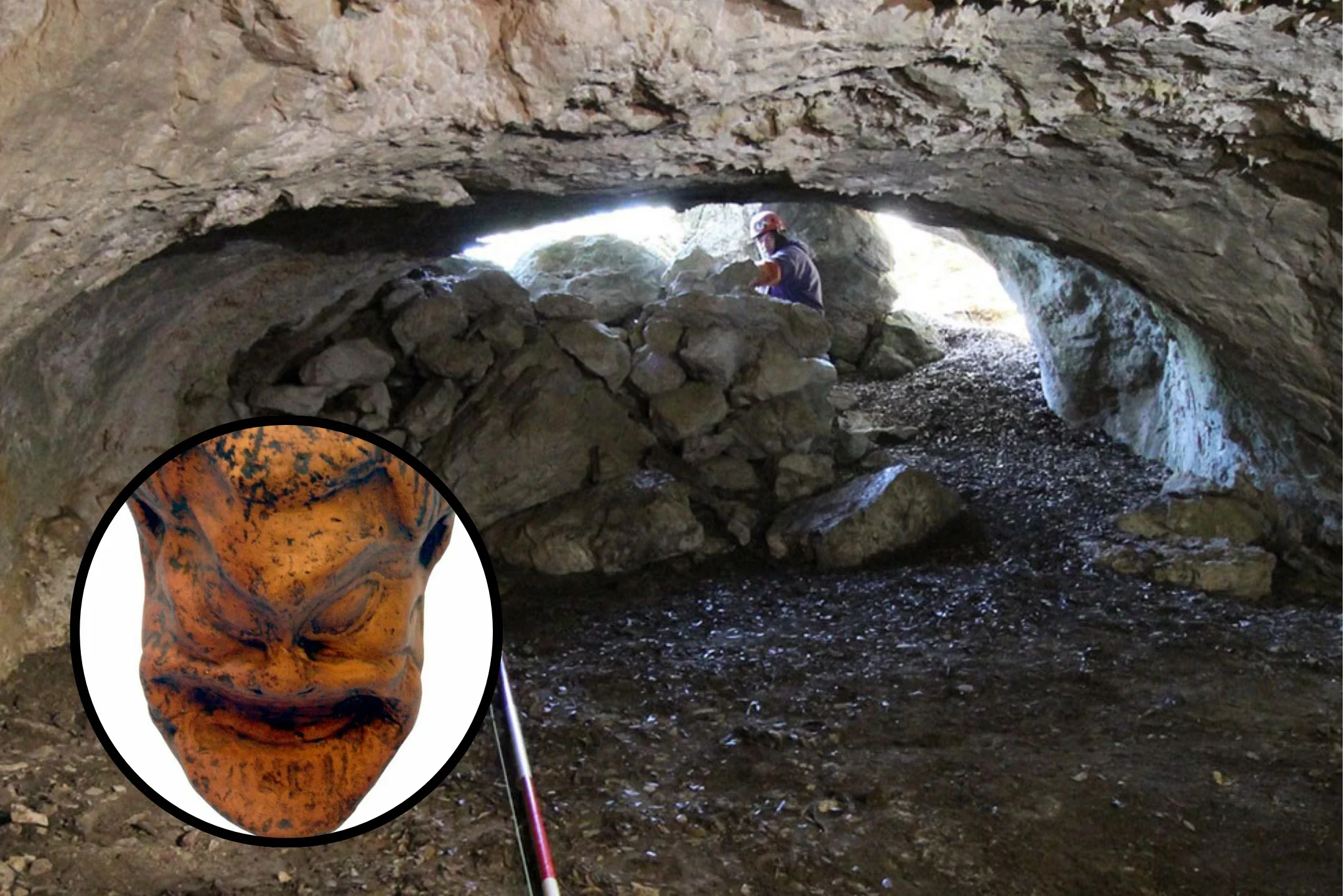
The presence of these high-value elements indicates that the place held religious and cultural significance in antiquity. The theater mask reinforces the ties to Greek traditions, which spread across the Adriatic and blended with local Illyrian customs.
Researchers continue to analyze the context to better understand how the space was used. The combination of imported and local objects shows a fluid cultural exchange in the region over several centuries.
This type of discovery helps reconstruct the ritual life of ancient communities in the Dubrovnik area. The cave, hidden and protected by nature, preserved these treasures for over two millennia.