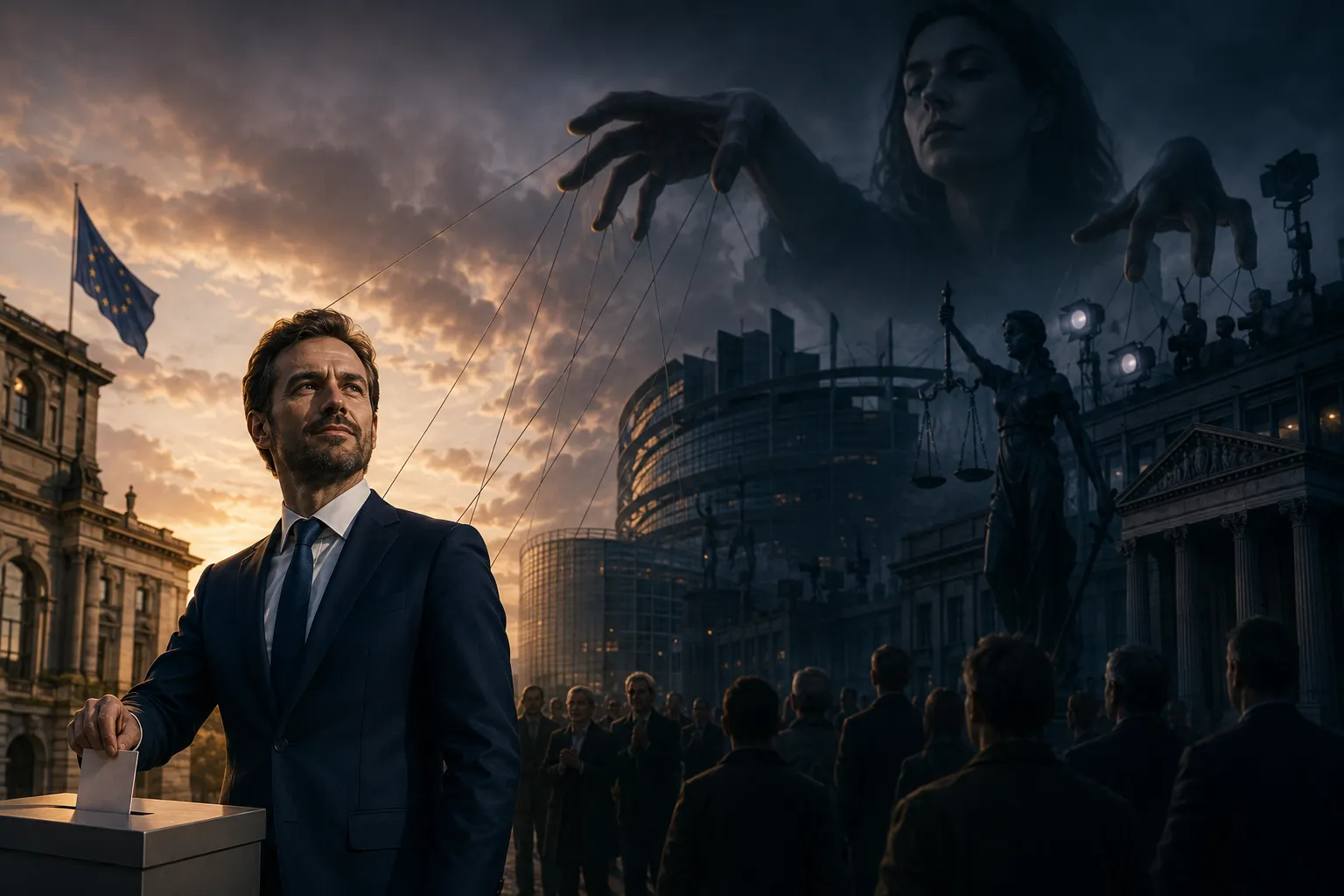

The left is losing elections across Europe (currently only Spain, Denmark, and the United Kingdom are led by the left, along with France and the Netherlands, governed by progressives/liberals) but not the battle of language.
The right continues to self-censor according to rules set by progressives regarding time, proof that cultural occupation survives political defeat. In fact, reversing years of progressivism and state reform requires much more than a victory, no matter how memorable, and it is not something that can be achieved in a month...
In 2020, the Cato Institute asked Americans if they felt free to express their political opinions. 72% responded that they did not (a figure that rose to nearly 8 out of 10 conservatives, compared to just over 1 out of 2 progressives). Today, it is not the left that self-censors, it is the right, even where it governs. French Interior Minister Nicolas Sarkozy (right) was able in 2005 to use the words "rabble" and "Kärcher" without his career suffering, while his successors weigh every phrase, fearing the accusation of racism more than electoral defeat itself.
This paradox deserves attention: how can a political family that wins elections in many European countries continue to speak the language of those it defeats at the polls?
The war of words precedes the war of the polls
The answer lies in a concept created by Antonio Gramsci (one of the founders of the Italian Communist Party) and later popularized by German activist Rudi Dutschke under the name of "the long march through the institutions". For him, before conquering the state, one must occupy the school, the university, the media, and the common vocabulary; this war of positions, slow and invisible, precedes every electoral victory and survives it. Since the 1970s, this occupation has set the limits of what can be said in Europe: certain words have become unspeakable not by law, but by the simple social fear they inspire.
European right-wing leaders, who often ally with even more right-wing parties and have managed to be elected by addressing issues like immigration or security (important topics for European citizens), appear moderate once in power, and some topics become taboo. These politicians continue to choose euphemisms that their own electorate considers tepid, not out of conviction, but because the administration, the newsrooms, and the university with which they still must coexist have internalized reflexes that no election has managed to change. Thus, very often the promises of revolution do not survive the days following a won election, while the cultural war has already been lost...









