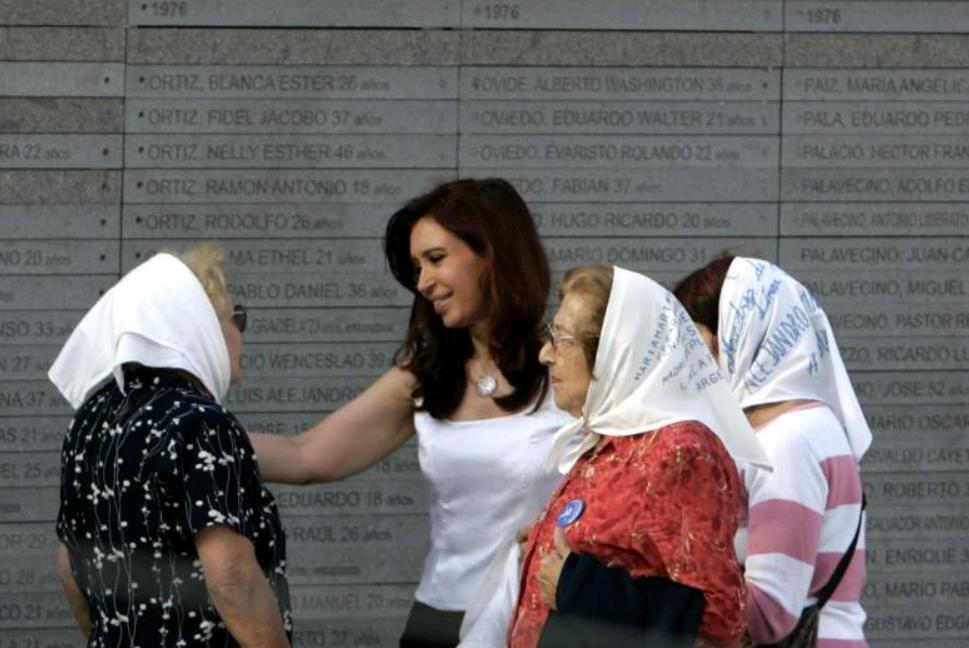

Every March 24, Argentina says to remember. But he stopped doing it a long time ago. What is being commemorated is no longer a historical event: it is a story that was carefully constructed, promoted and sustained from power.
Kirchnerism turned the interpretation of the past into a political instrument.Remembering ceased to be a free act and became a gesture of adherence. The idea was established that there was a single valid reading, a single legitimate narrative, a single moral framework allowed. To break out of that framework was not to debate: it was to deviate. And there was a cost to stray. Not always explicit, but real. Because control did not operate only through direct imposition, but also through incentives, signals and symbolic punishments that
aligned behaviors.Thus, what should be an open process of interpretation ended up being transformed into a system of political validation. It was not a question of understanding, but of repeating. It wasn't about thinking, but about demonstrating belonging.
This does not imply denying what happened or relativising the seriousness of the events. It implies recognizing that the State did not limit itself to remembering, but that it advanced on the most delicate terrain of all, that of defining how that past should be thought of. And that's where the underlying problem appears.
No one can centralize something that, by nature, is dispersed. The past does not exist as a single block ready to be interpreted from above. It exists in the looks, questions, doubts and interpretations of millions of people. When power tries to fix an official version, it doesn't just close the debate: it impoverishes knowledge. Reduce the complex to the convenient. Replace the search with the slogan
.Therefore, when you define what you can think of, you also define what is left out. And what is left out does not disappear: it is silenced.
History ceases to be a tool for understanding and becomes an invisible limit that conditions what can be said at no cost.In this context, March 24 ceased to be a space for reflection and became a ritual. A ritual where the important thing is not to understand, but to align. Where repetition replaced analysis and belonging displaced critical thinking.
Memory was not sought: discipline was sought.For years, Kirchnerism administered that scheme. It defined which versions were acceptable and which should be marginalized. It turned dissent into a cost and coincidence into a sign