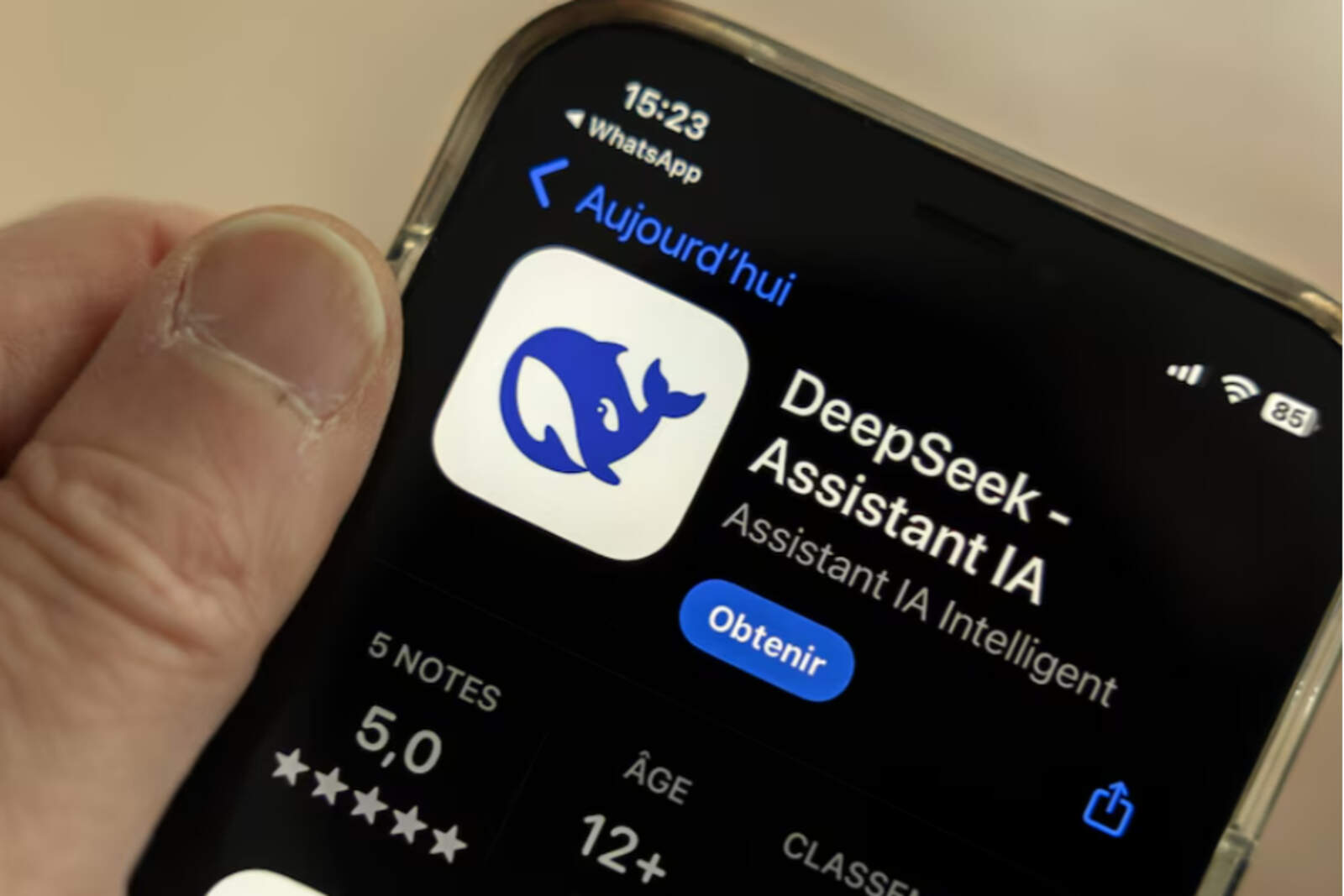

The DeepSeek model, presented by Chinese developers as a technological breakthrough competing with the West, quickly became a symbol of the digital authoritarianism of Beijing's regime. Behind its apparent sophistication, researchers and governments detected massive risks of privacy violations, political censorship, and state control, which led several countries to ban its use or suspend downloads.
Far from being a neutral tool, DeepSeek acts as a technological extension of the Chinese Communist Party (CCP), aligned with its censorship and surveillance apparatus. Experts warn that its operation reflects the same dynamics as the political system that supports it: opacity, centralized control, and disregard for individual privacy.
The data trap: everything remains in the hands of the regime
One of the greatest dangers of DeepSeek is its data policy. The model requires all personal information to be stored on servers within China, which leaves users completely exposed to state espionage. Chinese national security laws allow the government to freely access that information under the pretext of protecting the "interests of the nation."

This includes chat histories, IP addresses, API keys, and sensitive data from users and companies. In January 2025, researchers revealed that a DeepSeek database was publicly exposed, without any authentication, with more than one million lines of internal information. Among the leaked data were cryptographic keys, conversation logs, and operational metadata.
The incident confirms what many feared: China uses its AI technology as an instrument of global surveillance.
Global bans and warnings
The international response was forceful.
- Italy officially banned the use of DeepSeek for violating data protection regulations and refusing to comply with European legislation.
- Ireland warned that European users lose all protection if their data is stored on Chinese servers.
- South Korea suspended the application for failing to comply with its national regulations.
- Taiwan, as a national security measure, banned its use in public agencies due to the risk of geopolitical espionage.
Democratic governments have understood that allowing the use of DeepSeek is equivalent to opening a backdoor to Beijing's surveillance machinery.