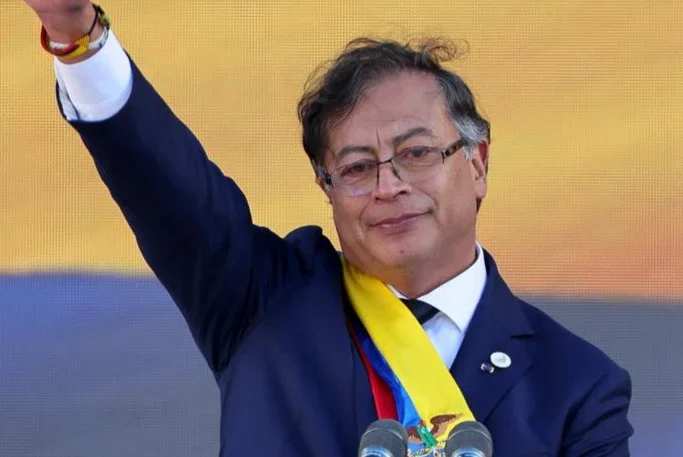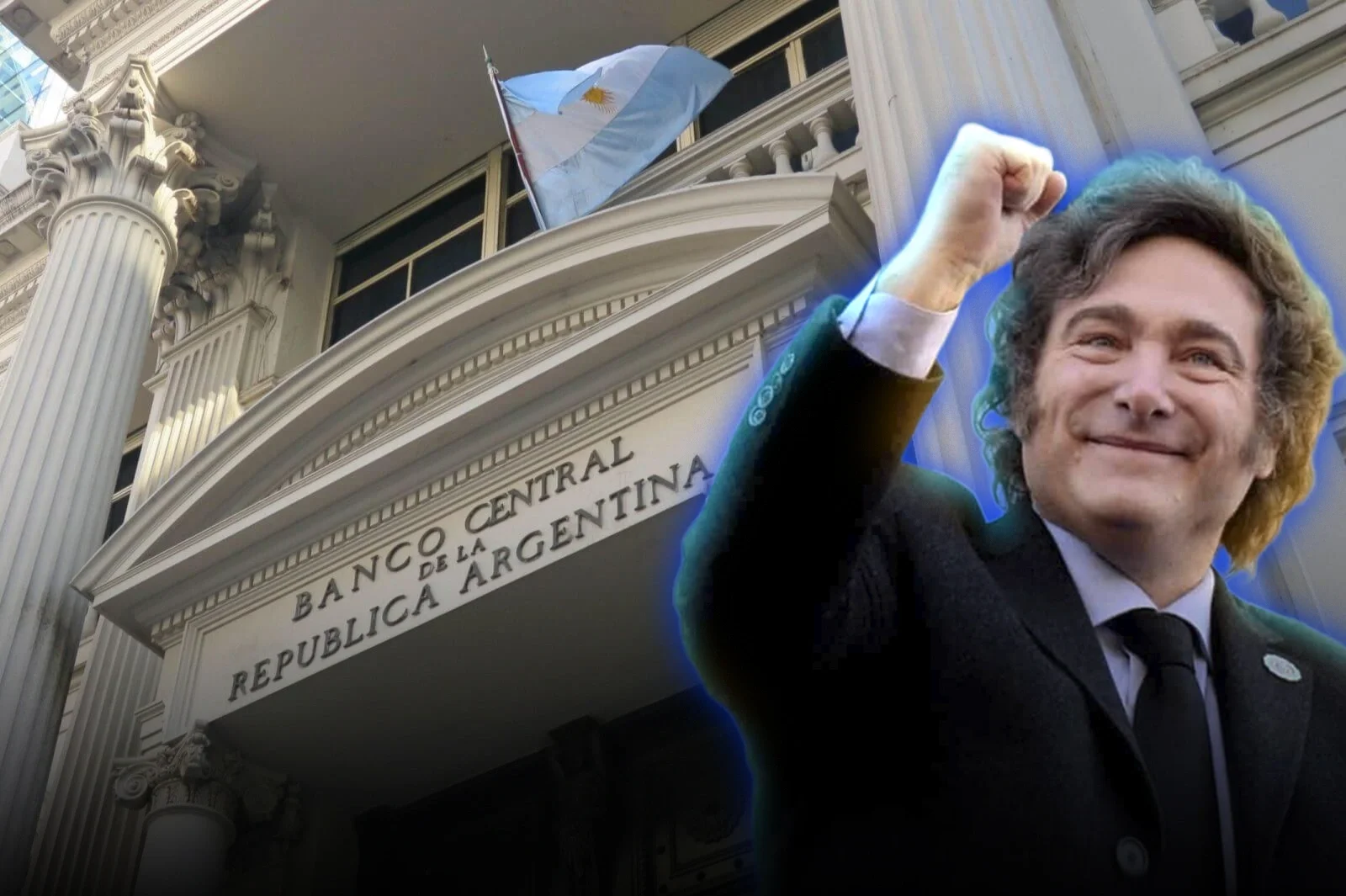

On a day that will be recorded in the annals of republican history, last Sunday May 31, Colombia took a decisive step towards the recovery of its institutions. The undeniable victory of lawyer Abelardo de la Espriella in the first presidential round has exposed the panic reigning in the far-left sectors. Faced with the imminent defeat of progressivism, President Gustavo Petro, in a state of evident agitation and delirium, has unleashed his frustration on social media, launching personal attacks and reckless accusations against the winner and the millions of citizens who supported his security and prosperity proposal.
From the public square in Barranquilla, amidst an atmosphere of patriotic jubilation, Abelardo de la Espriella was emphatic in denouncing the dark maneuvers that the executive intends to implement to perpetuate itself in power: “Petro and his puppet, I have been warning about this since before the campaign, intend to steal democracy”. In an act of civil courage, the right-wing candidate made a direct call to the institutions: “I ask the armed forces to remember their oath to the Constitution. If you fulfill it, this pair of lunatics will not achieve their dirty purposes”.
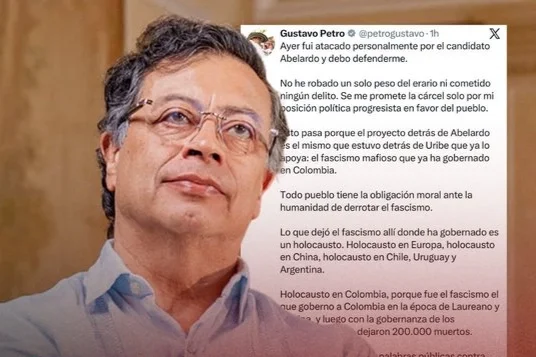
The reaction of the communist leader was swift, responding with an extensive and erratic post where, far from accepting the defeat of his model, he dedicated himself to victimizing and labeling his opponents as criminals. Petro claimed in a hallucinatory manner: “I am promised prison just for my progressive political position in favor of the people”, while describing De la Espriella's project as a “mafioso fascism” linked to former president Álvaro Uribe. In his divisive rhetoric, the president went so far as to compare the situation in Colombia with the “holocausts” of Europe, China, Chile, Uruguay, and Argentina, blaming his opponents for a supposed paramilitary governance that would have left 200,000 dead.
Among his most unfounded attacks, the president alleged, without presenting any evidence, that the winning campaign resorted to mass vote buying, estimating payments between 150,000∗∗and∗∗200,000 pesos per vote. With a marked class resentment bias, Petro attempted to ridicule the origin of the candidate from Defensores de la Patria, contrasting his own supposed background as a “son of farmers” with the “landowner family” of his rival. He even reveled in local figures to try to mitigate his national failure, pointing out that in Sahagún and in the department of Córdoba, the opposition leader received 260,000 votes compared to the 360,000 from the official sector.