The Peace Court of Minor Amount sanctioned members of "Hambre de Futuro" for conducting interviews and filming in an indigenous community; ADEPA rejected the ruling and questioned the requirement of a permit or registration to practice journalism
In the province of Formosa, the consolidation of a Kirchneristauthoritarianism, led by dictator Gildo Insfrán, has degraded basic constitutional guarantees, transforming the persecution of the press into a systematic tool of social control. The main focus of this liberty-threatening assault took place in the indigenous communitySan José, where a journalistic team from the program Hambre de Futuro, broadcasted by the channel LN+, was conducting interviews and audiovisual coverage about the local living conditions.
By order of the Justice of the Peace Court of Minor Amounts of Las Lomitas, headed by Judge Omar Padilla, the regime-aligned judiciary imposed a sentence of five days of arrest against four press professionals: journalists Lautaro Guillamondegui, Micaela Urdinez, Joaquín Rajadel, and Javier Corbalán. As an alternative to imprisonment, the controversial judicial resolution set a substitute fine of $282,550 for each of the affected individuals.
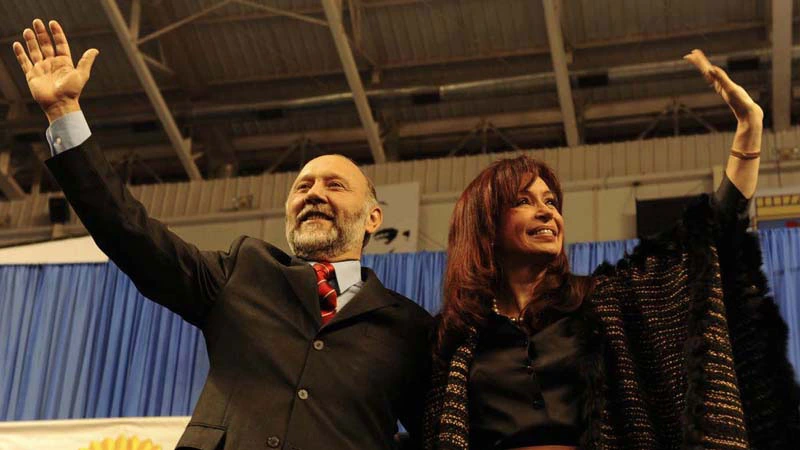
Cristina Kirchner and Gildo Insfrán
To justify the sanction, the court argued a supposed violation of article 73 of the provincial Code of Offenses. According to the magistrate's criteria, the communicators operated without the required prior "authorization" from the provincial power and lacked a state-issued "license to practice journalism" within Formosa's territory.
The arbitrary ruling provoked immediate condemnation from ADEPA (Argentine Association of Journalistic Entities), an organization that demanded the urgent review of the measure and warned about the extreme seriousness of the ruling. The entity sternly reminded that in Argentina, no license, registration, or state authorization is required to practice journalism, making it unacceptable to penalize with arrest for fulfilling an informative function.
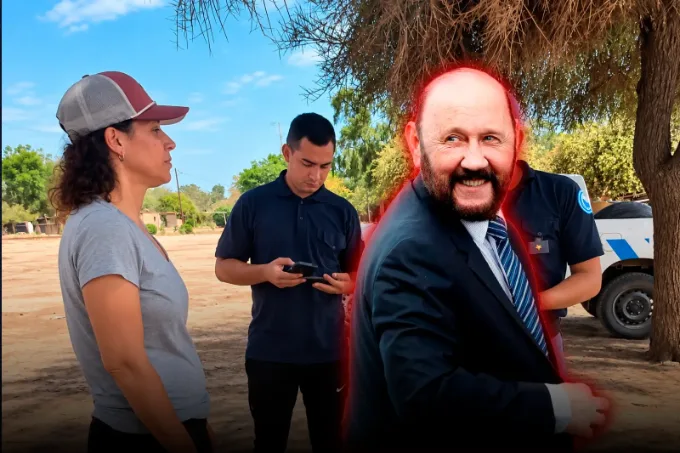
Gildo Insfrán
In its defense, ADEPA specified that the file shows that the LN+ team had initial authorization to enter the premises and left peacefully when requested. It also disqualified the conviction based solely on the complaint of chief Guillermo López, whose version contradicts the audiovisual recordings and testimonies collected at the site. The association concluded that the ruling did not establish violent invasion, clandestinity, or aggression, warning that requiring official credentials to investigate constitutes a veiled mechanism to condition which journalists can cover matters of public interest.
School Indoctrination:
As an additional example of the undemocratic practices that characterize the Kirchnerist dictatorship of Gildo Insfrán, the repression of journalism coexists with the partisan political indoctrination imposed on minors in the provincial educational system. An emblematic case occurred at the primary school EEP N° 59 “Leonor Mauriño”, located in the town of Gran Guardia, where the educational zonal delegate Gladys Esther González delivered a speech with a “clear partisan political content” to the students.
In that establishment, the official questioned the students about the delivery of school uniforms, shoes, and school supplies, in addition to the provision of milk and the school cafeteria. In response to the children's silence, Gladys Esther González insisted coercively:
Serious case of indoctrination in Formosa
“The provincial government. What is the governor's name?”, forcing the students to respond in chorus “Gildo Insfrán”. Immediately afterward, the delegate asserted to the class that “That is a political decision of the governor” and reprimanded the teachers that the lack of immediate response constituted an aspect to work on.
This episode prompted the swift intervention of the national Government led by Javier Milei, which, through the Ministry of Human Capital, sent a formal request for explanations and initiated investigations into the educational area of Formosa. The national portfolio emphatically condemned the incident, stating that “the use of the school environment to exalt a sitting authority constitutes an act of institutional gravity”, declaring that such manipulation “violates the principle of neutrality that must govern educational institutions and compromises the freedom of conscience of the students”.