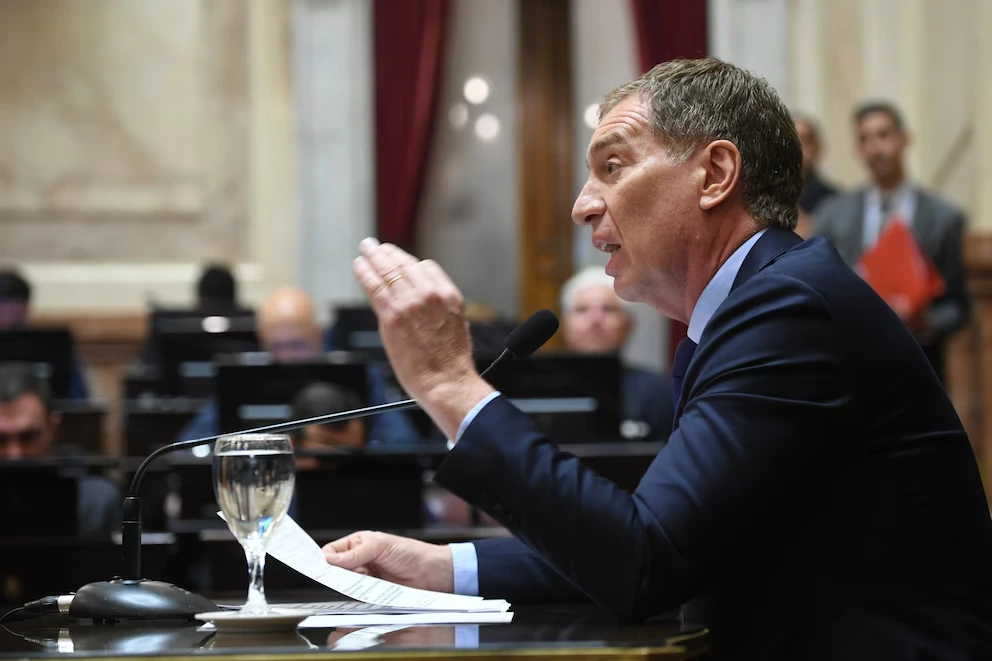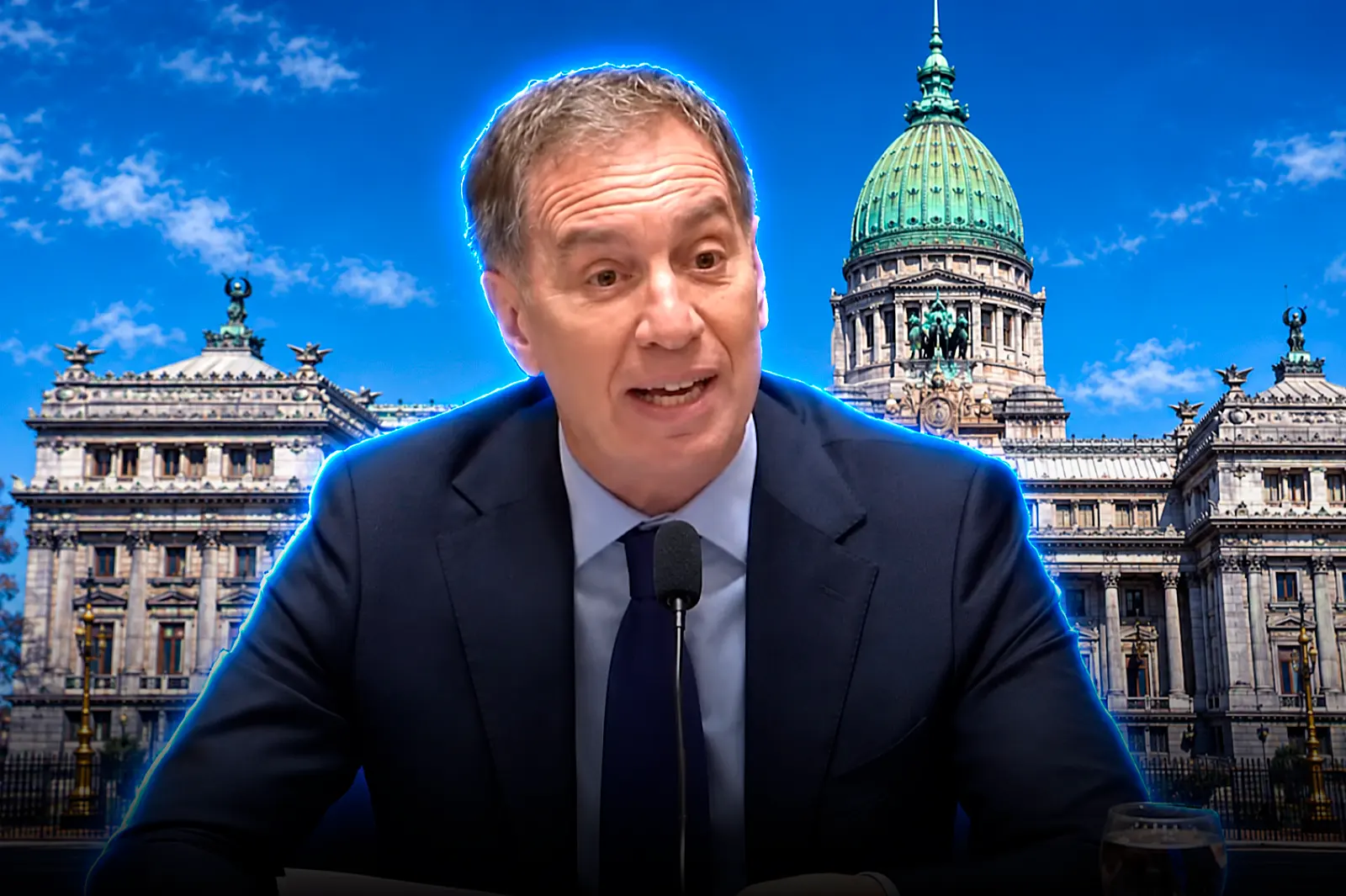

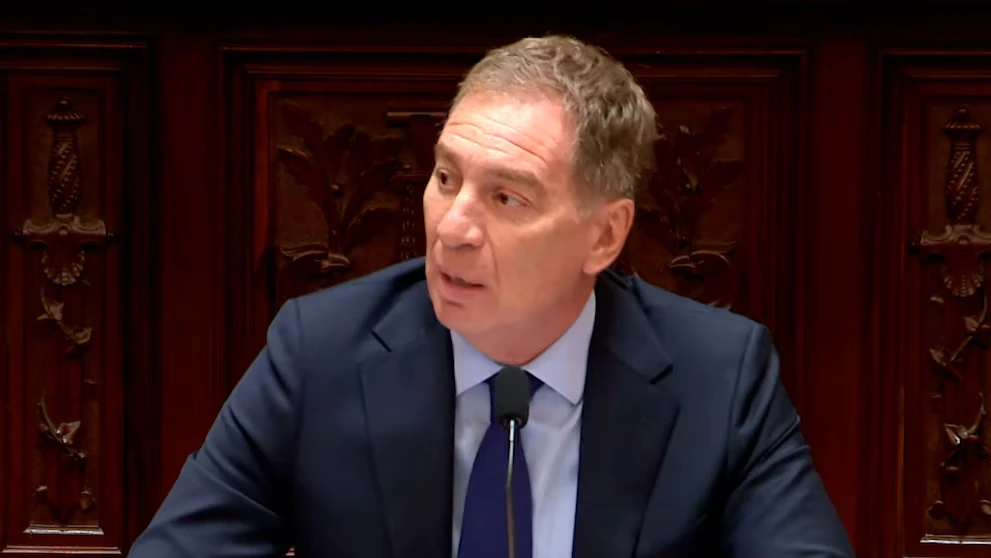
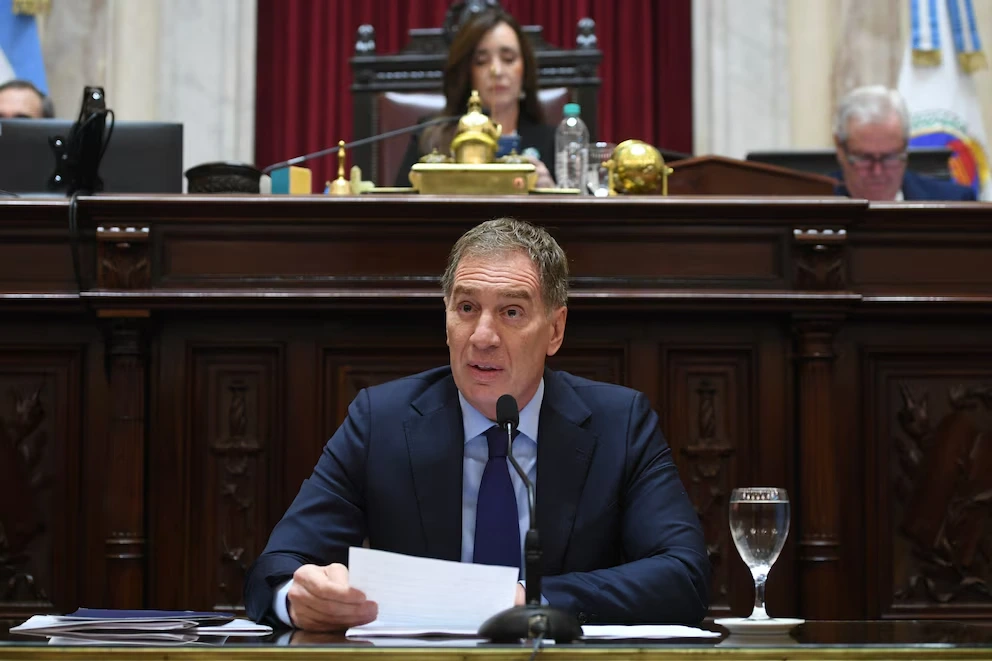
In the chamber of the Upper House, the Chief of Cabinet of Ministers of the Nation, Diego César Santilli, aged 59, presented his first management report before the Senate of the Nation. The historic institutional day, corresponding to Report 146, began solemnly with the raising of the national flag by Senator José Mayans and the subsequent singing of the National Anthem. During his opening speech, which lasted 53 minutes, the national official reaffirmed the course of freedom promoted by the Executive Power.
At the start of his speech, Diego Santilli defined the strategic vision of the Executive Power, highlighting the international positioning of the President of the Nation: “Milei achieved in two years what others took ten or twenty, which is why the world is still surprised. That’s why the President is now a world leader”. In contrasting the present with the heavy legacy received from the previous Peronist administration, the Chief of Cabinet recalled that upon taking office, they found the country “in pharmacological coma”, immersed in structural ruin. In this sense, he denounced the multiplicity of inherited crises: “They left us emergencies of all kinds: economic, financial, fiscal, administrative, pension, tariff, health, social, railway, energy. What present State are you talking about? That was a lie”.
The minister made it clear that Argentina is going through a decisive moment of national refoundation: “We are at a turning point in Argentine history. Next year it will be decided whether we move forward or go back to that country that I told you about for 40 minutes. It was not just an economic inheritance: it was an educational, social, health, infrastructure, and cultural inheritance. It was a destroyed and abandoned Argentina”.
In the most detailed part of his intervention, Diego Santilli reviewed the ordeal experienced by Argentines during the last four decades of interventionist model: a galloping inflation, the use of five currencies and quasi-currencies, the removal of 13 zeros from the peso, a systematic history of defaults, violent street control by union picketers, judicial extortion against SMEs, the loss of teacher authority, and the everyday insecurity suffered by families in the Conurbano and Rosario.
In the face of this tragic reality, Diego Santilli argued convincingly why the policy of zero deficit and macroeconomic order marks an irreversible milestone: “That’s why this time is different and that’s why it was worth it. It was worth it to order the accounts, lower inflation, end the currency controls and the twenty exchange rates, reclaim the streets, align ourselves with the West and not with dictatorships”.
The official substantiated the success of Javier Milei's management with categorical and indisputable figures of social and economic recovery:
Historic reduction of poverty: A drastic drop from 57% to 32% was achieved.