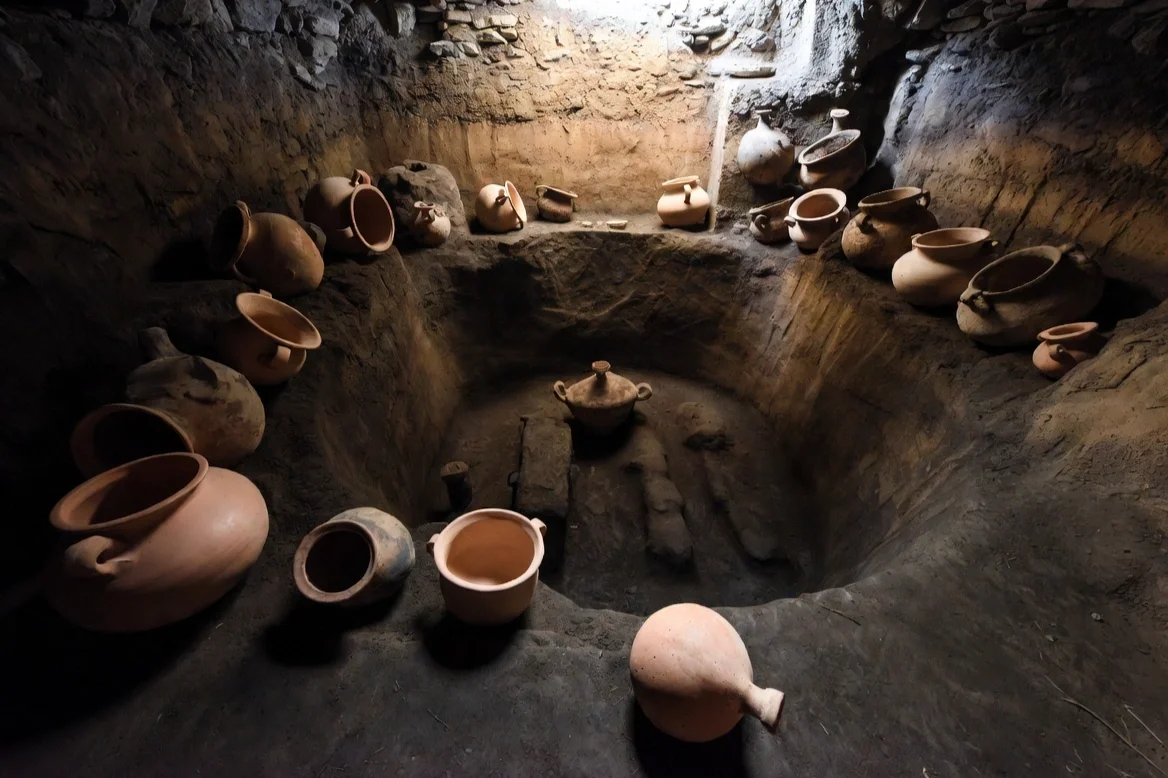
In Ignacio Zaragoza, Mexico, a team of researchers from the National Institute of Anthropology and History (INAH) discovered eight ancient burials along with 47 ceramic vessels during preliminary work for the construction of the Mexico-Querétaro Passenger Train.
The findings occurred in the archaeological zone of Tula, in the central-eastern part of the country, specifically in what appears to have been a residential complex dated between the years 225 and 550 A.D.
Archaeologist Víctor Heredia Guillen detailed that five shaft tombs and other burials were identified at the site. The eight main bodies were found within a shaft tomb located on the north side of a residential room.
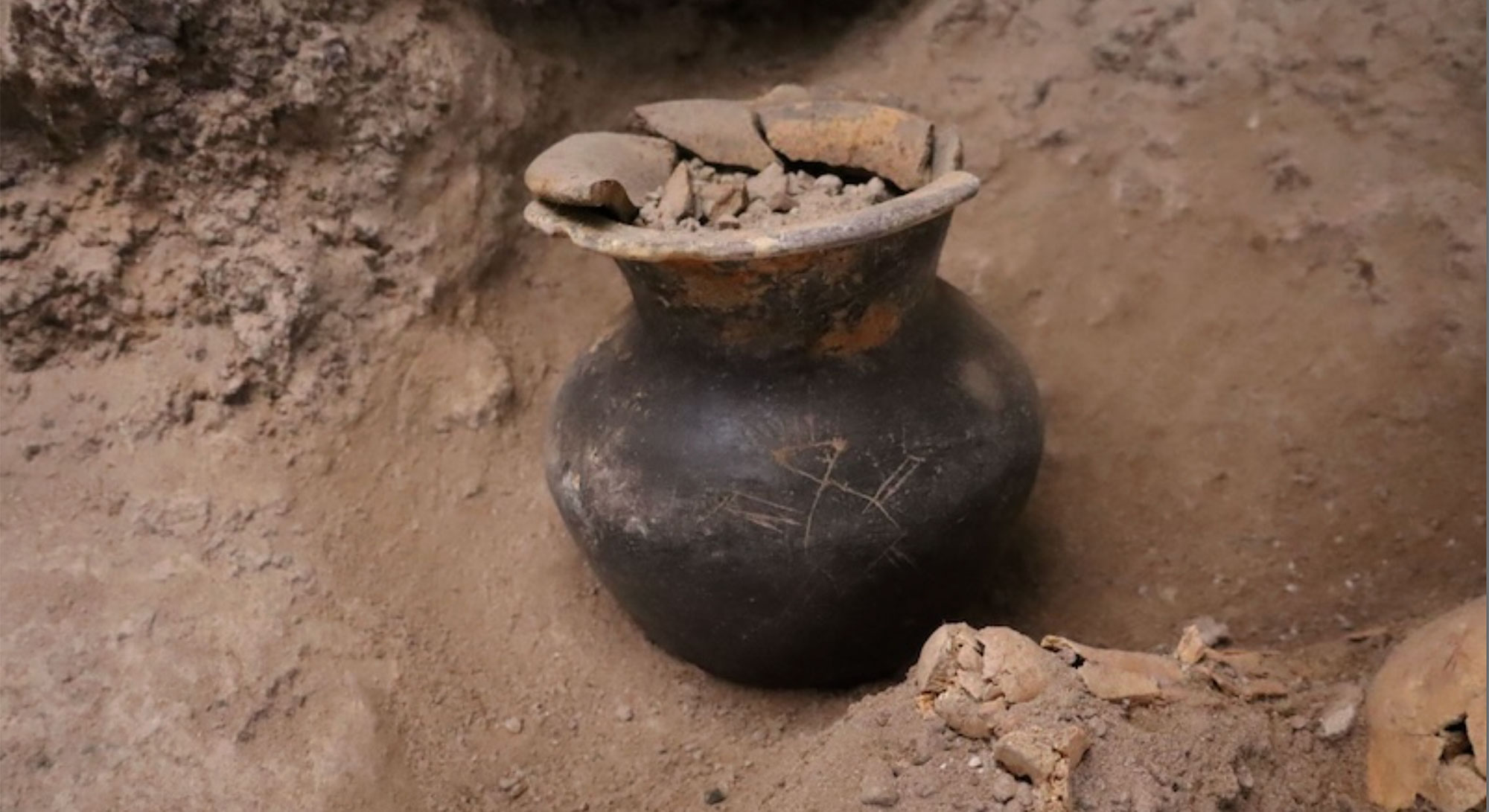
Six of the individuals were placed in a seated position, with ceramic offerings arranged near their feet. One of these burials also included a small shell ornament and fragments of a pendant made of mother-of-pearl.
Reuse of the tomb
The remaining two sets of remains had been moved, suggesting that the structure was reused over time by ancient communities.
These discoveries provide new information about burial practices in the region during that period. The ceramics and personal items found indicate a careful ritual in the arrangement of the deceased.
For his part, archaeologist Jonathan Velázquez Palacios noted that the lime extracted in Tula was likely used to make stucco intended to cover surfaces in Teotihuacan, located about 80 kilometers away.
This connection between both sites reinforces the idea of exchanges and relationships between pre-Hispanic centers of central Mexico. Lime was a key material in the architecture and finishing of important constructions at the time.
Context of the investigations
The work is part of mandatory archaeological salvage tasks before major infrastructure projects. This way, cultural heritage is protected while advancing regional connectivity projects.
The Tula area is known for its historical relevance, associated with the Toltec culture, although these burials correspond to an earlier time. The findings allow for a deeper understanding of the societies that inhabited the area more than fifteen hundred years ago.
The remains and ceramic pieces will be analyzed in the laboratory to obtain more details about the diet, health, and customs of those people. This type of study contributes to the general knowledge of Mesoamerican history.
With this discovery, a new layer of information is added to the rich archaeological mosaic of Mexico, highlighting the importance of conducting prior surveys in areas of high heritage value.
INAH authorities continue to evaluate the site to determine if there are more structures or associated burials, in an effort to preserve history before the train works advance in the region.