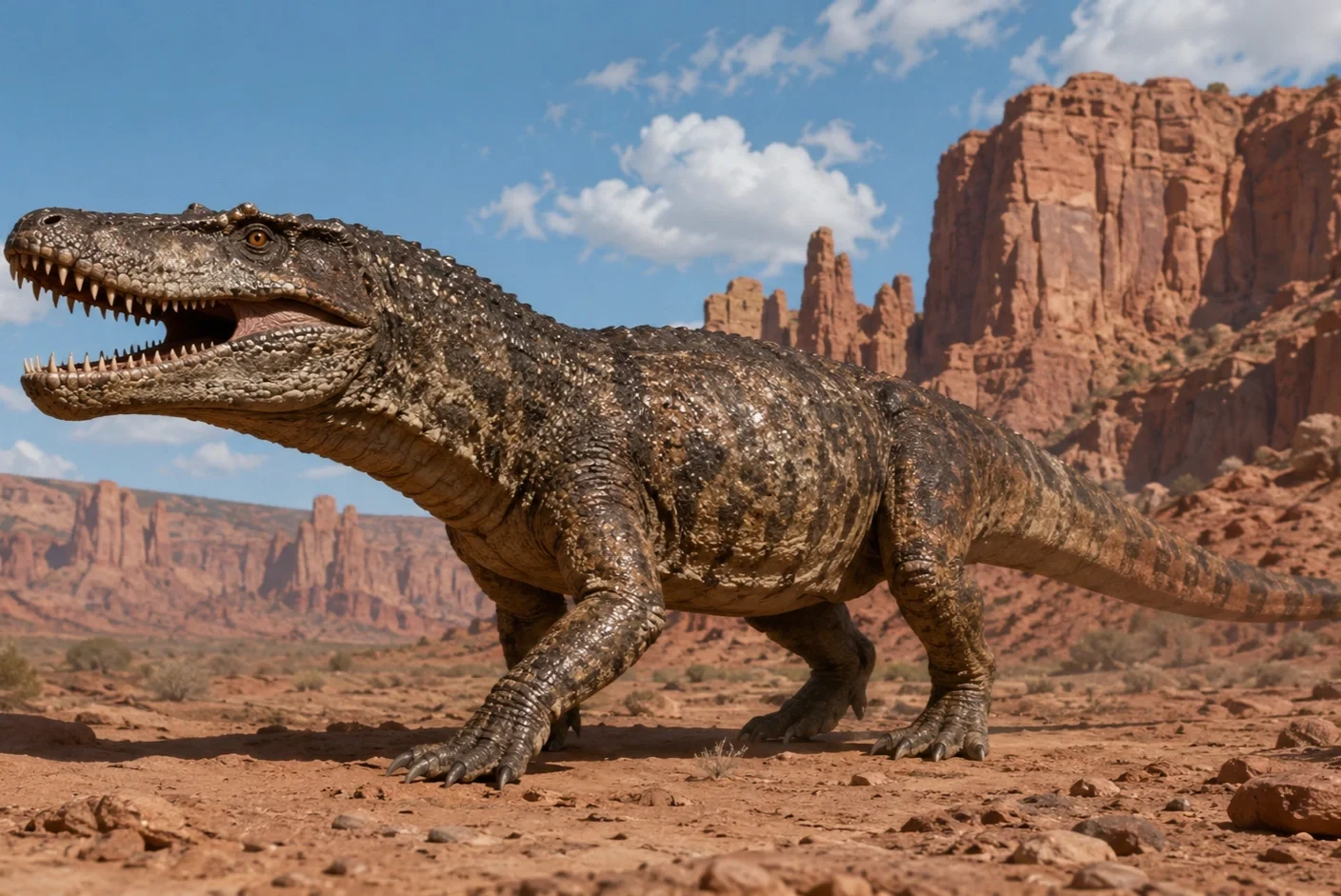

Scientists from CONICET revealed the discovery of a new species of giant reptile that inhabited the territory of La Rioja 237 million years ago This creature is Shakajlura riojanensis, an animal notable for its imposing size and its role as one of the main predators of its time
The name of this creature means “blessed lizard of La Rioja” and belongs to the group of Paracrocodylomorpha, distant relatives of modern crocodiles According to estimates, it reached about six meters in length, with a skull measuring around 60 centimeters
The discovery took place in the Talampaya National Park, specifically in the Chañares Formation, during paleontological campaigns conducted in 2017 and 2018 The results were only published now, in 2026, in the prestigious scientific journal Papers in Palaeontology
The first author of the study, Ariel Cardillo, a doctoral fellow at CONICET in CRILAR, explained the importance of the Triassic period This moment represents a key chapter after the great Permian extinction, when life on Earth was recovering
Relevance for the origin of crocodiles
Cardillo detailed that these reptiles provide valuable data on what faunas were like after that massive catastrophe “Paracrocodylomorpha are important for several reasons On one hand, they tell us about the origin of crocodiles, the only representatives of the lineage that have survived to the present,” he noted
Additionally, these fossils help to understand the animal communities that emerged in the Mesozoic Era, before dinosaurs became dominant Shakajlura riojanensis adds to a fossil record that is quite scarce for this group, making each new specimen of enormous scientific value