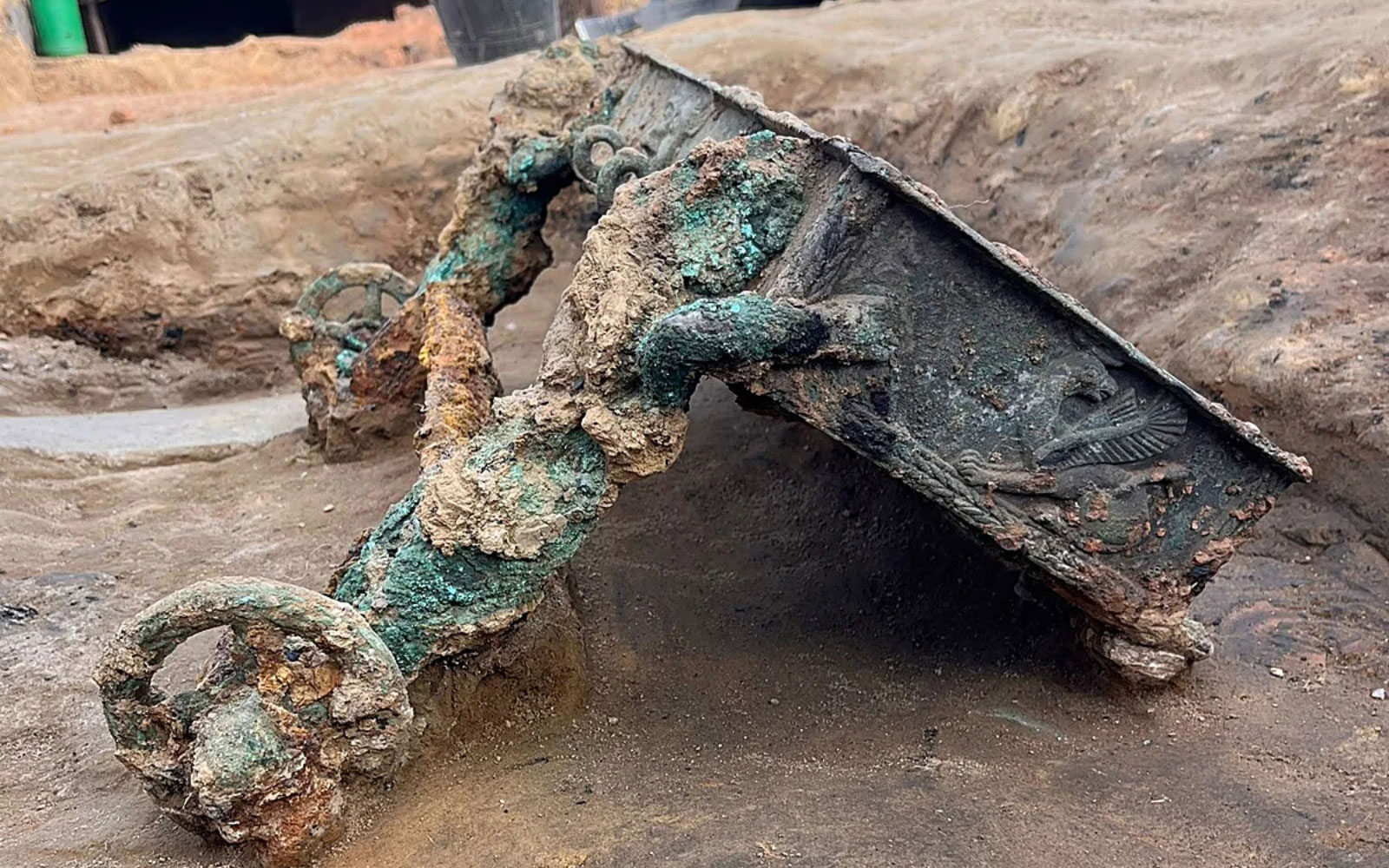

In the town of Guareño, in the southwest of Spain, a team of archaeologists made a remarkable discovery: the wheels and parts of a miniature bronze votive chariot dating back about 2,500 years. The discovery occurred at the Tartessian site known as Casas del Turuñuelo, a place already famous for its monumental structures.
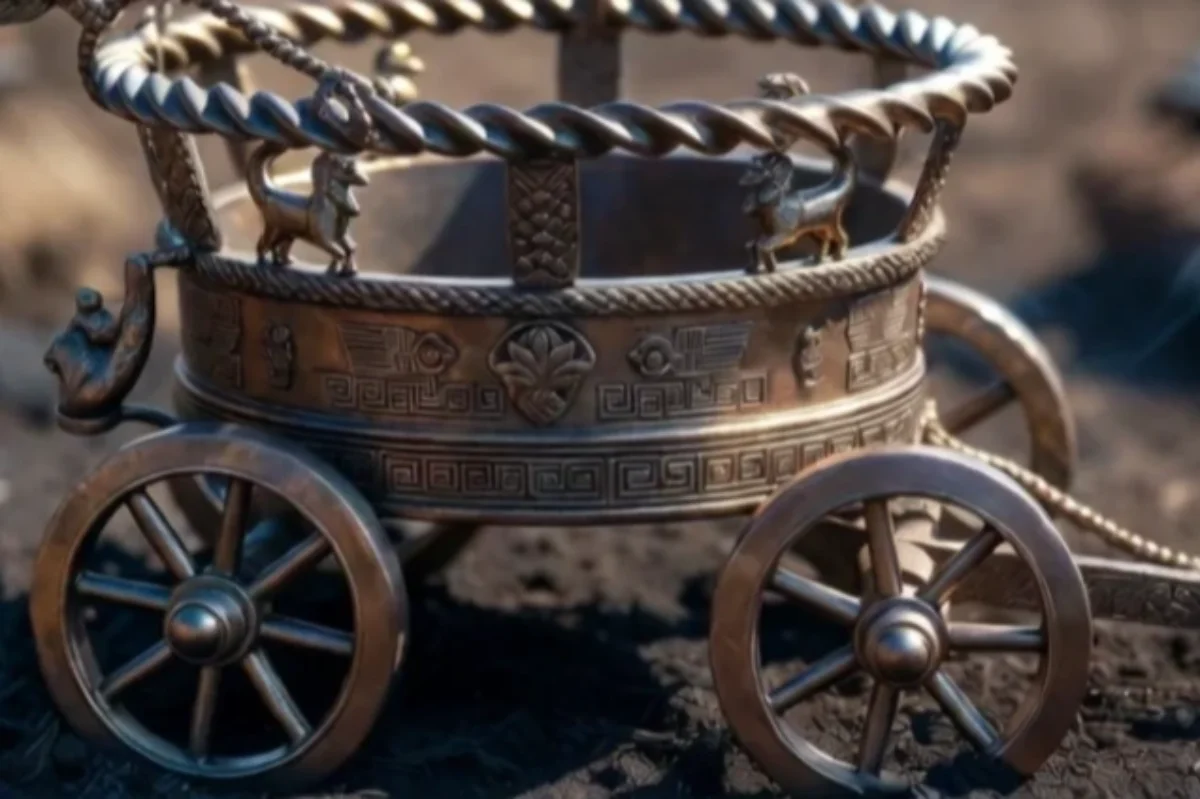
This small ceremonial vehicle was found in an imposing building at the site. According to specialists, it likely served to hold embers, incense, or aromatic resins during rituals. Its design combines bronze elements joined with iron fittings, including a central axle also made of iron.
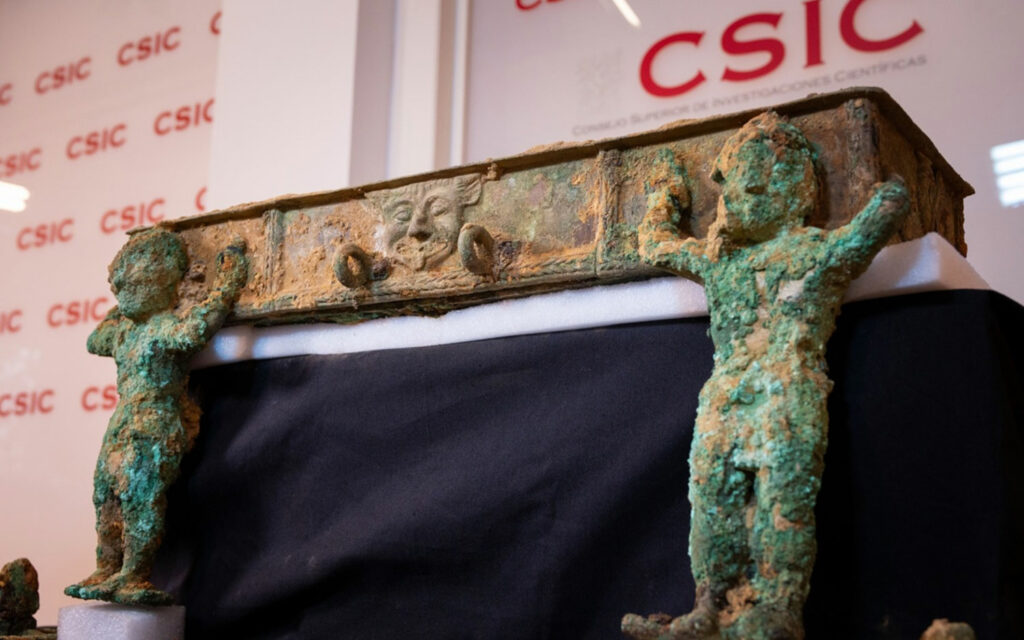
The decorations on the frame evoke twisted ropes and display mythological figures. Among them, two griffins stand out, as well as the representation of Achelous, the Greek god of rivers, characterized by bull horns and a prominent tongue. Additionally, the chariot is supported by two figures reminiscent of Atlas, the titan condemned to hold up the sky forever.
Context of the site and previous findings
In the same area where the chariot pieces were found, researchers had already unearthed an altar shaped like a bull's hide. This combination suggests that the place had a strong ritual component, linked to ceremonial practices of the Tartessian culture.