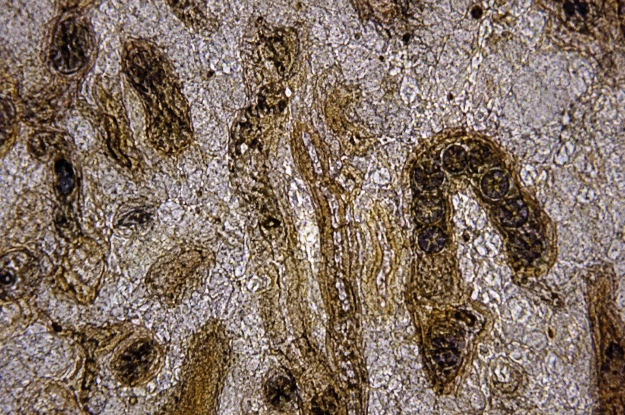
A striking reanalysis of microscopic fossils found in Brazil is changing key ideas about the first animals on Earth. What was believed to be traces left by small worm-like organisms turned out to be fossilized communities of bacteria and algae, some with remarkably preserved cells and organic material.
The study, published in the journal Gondwana Research, focused on 540-million-year-old samples from the state of Mato Grosso do Sul. Researchers used advanced imaging techniques and chemical analysis to reach this conclusion, which modifies the understanding of the Ediacaran period, just before the Cambrian explosion.
Previous studies had interpreted these structures as evidence of meiofauna, small invertebrates less than a millimeter that would move through marine sediment. If confirmed, they would have pushed back the fossil record of these animals. However, the new data points in another direction.
High-resolution techniques reveal the truth
Using microtomography, nanotomography, and Raman spectroscopy at the Sirius synchrotron of CNPEM, scientists observed cellular structures, divisions in the walls, and preserved organic matter. These details are consistent with bacteria or algae and not with traces of animal movement, explained the first author of the work, Bruno Becker-Kerber.
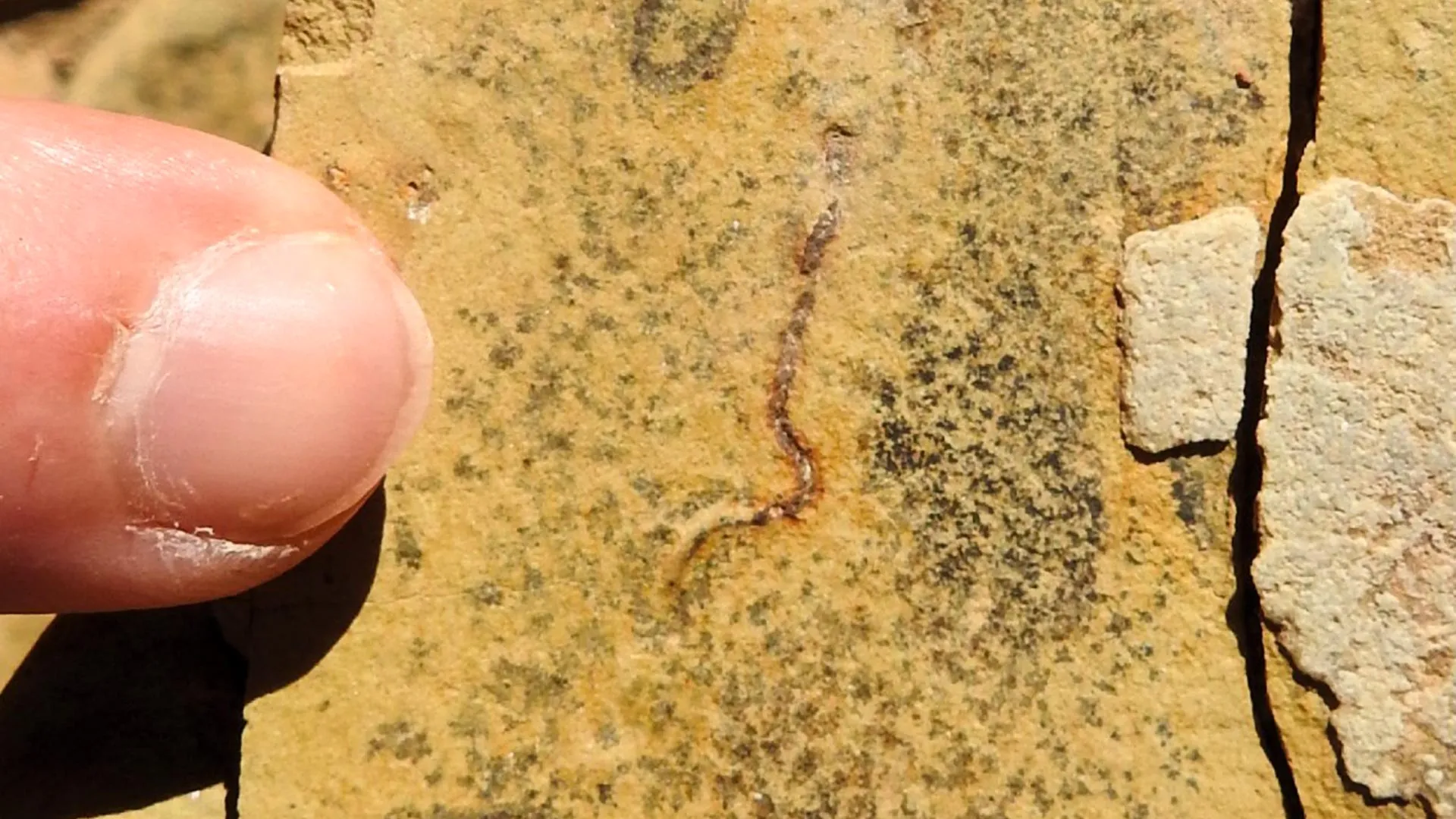
Some of the formations contain pyrite and would correspond to sulfur-oxidizing bacteria, a group that includes species large enough to be visible to the naked eye. The fossils appear in different size ranges, suggesting diverse microbial communities where several species coexisted.
The studied sites include Corumbá and Bonito, in the Serra da Bodoquena region, within the Tamengo formation. These environments correspond to a shallow sea on the margin of Gondwana, the supercontinent that would later split to give rise to South America and Africa.
Implications for evolution before the Cambrian explosion
The finding indicates that oxygen levels in ancient oceans were likely still too low to support certain types of animal life around 540 million years ago. This delays the possible appearance of meiofauna in the fossil record and helps to better understand the environmental conditions prior to the massive diversification of complex organisms.
The team, which had already identified what could be the oldest fossil lichen in the same area, continues to provide key pieces to reconstruct the Ediacaran world. Becker-Kerber conducted part of the work during his postdoctoral research at the University of São Paulo and is now continuing his investigations at Harvard.
The evidence includes coiled filaments, concave and convex partitions, and cells with organic material without internal sediment, characteristics incompatible with simple disturbances caused by moving animals. All of this reinforces the interpretation that these are preserved microbial bodies and not traces of passage.
This work not only corrects a previous interpretation that lacked current imaging technology but also offers a clearer view of the microbial communities that dominated the oceans before complex animal life expanded.