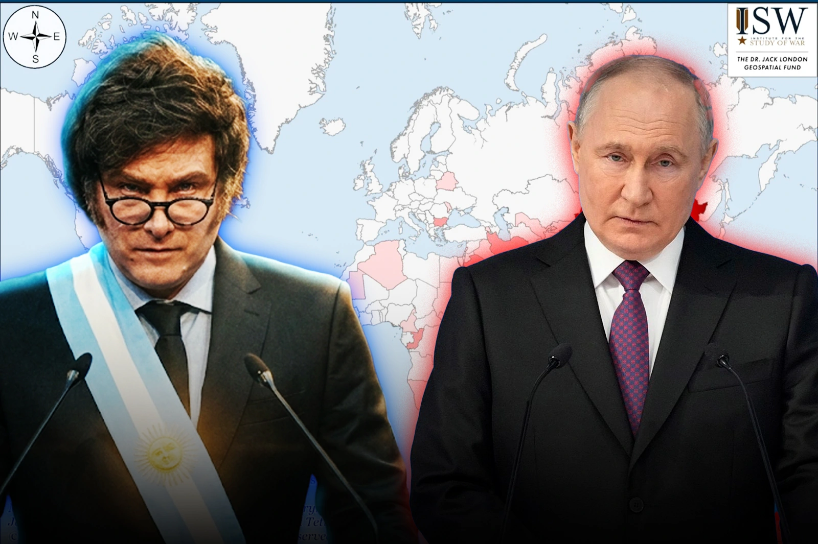
A recent report from the Institute for the Study of War (ISW) detailed the expansion of a global disinformation network driven by Russia and its impact on numerous continents and countries, such as Argentina.
The document states that the Kremlin is developing a “media conglomerate” on a global scale with the aim of influencing public opinion and shaping political narratives in different countries, including the Argentine case.
According to the report, this framework is part of a strategy of “cognitive warfare”, aimed at influencing decision-making in the West, improving the image of Vladimir Putin's regime, and projecting informational power in the long term.
In this context, Russia has deployed a network that combines state media, cooperation agreements, journalist training, and global content distribution.
Among the central actors are agencies like TASS, Rossiya Segodnya, Sputnik, RT, and Ruptly, which operate as wholesale content providers for local media in various countries.
These structures allow for the insertion of Kremlin narratives into national information ecosystems through alliances with smaller or regional media.
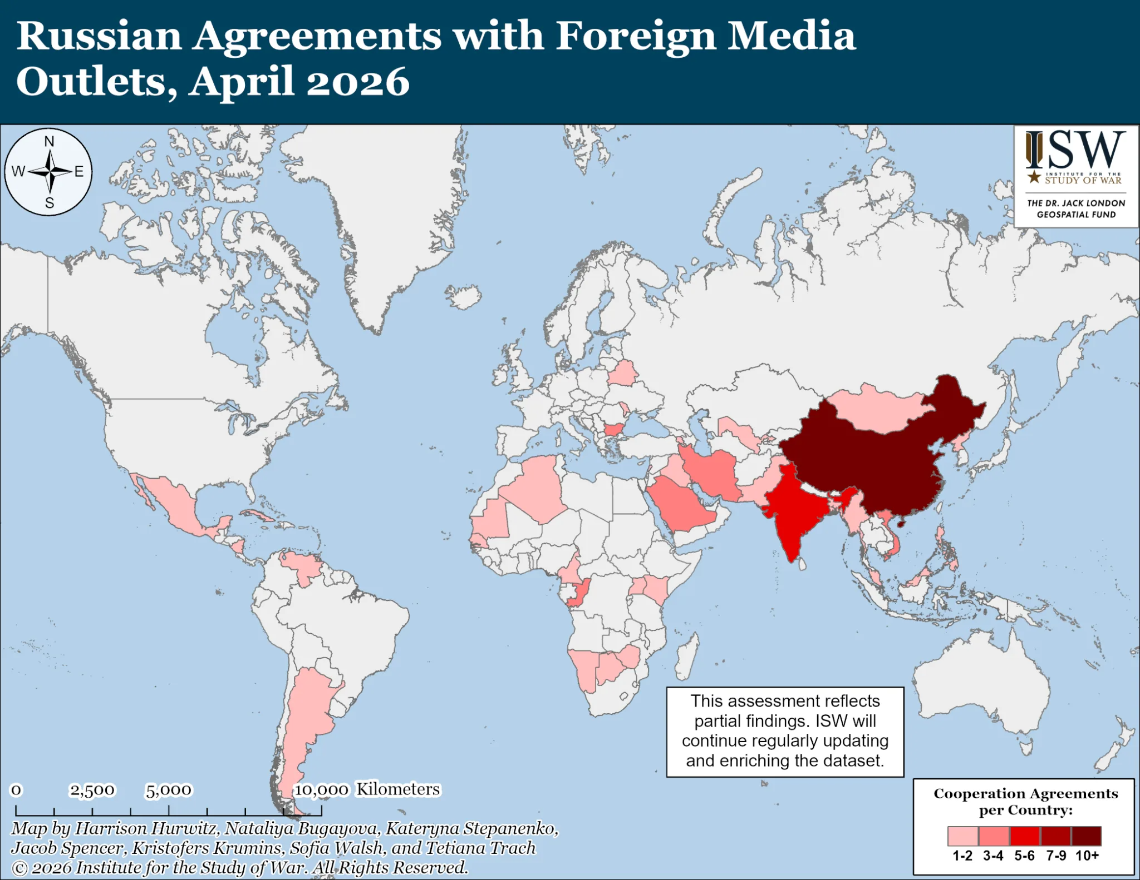
The Russian agreements with media from other countries.
The Case of Argentina
In the case of Argentina, the report details concrete agreements that reinforce this strategy. One of them is the link between Sputnik and the digital media Ahora San Juan, signed in December 2022, aimed at the exchange of content in Spanish.
At the same time, the TV BRICS network has advanced with partnerships in the country, including Ahora San Juan, BRICSLat, AsiaTV, and the channel Extra!, consolidating a dissemination network in the local sphere.
These data connect directly with another investigation that recently exposed the Russian disinformation network in Argentina, where the publication of content funded by Russians was detected on multiple digital platforms, aimed at damaging the image of the government of Javier Milei through fake news.
In that survey, the participation of various Argentine media in the dissemination of articles linked to these operations was identified.
Among the sites mentioned by the number of publications are Diario Con Vos (37), El Destape (27), Diario Registrado (26), Realpolitik (20), Dos Bases (19), C5N (17), Big Bang News (16), and Política Argentina (12), among others.
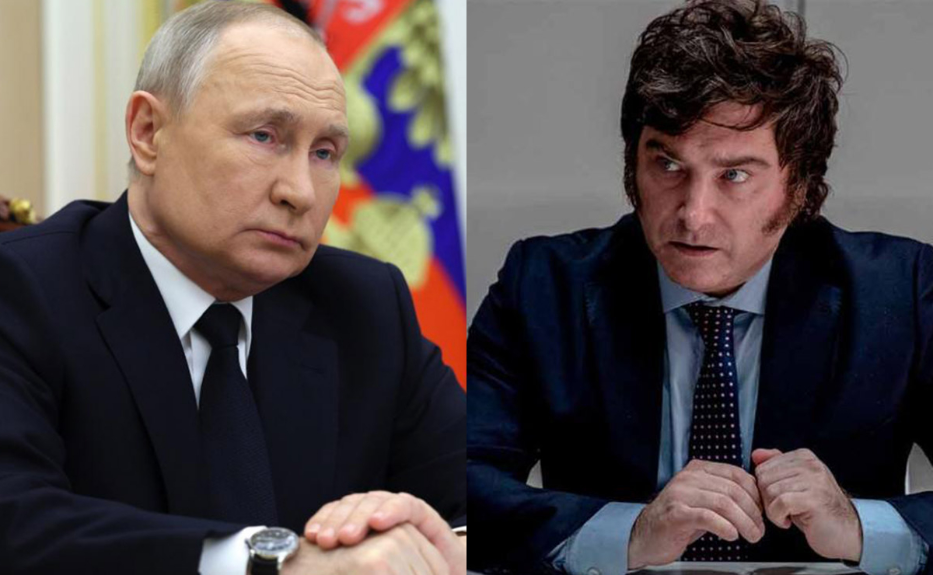
Javier Milei and Vladimir Putin.
Also listed are En Orsai, A24, La Patriada Web, Ámbito, Tiempo Argentino, Grito del Sur, El Ciudadano Web, and Infocielo, in addition to portals with lower content volume such as El Cronista, Data Clave, and Agenda Urbana.
The ISW report states that the Kremlin is not only seeking media agreements but also training journalists aligned with its interests globally. Programs like SputnikPro and RT Academy have already trained thousands of agents in various regions, creating an influence network that could operate for decades.
Furthermore, Russia has expanded its reach by creating content in multiple languages and opening new production centers in Africa, Asia, and Latin America. This expansion allows for the adaptation of messages to local contexts and increases their penetration in diverse informational markets.
The Argentine case, in this context, appears as a concrete example of how these global strategies can have an impact at the national level.
In this way, the ISW report not only confirms the existence of an international disinformation structure driven by Russia but also reinforces the alerts raised in Argentina regarding the presence of these networks.