This progress marks a reversal of the downward trend observed in previous years and represents an important step in protecting public health, especially in childhood and high-risk groups.
More control and transparency in the ministry led by Mario Lugones
Additionally, with the aim of providing greater transparency and control, the Ministry of Health implemented a new procurement model that involves a deep transformation in the National Disability Agency (ANDIS), which promotes transparency and efficiency in procurement processes.
"This change seeks to leave behind opaque practices and strengthen controls over the management of public funds and facilitate the participation of both companies and citizens in monitoring the agency's contracts," government sources stated.
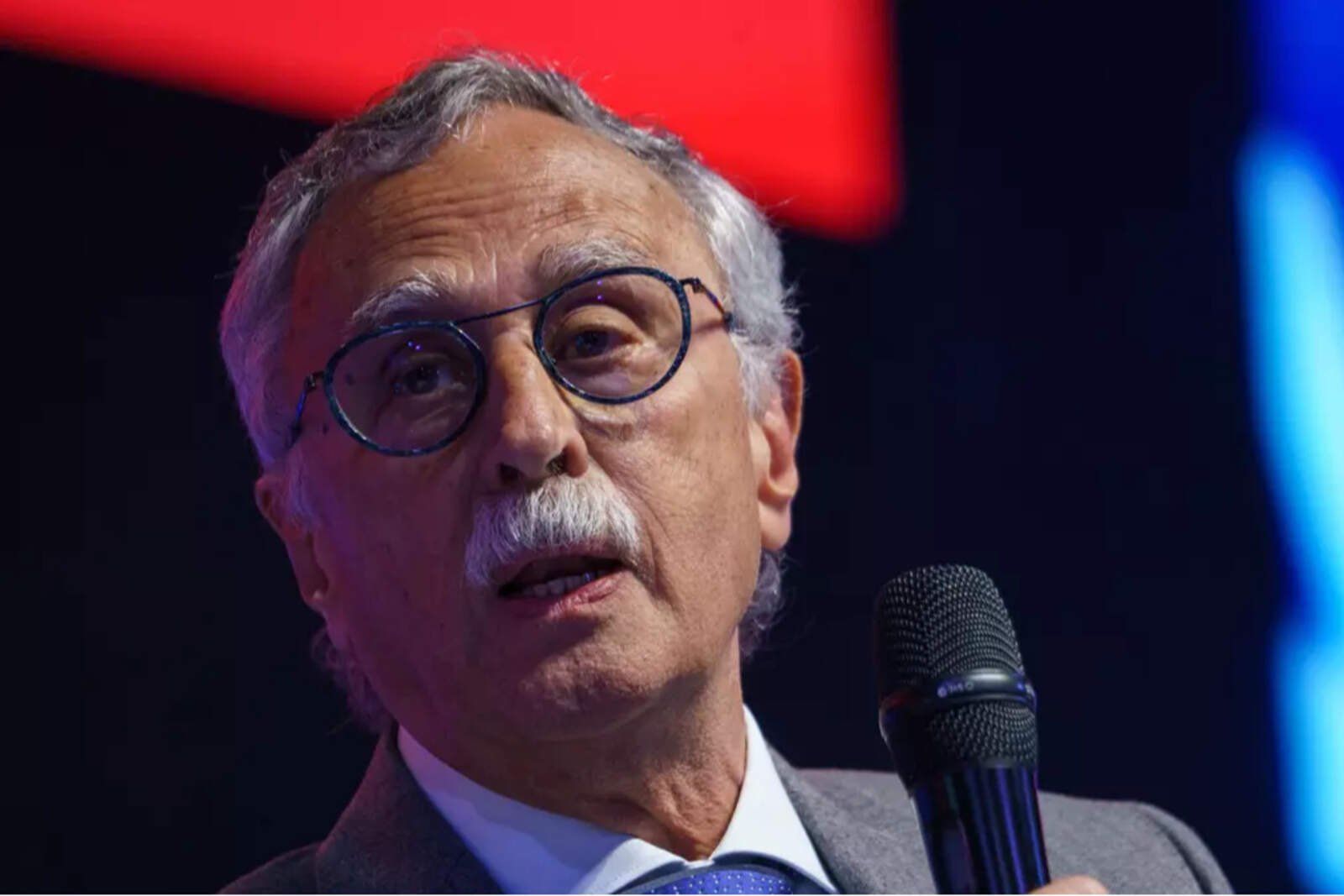
Mario Lugones, ministro de Salud de la Nación.
Under Lugones's administration, doctors' salaries in various public hospitals also improved, while a high-profile complaint was filed against medical residency applicants who cheated during the entrance exam.
The distinguished career of Mario Lugones
It is worth noting that Lugones developed extensive experience in the private medical sector, at Sanatorio Güemes.
Born on July 28, 1947, the official has an outstanding academic background in health services management.
He graduated in 1972 from the Faculty of Medicine at the University of Buenos Aires (UBA) and, shortly thereafter, specialized in Cardioangiology at the University of Salvador in 1976.
Lugones, specialist in Public Health
In 2011, he obtained the title of specialist in Public Health, again at UBA, consolidating his profile as a well-rounded professional in the health field.
His professional career began at Dr. Cosme Argerich Hospital, where he worked in the Cardiology Department between 1972 and 1976.
During his time at this prestigious Buenos Aires hospital, in addition to serving as a resident physician, he actively participated in the emergency department and the Coronary Unit, which allowed him to consolidate his specialization in cardiology in a highly demanding and relevant environment.
Mario Lugones at Sanatorio Güemes
Sanatorio Güemes was the central stage in Lugones's professional development.
Since 1972, he has held various positions, including head of the emergency department and head of the clinic in the Coronary Unit, until 1981, when he assumed more significant roles.
In 2000, he founded and presided over Fundación Sanatorio Güemes, an institution dedicated to clinical research and continuing medical education.
During his leadership, the foundation became a benchmark in medical education, offering everything from residency training to research projects in cardiology.
Throughout his career, he also worked as a cardiologist in renowned institutions, such as Sanatorio Malvinas and Fundación Favaloro, where he worked between 1976 and 1981 coordinating medical training courses.
His career in health management includes a prominent role as Medical Benefits Manager at the National Institute of Social Services for Retirees and Pensioners (INSSJP/PAMI) in 1994, reaffirming his commitment to improving the health system.
Lugones and his management efficiency
Management has been one of the most outstanding areas in Lugones's career.
In recent decades, he has led several key programs, such as the Institute of Medicine for Social Security and Technological Assessment (IMSSET) at the Faculty of Medicine of UBA, where he led studies on the impact of technologies in the medical field.
He also headed the Master's in Health Systems Management, a program that has contributed to the training of new generations of physician managers, thus strengthening the link between medicine and health services administration.
During the early days of Javier Milei's administration, the physician played an essential role as an advisor on health issues, despite not holding a formal position.
He actively participated in several cabinet meetings and collaborated in defining the new government's health policies, focusing particularly on the intersection between health and the economy.
Although he was not initially appointed as minister, his contribution to strategic management proved crucial during Mario Russo's brief tenure.