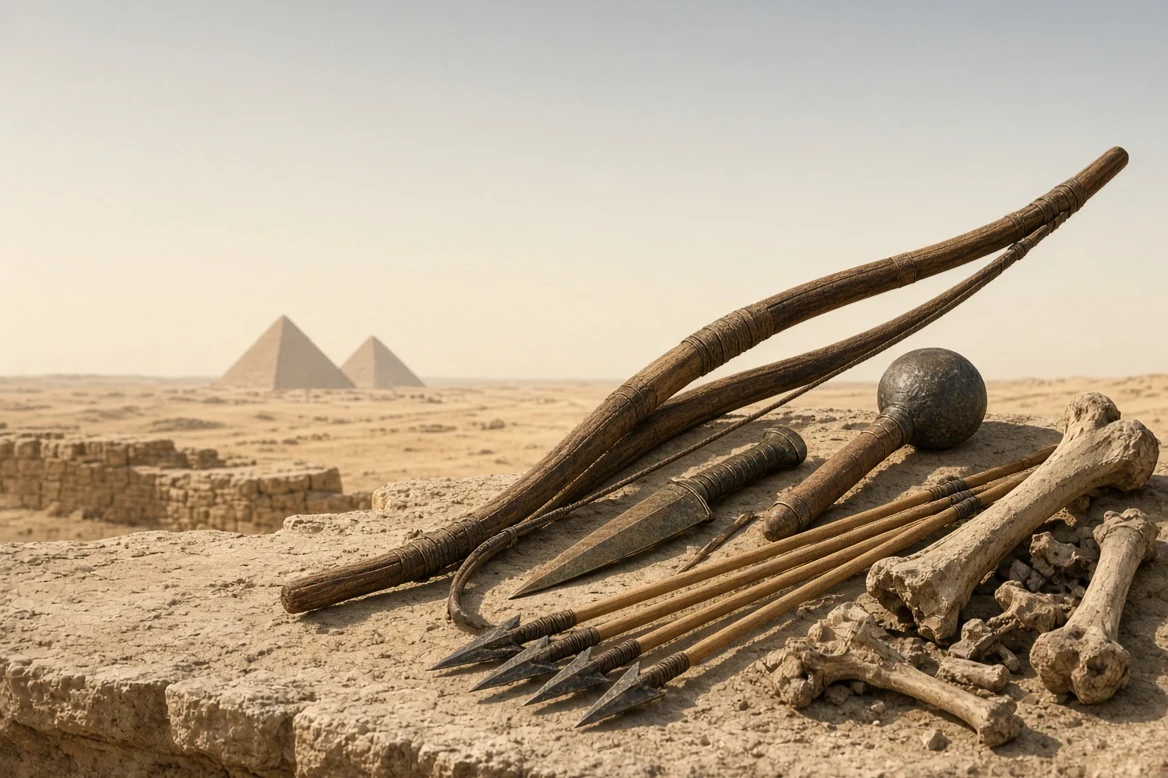
For a long time, it was thought that the weapons found in the tombs of princesses from ancient Egypt were merely symbolic objects. A new analysis of royal remains from Dahshur changes that idea: the bones reveal that at least some of these women regularly trained with bows, daggers, and maces.
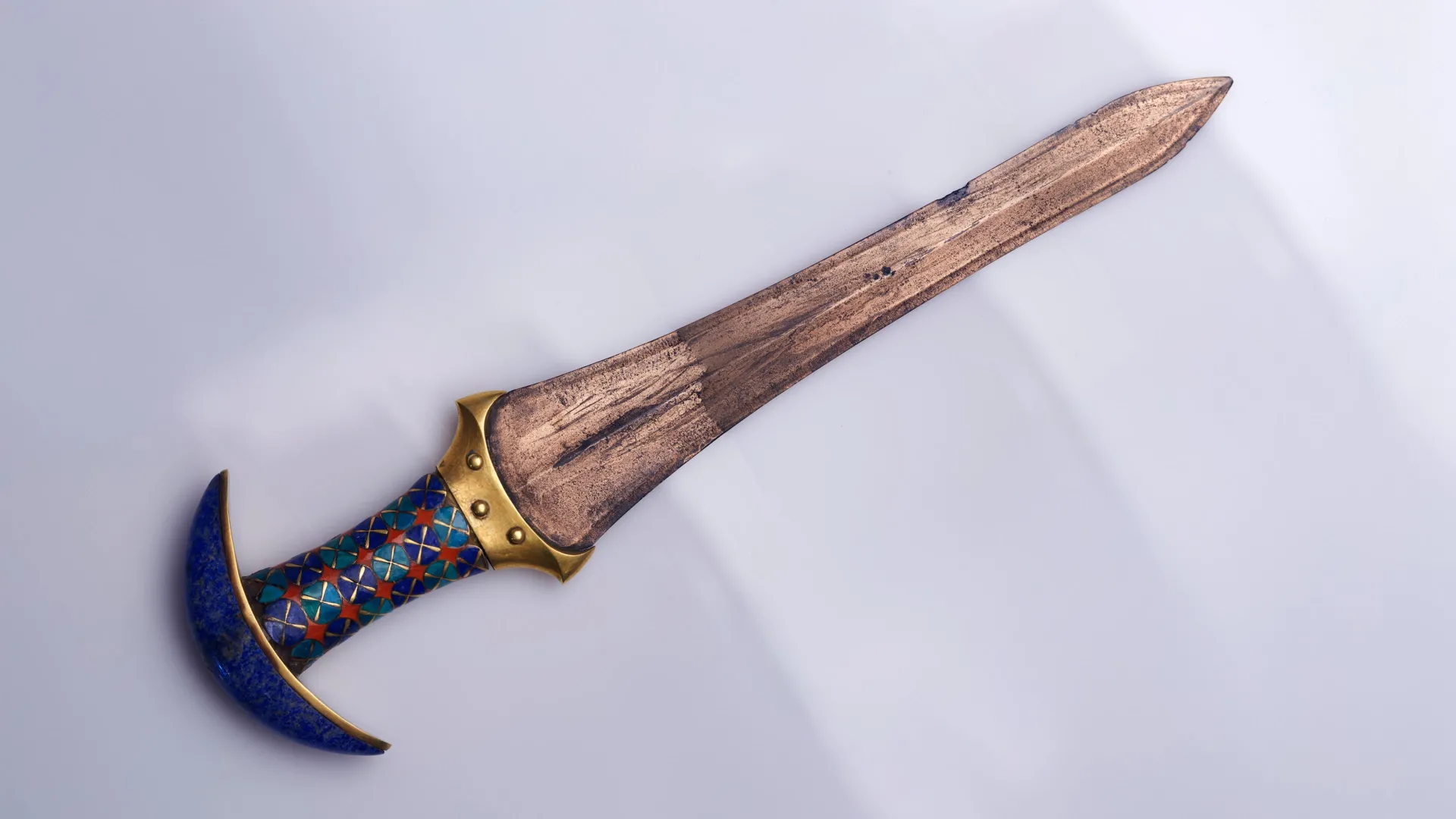
The work, led by researcher Zeinab Hashesh and published in Frontiers in Environmental Archaeology, focused on six royal mummies from the Middle Kingdom. Four of them were sisters and daughters of Pharaoh Amenemhat II. Their tombs included bows, arrows, and, in the case of Princess Ita, a specially crafted dagger.
The remains had been excavated in the 1890s and then lost to research until they were reidentified at the Egyptian Museum in 2020. Although the soft tissues have degraded and parts of the skeleton are missing, including the skulls, the preserved bone material allowed for estimates of age, height, and traces of intense physical activity.
The researchers found highly developed muscle insertions in the upper limbs. These marks correspond to the repeated movements of drawing a bow or stabilizing a weapon. This is not occasional use, but rather a practice maintained over years.
Evidence of Archery and Physical Training
Princess Ita, aged between 28 and 34, exhibited strong muscle anchors in the upper body, consistent with the regular handling of maces or daggers. Princess Khenmet, in her late 30s or 40s, showed more fragile bones but very robust ligaments. Itaweret, also young, between 20 and 34 years old, displayed clear signs of having been an experienced archer.
Similar patterns of bone development appear in Princess Noub-Hotep and King Hor, included in the same study. Hashesh emphasizes that the pronounced development of the upper limbs correlates with high-intensity and repetitive actions, such as pulling the bowstring.
These observations explain why bows, arrows, and maces appeared alongside the women: they were not mere ceremonial offerings, but tools that they themselves used. The finding suggests that members of the royal family, including women, participated in demanding activities such as hunting or weapon training.
In addition to the marks of muscular use, several skeletons show traces of trauma. Itaweret suffered broken ribs, likely from a blow or a fall, and fractures in her feet. The sisters shared rare vertebral anomalies, a detail that points to genetic closeness within the royal family.
Healed Injuries and Medical Care
What is striking is that these injuries healed well. According to Hashesh, they were most likely caused by accidents, falls, or impacts associated with an active life, whether from hunting, military training, or other demanding activities. The fact that they recovered indicates that they had advanced medical care for the time.
The study also detected signs of infections and nutritional deficiencies. Nevertheless, the researchers caution about the limitations of the material: the absence of skulls restricts certain analyses, and not all planned tests have been completed, including stable isotope studies that could provide more data on diet.
Hashesh aims to go beyond identifying these remains. The future goal is to reconstruct their life stories, family relationships, health, and even possible political roles in as much detail as possible, always with ethical respect for the bodies. The creation of 3D prints for teaching and virtual exhibitions is also being considered, alongside the jewelry, weapons, and funerary objects that accompanied them.
While traditional archaeology focused for decades on preserving material treasures, this work shifts the focus to the people themselves. The princesses of Dahshur are no longer seen merely as recipients of symbolic offerings, but as women whose physical activity left a clear mark on their bones.