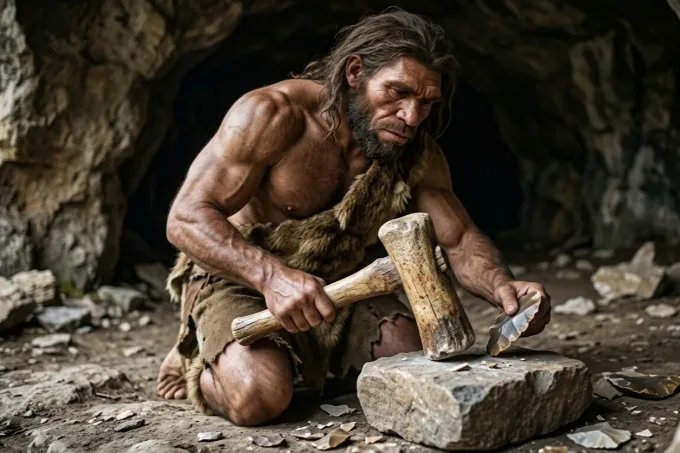

Archaeologists identified a prehistoric hammer made from elephant bone that is nearly 500,000 years old The find, made in southern England, represents the oldest known elephant bone tool in Europe and provides a direct insight into the intelligence and technical skills of early human ancestors
The object was analyzed by researchers from University College London and the Natural History Museum in London According to the study published in Science Advances, it was likely created by early Neanderthals or Homo heidelbergensis It was not a heavy hammer, but a softer percussion tool used to repair and sharpen hand axes and other stone implements when their edges became worn
Simon Parfitt, the lead author of the work, highlighted the ingenuity of these groups: “This remarkable discovery shows the inventiveness and ingenuity of our ancient ancestors They possessed not only a deep knowledge of local materials but also a sophisticated understanding of how to manufacture highly refined stone tools The elephant bone would have been a rare but very useful resource, and it is likely that this was a tool of considerable value”
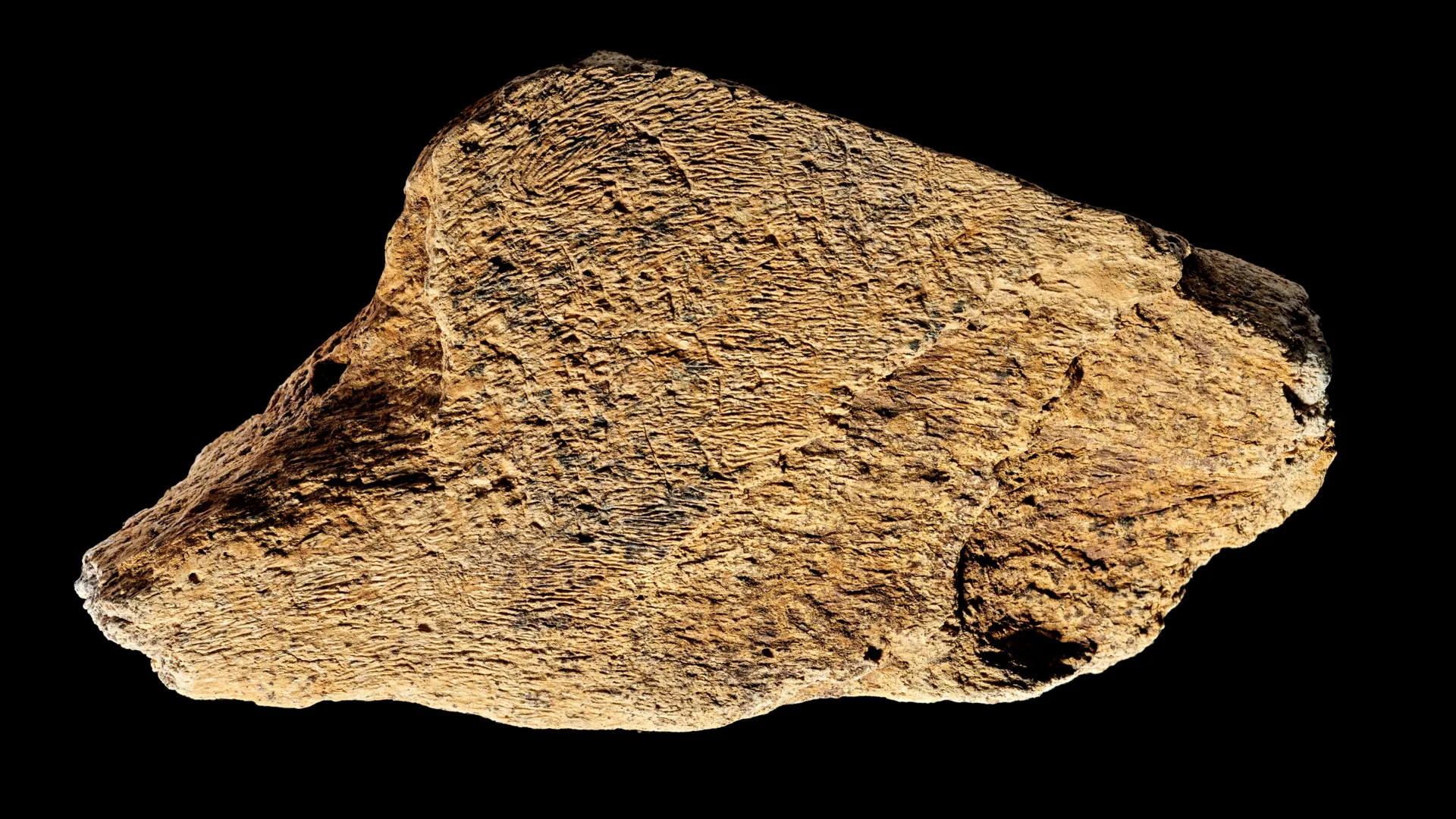
The fossil is approximately triangular in shape It measures about 11 centimeters long, six wide, and three thick Most of it corresponds to cortical bone, the dense and thick tissue that forms the outer layer of bones Its unusual thickness indicates that it comes from an elephant or a mammoth, although there was not enough material left to determine the exact species or the part of the skeleton
Marks that reveal repeated use
The fragment was recovered in the early 1990s at the Boxgrove archaeological site near Chichester in West Sussex At that time, it was not recognized as a tool Only a recent examination using 3D scanning and electron microscopes allowed for the identification of notches, impact damage, and small flint chips embedded in the surface These evidences demonstrate that it was used repeatedly to strike, reshape, and maintain stone tools










