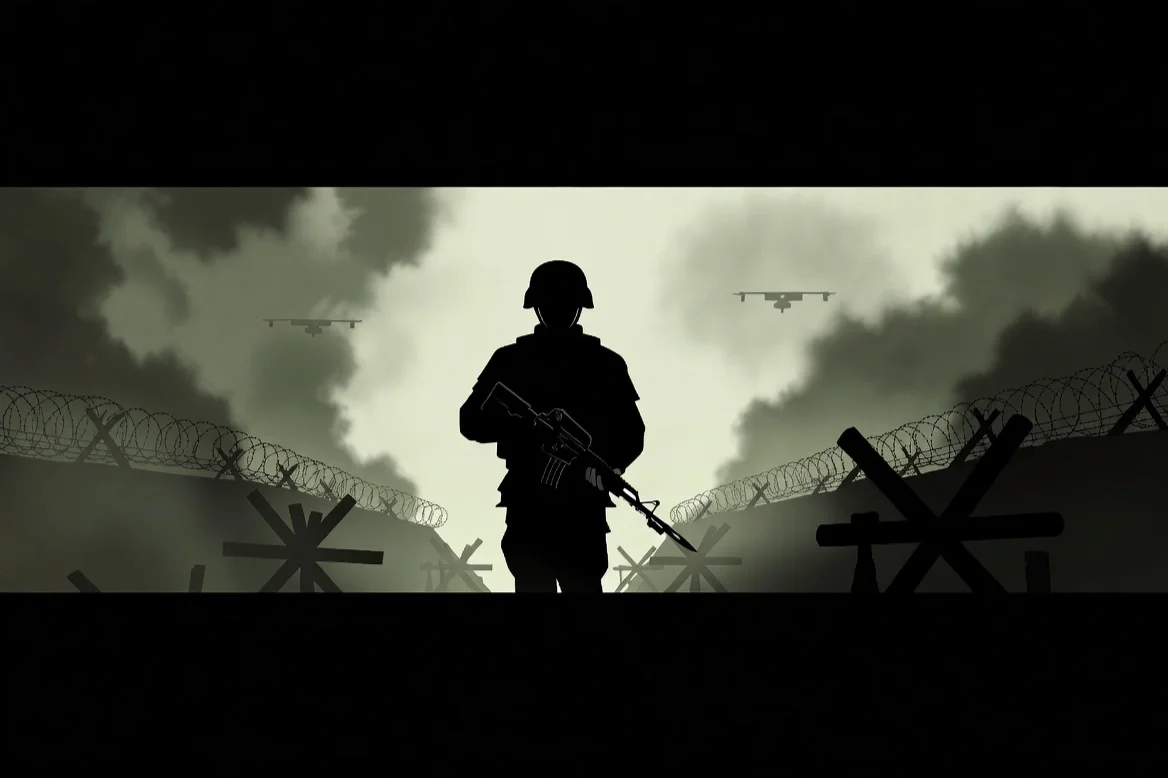
In the midst of a war dominated by FPV drones, smart missiles, and electronic warfare, the United States Army has decided to revive a tool that seems to be taken straight from the trenches of World War I: the bayonet.
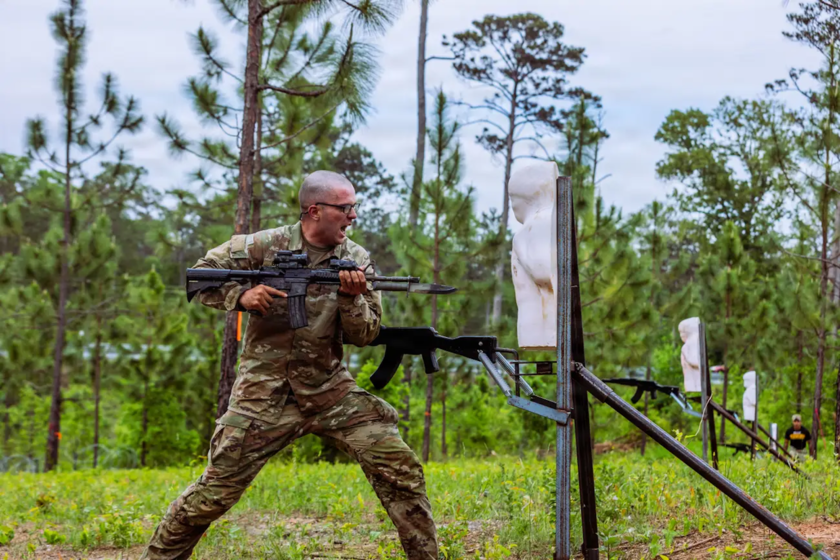
The Ranger School, one of the toughest training programs on the planet, has recently incorporated close-quarters assault exercises where soldiers advance through smoke, tunnels, and obstacles while attacking targets with knives mounted on their rifles.
At first glance, it may seem like a total anachronism. However, for the Pentagon, this decision responds to lessons learned from recent conflicts such as the war in Ukraine.
U.S. strategists are watching with concern how modern battlefields increasingly rely on networks, GPS, and communications that can collapse in minutes due to interference or electronic attacks.
The Risk of "Technological Blackout"
In that scenario, they fear that troops accustomed to operating with cutting-edge technology will become disoriented and unable to continue fighting when screens and air support fail.
That’s why they insist on training basic and brutal skills: advancing under pressure, maintaining cohesion with comrades, and continuing the attack even in situations of extreme exhaustion and total chaos.
The bayonet is not new to modern armies. U.S. troops used it in Korea and Vietnam, and both British and U.S. Marines employed it again in violent urban combat during the Iraq War in 2004.
During the invasion of Iraq, a group of British soldiers launched a bayonet charge against militants near Al Amara. Although it seemed to come from another century, the British Army considered it a tactical success.
The Psychological Value of the Relic
According to specialists, the true value of the bayonet today lies not so much in its offensive capability but in what it represents for the soldier: a tool to develop aggression, discipline, and the ability to keep fighting under intense fear.
It forces one to accept a reality that technological warfare sometimes obscures: many fights are still resolved at close range and in profoundly chaotic conditions.
This return is striking just when conflicts seem more futuristic than ever. In Ukraine, autonomous drones, interference, and constant surveillance fill the front, but when communications fail, combat becomes disordered and primitive again.
The Pentagon seems to have drawn a clear conclusion: the more sophisticated warfare becomes, the more important it is for the individual soldier to continue operating when all technology disappears.
The bayonet symbolizes that last level of military survival. Massive charges from the past are not expected to return, but there is a desire to prepare troops capable of advancing even when all that remains is their determination and their melee weapon.
This paradox defines the current moment: the more advanced wars become, the more armies fear a return to something physical, close, and ancestral.