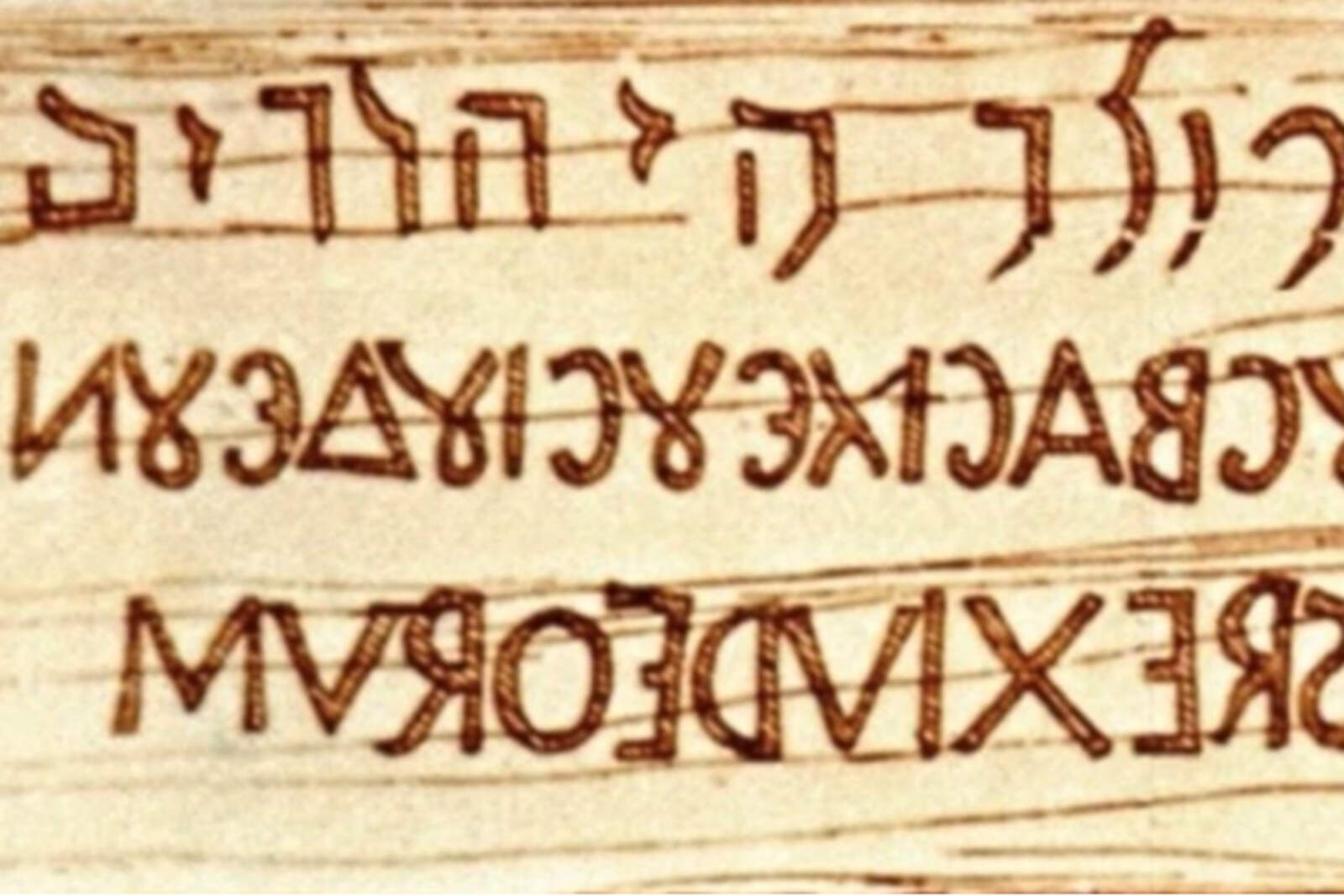

Until the 4th century, Christians identified themselves with the following symbols: a fish, an anchor, the image of a shepherd carrying sheep, an agape around the table, the XP monogram, the two Greek letters, alpha and omega, the dove, which represented the Holy Spirit, among others.
So, how did the Cross later come to supplant this primitive symbolism?
During the 2nd century, Christianity spread rapidly throughout the Roman Empire. The new faith grew so much that it first caused mockery among the Romans, then concern, later fear, and finally unleashed countless persecutions against this new religion; accused of "atheism" because it despised the entire pantheon of Roman pagan gods and did not tolerate the relaxed morals of the Empire, as well as the prevailing promiscuity in Rome.
The famous "Alexámenos graffiti" has been preserved on a wall in a section dedicated to servants, on the Palatine Hill, in the Eternal City. It is a drawing from the 1st century AD, where, on the left, a human figure (Alexámenos) is seen paying homage to a character, to his right, with a donkey's head, who appears crucified. A legend in Greek appears, reading "Alexámenos worships his god," an obvious satirical reference to Christ.
This is the first graphic representation of the crucifixion of Jesus. It demonstrates that the event and the manner of his execution were publicly known at the time, as well as the object of mockery by pagans. Who would think of having a dead god, in such an ignominious and absurd way? the authors of the graffiti must have imagined.
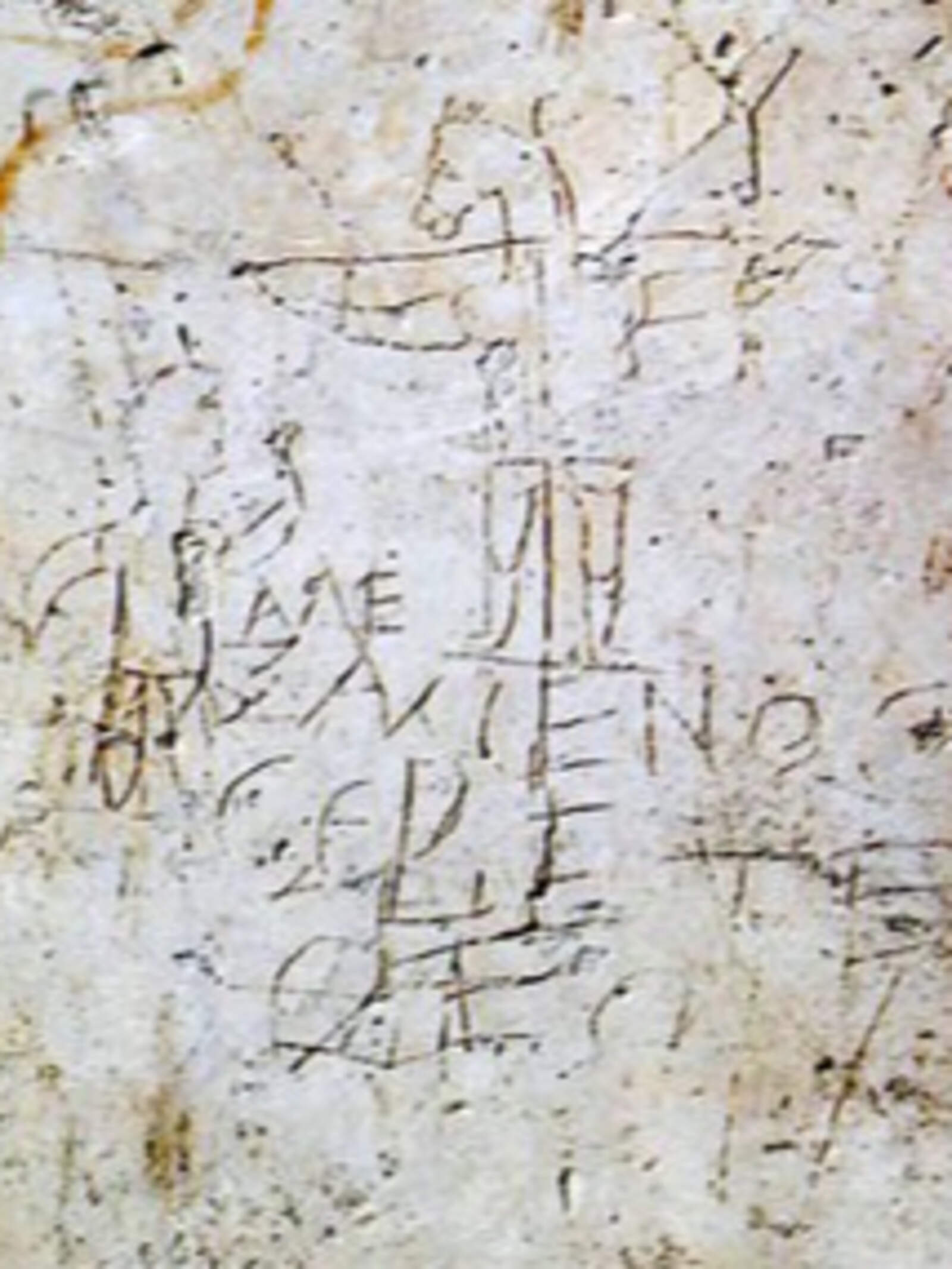
Alexámenos graffiti (Museum of the Antiquarium Palatine of Rome)
On October 28, 312 AD, Constantine, one of the contenders for the Roman throne, defeated his rival Maxentius at the Battle of the Milvian Bridge, on the outskirts of Rome. Lactantius, the Christian teacher of Crispus, Constantine's eldest son, recounts that the night before the battle, Constantine had a dream in which the God of the Christians appeared to him and ordered him to draw the chi-rho (the XP) on his soldiers' shields. Eusebius of Caesarea would say, 20 years later, that what had appeared to him in the dream was actually a luminous cross, with the Greek words τούτω νικα (or in Latin: in hoc signo vinces, "with this sign you will conquer"); and Christ himself inviting him to place the chi-rho on the imperial standard (the labarum).
This way, little by little, the cross began to appear timidly in the history of Christian symbolism. The following year, and surely influenced by his mother, Empress Saint Helena, Constantine approved the Edict of Milan. After almost two centuries of persecutions, Christianity became tolerated by the Roman Empire.
Gradually, Christians became the official religion of the state. Faced with the first heresies and differences that arose, Constantine convened the Christian bishops in 325 AD to meet in Nicaea, at the first ecumenical council, where the Nicene-Constantinopolitan Creed was established, which is recited in many Christian denominations to this day, and Arianism was condemned as heresy. In one stroke, Constantine not only managed to unify the empire under his rule, but also the Christian Church, which was threatening to fragment.
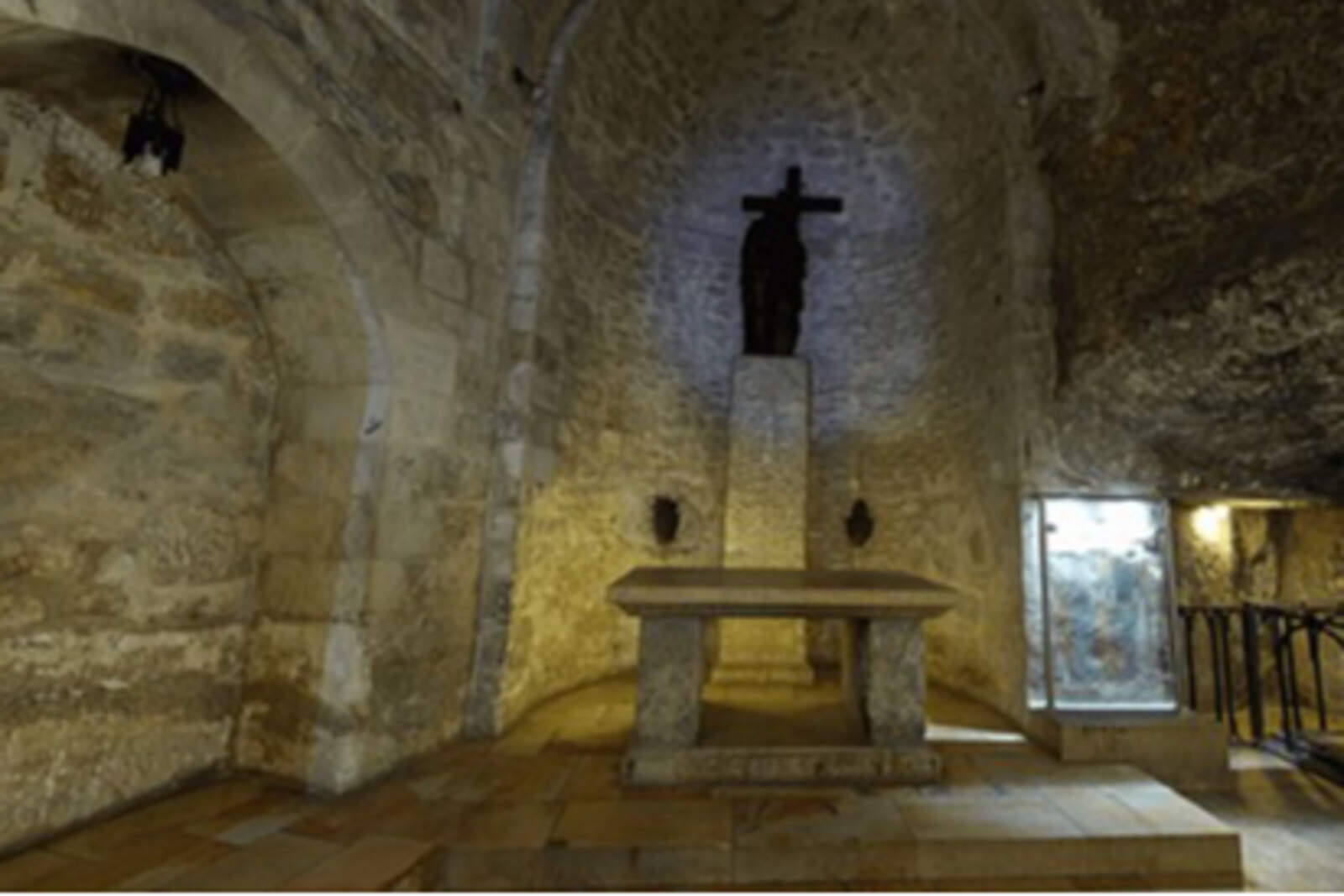
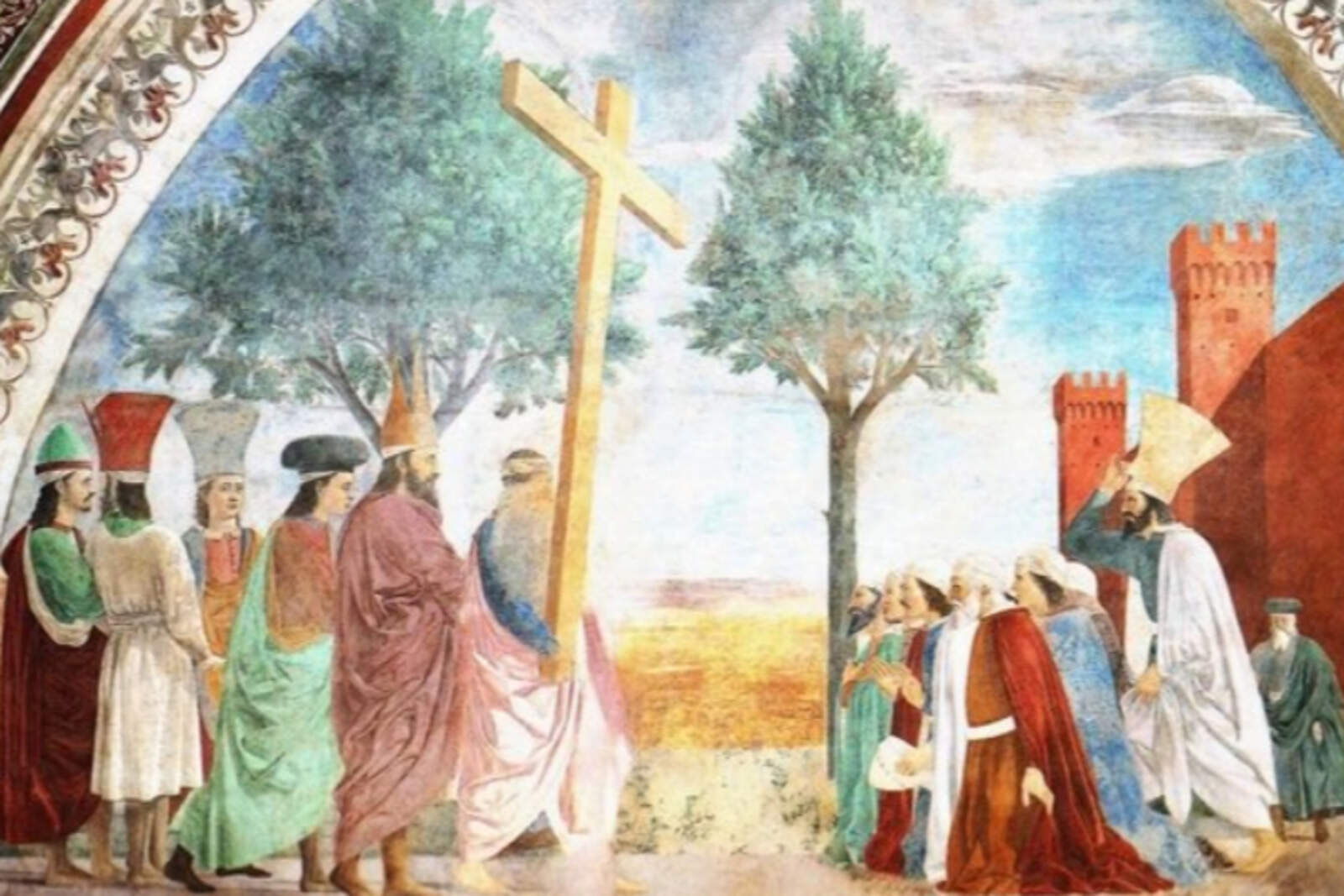
It was in Nicaea that the Patriarch of Jerusalem, Bishop Macarius, complained to the emperor that he found it abhorrent that the site of the crucifixion and the tomb of Christ in Jerusalem had been covered with rubble, under the reign of Emperor Hadrian (117-138 AD), that a slab was then placed on top and later a temple dedicated to Venus was built above it. That this was an affront to all Christians. Considering Macarius's request reasonable, Constantine authorized him to demolish the pagan temple and excavate the site in search of the Holy Places.
Eusebius of Caesarea, bishop and first Christian historian, contemporary to these events, narrated in his "Life of Constantine," Book 3, Chap. XXVI: "Unbelieving and profane men conceived the idea of making that redemptive cave disappear from among men… And making a great effort, they covered the entire place with earth brought from outside. Then, raising the level of the ground and after paving it with stone slabs, they hid the divine grotto under such a huge mound. Later… they built a dark chamber for the dissolute spirit of Aphrodite, where they offered execrable sacrifices on profane altars".
In a similar way, and in that same century, Saint Jerome, translator of the Bible into Latin from Greek (the "Vulgate"), also tells us: "From the time of Hadrian until the reign of Constantine, for about 180 years, at the place of the resurrection, worship was given to an image of Jupiter, and on the rock of the cross to a marble statue of Venus… The authors of the persecution imagined that they would take away our faith in the Resurrection and the Cross if they contaminated the sacred places with their idols".
That is, the tradition of the Christians had maintained the exact location of the Holy Places after almost three hundred years. Is that possible? Indeed, in the first place, not so much time had passed since the Passion of Christ, which was an event that left a deep mark on all his followers in Jerusalem. It is to be imagined that the place of his Resurrection must have been a site of pilgrimage, prayer, and recollection for the first Christians, who must have made every effort to preserve those memories for posterity. Something similar could be mentioned among us, the Tucumanians, for example. Tradition has preserved that, for a month, in 1814, General José de San Martín resided at the estate of Pedro Bernabé Gramajo, in La Ramada de Abajo, in Burruyacú, without there being documentary proof of that event, which happened more than two hundred years ago. To this day, every August 17, the Government of the Province pays tribute to the Liberator at that historic place, which no one questions.
That is, oral tradition can very well preserve the location of spaces of great historical or spiritual relevance, to transmit them to posterity, especially if not so many years have passed.