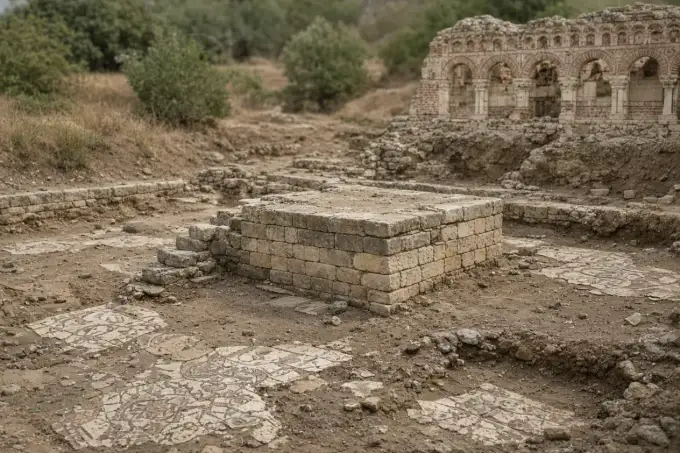
Archaeologists working in the capital of Lithuania have unearthed significant remains of the Great Synagogue of Vilnius, a Renaissance-Baroque style building erected in the 17th century that for centuries concentrated the Jewish religious life of the city.
The temple was looted by the Nazis in 1941 and later demolished by Soviet authorities after World War II. Since 2011, a joint team from the Lithuanian Archaeological Society, the Israel Antiquities Authority, and the Jewish community of Lithuania has been advancing the excavations at the site.
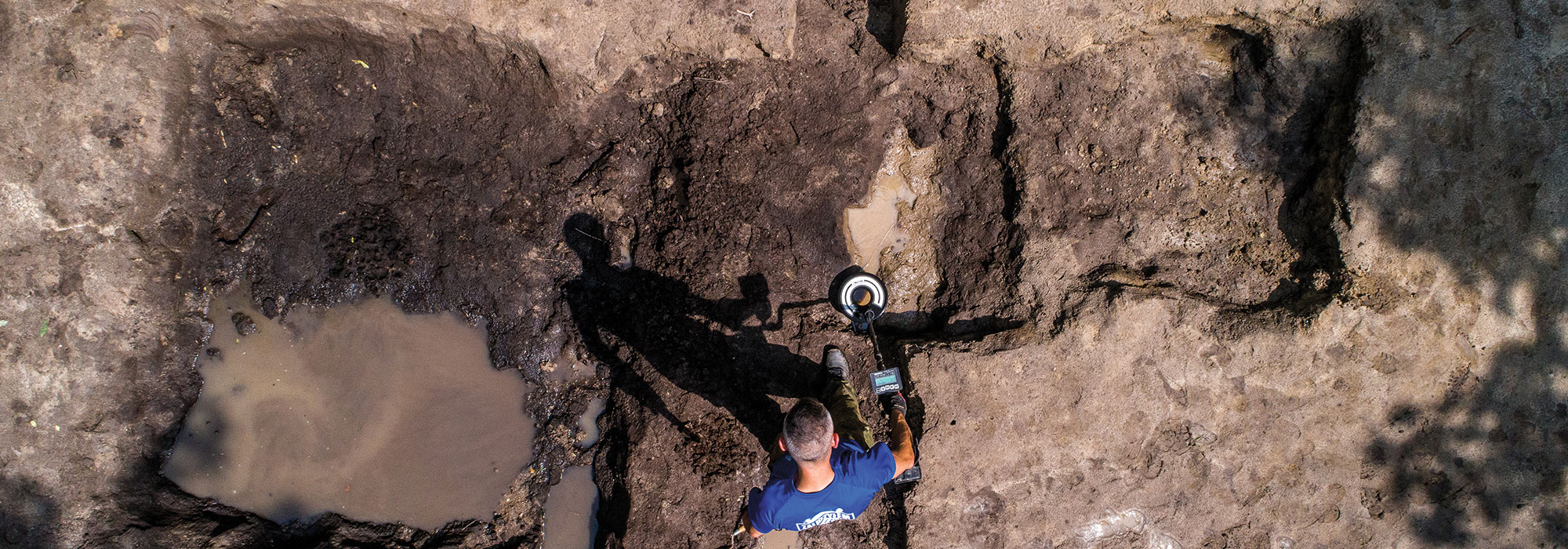
The most recent work has allowed for the recovery of important parts of the main prayer hall. Among the findings are the impressive remains of the bimah, the central podium from which the Torah was read, as well as sections of the gallery designated for women.
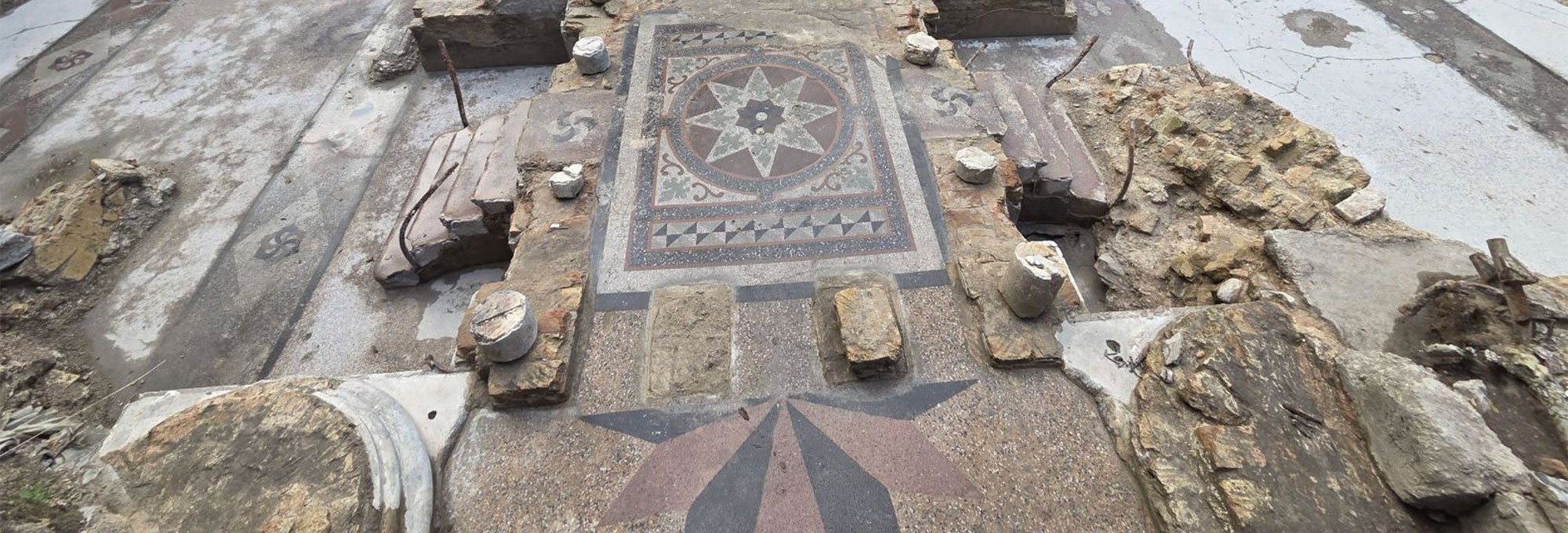
Colorful floors with floral and geometric motifs that still retain some of their original vibrancy have also appeared. These decorative elements provide a concrete image of what the interior of the building looked like in its time of splendor.
Personal Items and Name Plates
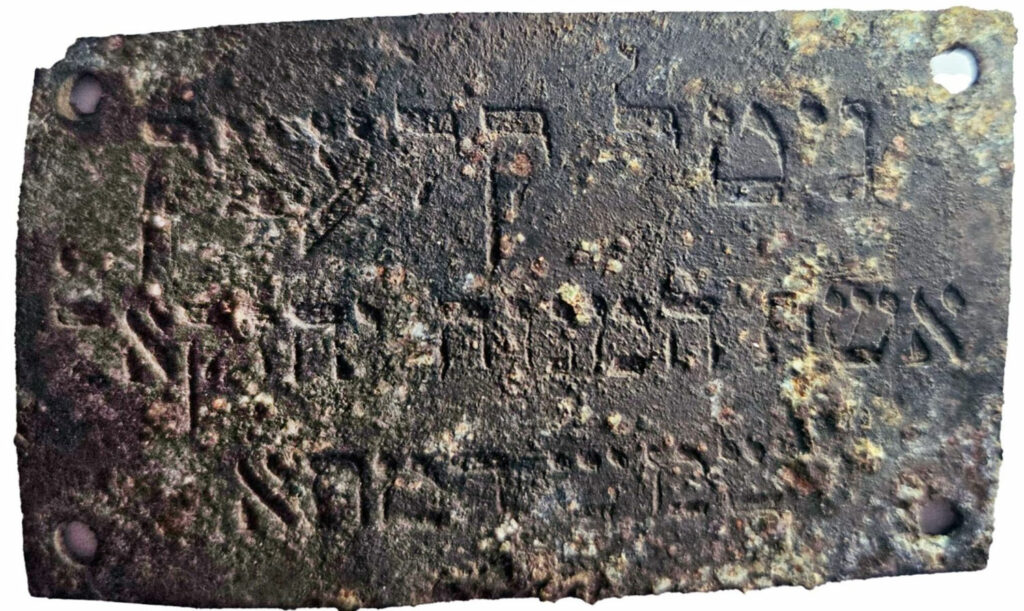
The team also recovered seat plaques bearing the names of regular worshippers. One of them is inscribed with the Ten Commandments. These objects provide a direct link to the people who frequented the place.
John Seligman from the Israel Antiquities Authority highlighted the emotional value of the discoveries: “The findings give us a touching, almost personal familiarity with the people who prayed here and with the community life that revolved around the synagogue for centuries.”
The Great Synagogue was not only a place of worship. It served as the hub of social and religious life for the large Jewish community of Vilnius, known at the time as the “Jerusalem of the North.” Its destruction represented an irreparable loss of the city’s cultural heritage.
The current excavations aim to reconstruct, from the material remains, everyday and ritual aspects that written documents do not always record in detail. Researchers emphasize that each new finding allows for the recovery of fragments of a violently interrupted history.
A Long-Term Project
The joint work between Lithuanian and Israeli institutions has been ongoing for over a decade. The continuity of the project has allowed for systematic progress across different areas of the site where the building once stood.
The remains of the bimah and the women's gallery are especially valuable because they show the spatial organization of worship and the traditional separation between men and women during ceremonies. The decorated floors, in turn, reveal the aesthetic care that was put into the interior of the temple.
The name plates provide an almost intimate dimension: they allow for the identification of specific individuals who regularly occupied those places. This type of evidence transforms the site from a simple set of ruins into a space inhabited by real people.
Project leaders insist that the findings are not only of interest to specialists. They represent an opportunity for contemporary society to connect with a community that was a central part of Vilnius's history and that was decimated by Nazi persecution and subsequent policies.