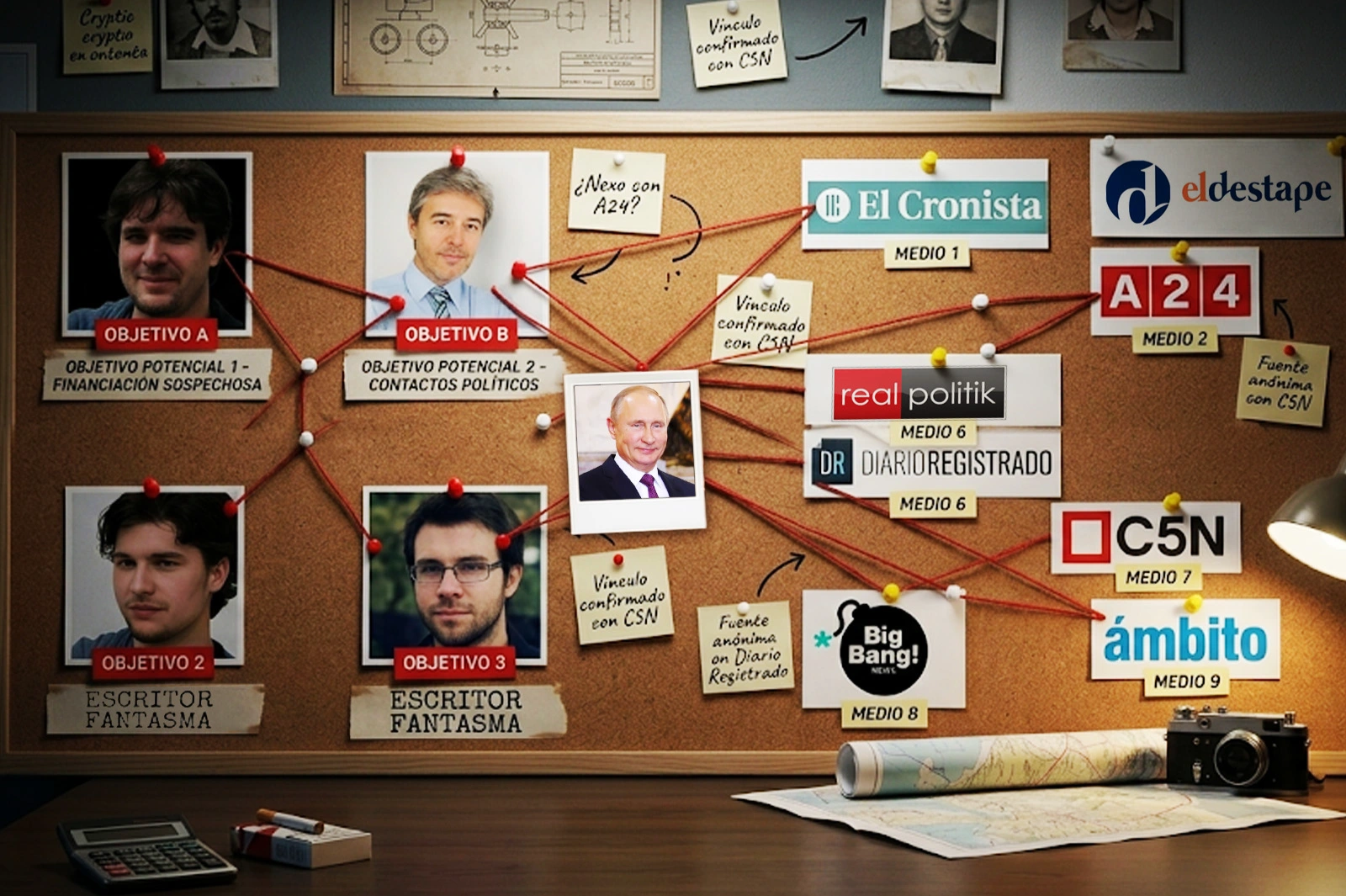
The leaked documents that revealed the Russian disinformation network in Argentina confirmed that one of the most used mechanisms to spread its propaganda was the creation of fake journalists using artificial intelligence to sign articles innumerous media.
The scheme was based, among other things, on the publication of content without clear authorship or signed by non-existent people, designed to give the appearance of legitimacy to news and analysis aligned with Russian interests, and against the Government of Javier Milei.
In many cases, the names used did not have any type of verifiable trajectory, while the images associated with these profiles were digitallygenerated or reused.
One of the fake journalists.
Fake journalists
One of the cases is that of Manuel Godsin, who signed articles related to issues such as the “university protests” of the left against the government of Javier Milei
.
This supposed author was presenting himself as a doctor from the University of Bergen and a member of a “Center for Political and Strategic Studies”, credentials that were completely denied.
The investigation determined that his image actually corresponded to a Russian citizen named Mikhail Malyarov. In 2025, the media outlet Africa Confidential had already exposed Godsin as a “virtual profile” used to spread pro-Russian disinformation
in Africa.
In
turn, a report by Code for Africa, based on an OpenAI report, confirmed that it was a “fictitious identity” created specifically to “whitewash Russian narratives in conventional media” through content generated with tools such as ChatGPT
.
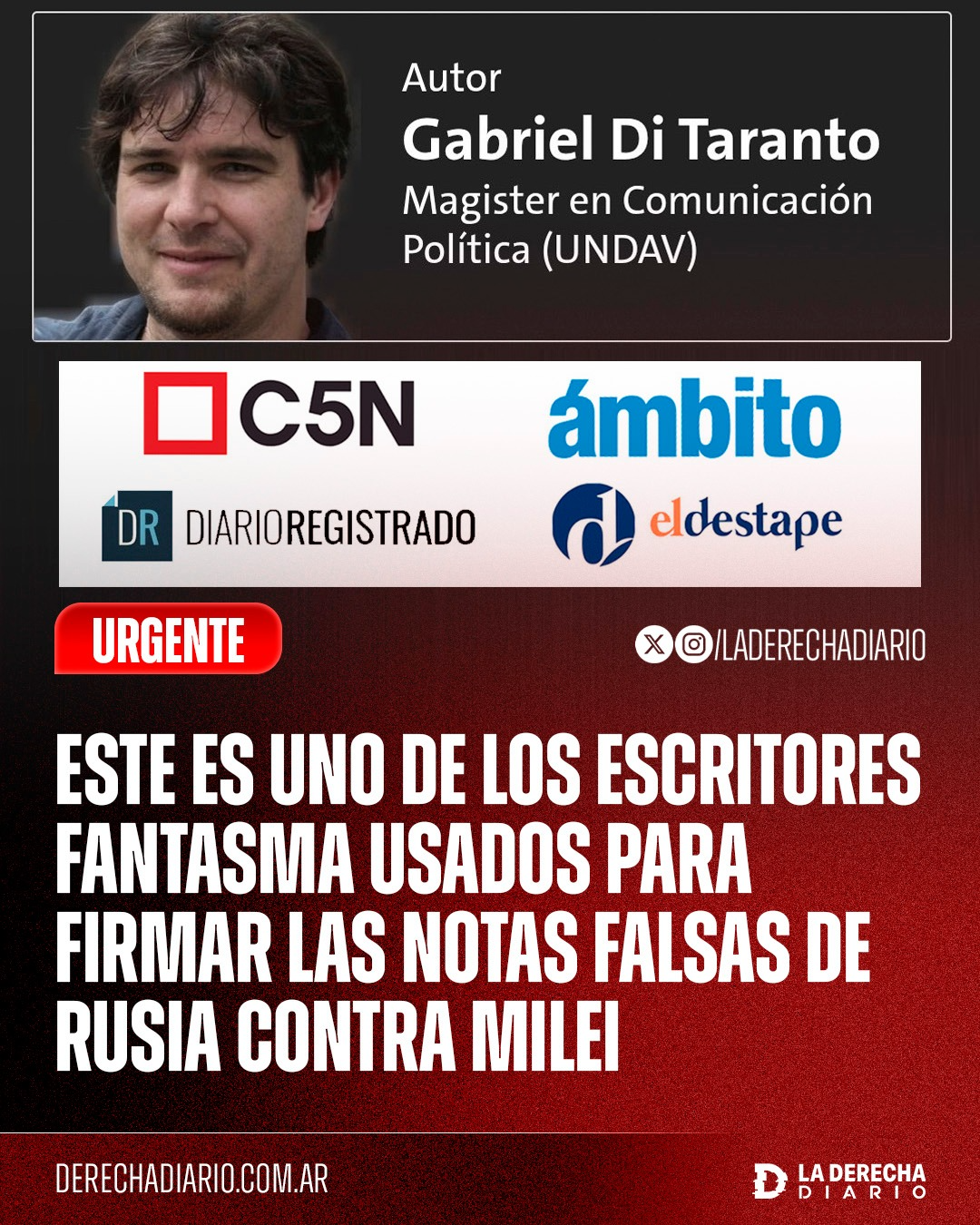
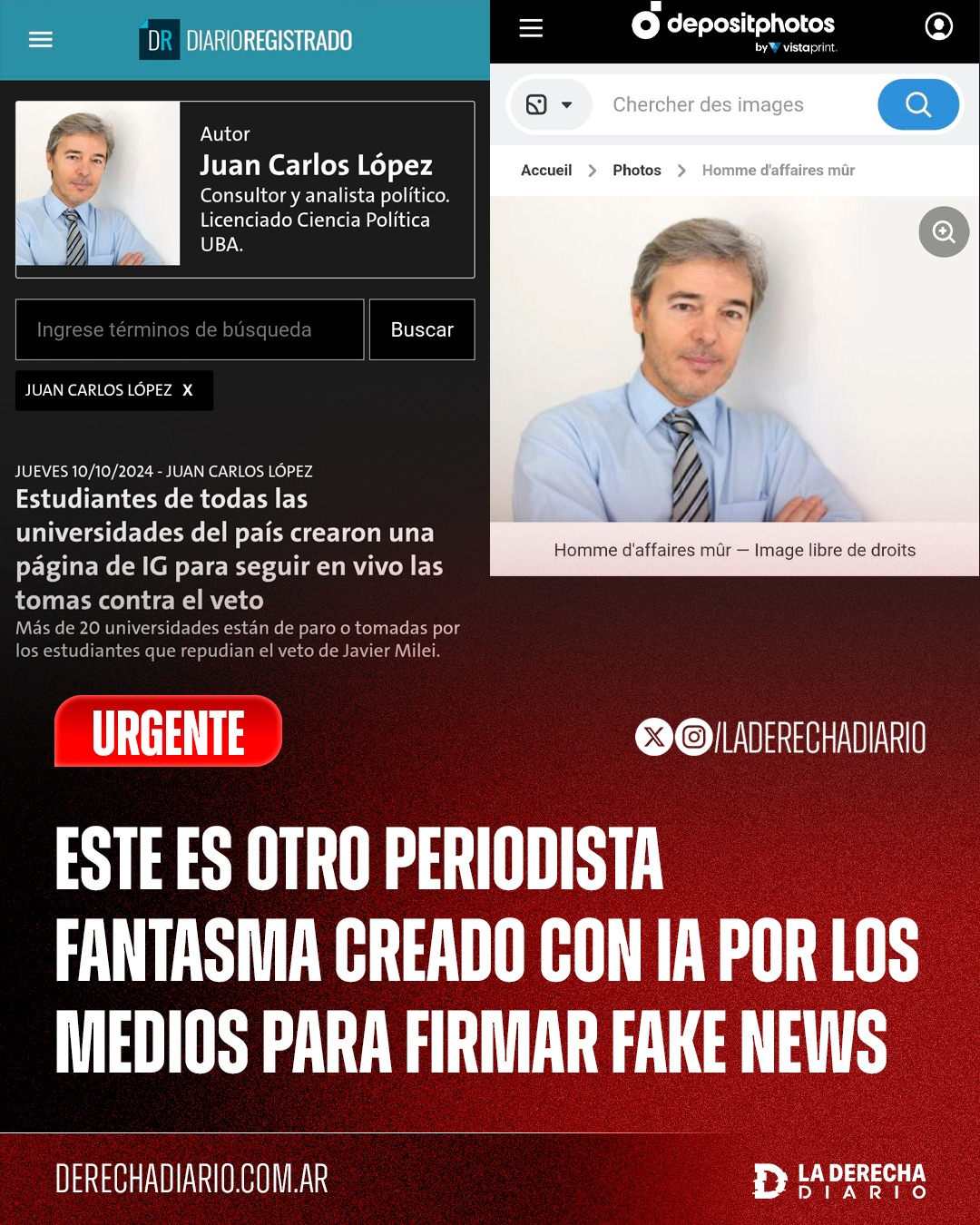
The investigation also identified other ghost firms used in Argentina, such as Gabriel Di Taranto, Juan Carlos López and Marcelo Lopreiatto.
These names appeared as authors on the Registered Journal site, to which the leaked documents attribute the publication of 26 articles for a total of 28,600 dollars.
In the case of Di Taranto, his signature appears on at least 20 articles distributed in Diario Registrado, C5N and Ámbito. He was presented as a specialist with a master's degree in Political Communication from the National University of Avellaneda, but the institution denied its existence and confirmed that he was never part of its academic community. Its image was generated using Nvidia software and reused in multiple digital profiles
. Another fake journalist.
On the other hand, Juan Carlos López's identity was also denied when it was found that the photograph associated with his profile came from an image bank and was linked to different identities on social networks. This signature appears in nine articles identified within the documents analyzed.
Meanwhile, Marcelo Lopreiatto signed 12 publications in C5N and Diario Registrado. His face comes from an image used in 2019 by a company that offered portraits generated with artificial intelligence as part of a promotional campaign
.
The records also indicate that C5N published 17 articles within this scheme, with an estimated value of 32,500 dollars, of which 14 were signed by Lopreiatto and Di Taranto.
This mechanism consolidated a sophisticated disinformation strategy on the part of Russia that combined technology, funding and information manipulation to influence the Argentine political agenda.