A metal detectorist found two deposits of coins and jewelry from between the years 1000 and 1050, stored in birch bark containers and hidden in a forest
An unexpected find in southern Finland has once again brought medieval history of the region into the spotlight A metal detecting enthusiast located a collection of silver coins and jewelry that, according to specialists, dates from between the years 1000 and 1050
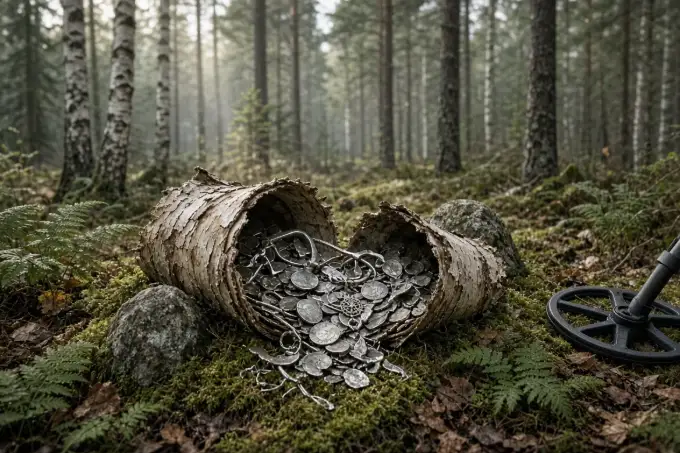
The material was spread across two nearby deposits, placed inside containers made from birch bark Both were buried several meters apart in a forested area marked by a couple of stones
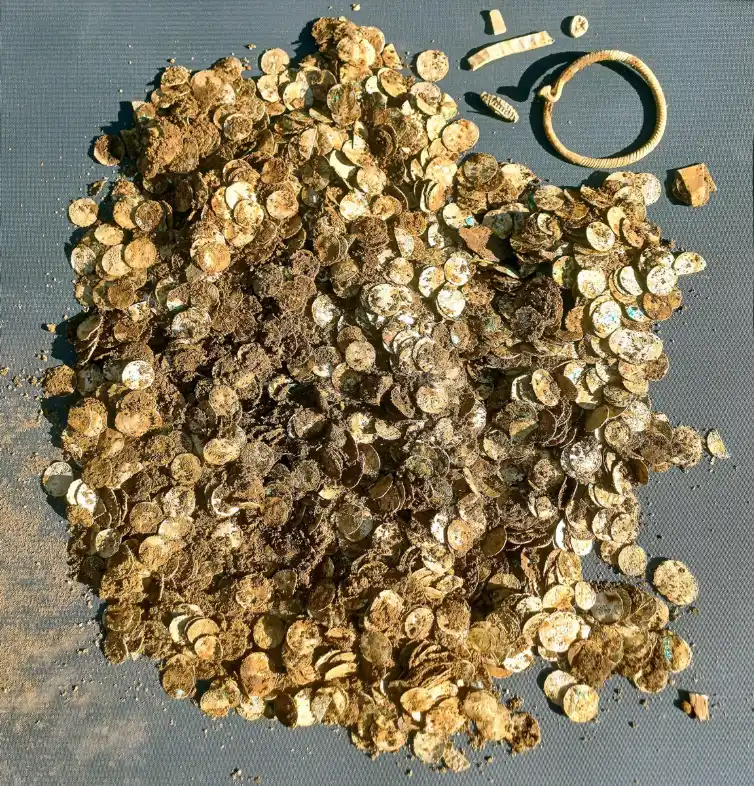
Esko Tikkala from the Lahti Historical Museum explained that the complete set weighs around four and a half kilos “There are quite a few coins in this treasure,” commented the specialist “I haven't had time to review them all yet”
In an initial analysis, Tikkala identified pieces originating from what is now Germany, Sweden, and Great Britain, as well as dirhams minted in the Islamic world He also found fragments of cut silver, known as hacksilver, which were used as a means of payment by weight
A divided and well-protected deposit
The decision to separate the treasure into two containers and bury them at a certain distance suggests a deliberate intention to protect the accumulated value The use of birch bark as a storage material was common at the time due to its durability and availability in the Nordic forests
Specialists highlight that the presence of coins from such diverse origins reflects the extensive trade networks that spanned northern Europe at the beginning of the second millennium Trade connected the Baltic with the center of the continent and with the Near East through river and land routes
The find confirms the circulation of silver as a form of wealth and exchange in a society that did not yet have a consolidated local currency The cut fragments allowed for flexible adjustment of transaction values without relying on fixed denominations
Tikkala noted that the cleaning and cataloging work has only just begun Each piece will need to be analyzed to determine its exact provenance, its state of preservation, and its possible connection to other similar finds in the region
Historical context and next steps
The period between the year 1000 and 1050 coincides with a time of intense commercial contacts and population movements in northern Europe Foreign coins arriving in Finland during this time are often interpreted as evidence of travels, exchanges, or even loot accumulated over the years
The site of the discovery, marked by two natural stones, may have served as a visual reference point for whoever hid the treasure Such markings were common when one sought to recover the material at a later time or when a discreet signal was intended for a small circle of people
For now, the collection remains under the custody of Finnish cultural authorities Researchers plan a more thorough study that includes metal composition analysis and comparison with other deposits from the same period found in the country and neighboring regions
The discovery reinforces the idea that southern Finland was part of a dynamic economic landscape where silver circulated freely and where people carefully stored their wealth against potential risks The presence of Islamic coins alongside European pieces shows the extent to which these networks extended beyond local borders

 The site of the discovery, marked by two natural stones, may have served as a visual reference point for whoever hid the treasure Such markings were common when one sought to recover the material at a later time or when a discreet signal was intended for a small circle of people