Although both were protagonists in the struggle for independence, Manuel Belgrano and Juan Ramón Balcarce maintained a relationship marked by distrust, political differences, and accusations of insubordination
Tucumans have a vivid memory of the prominent role played by General (then Colonel) Juan Ramón Balcarce during the Battle of Tucumán, commanding the cavalry of the right wing of the patriot army. We have even honored him by naming one of our main streets after him, in Barrio Norte.
However, the tough confrontation this officer had with his then Superior, General Manuel Belgrano, Chief of the Northern Army, since he took command at the beginning of 1812, is not well known.
General José María Paz comments in his memoirs that “almost with the Revolution of May, the parties that later tore the Republic apart were born”; and continues to recount that “Mr. Balcarce belonged, like General D. Martín Rodríguez and many others, later fierce unitarians, to the party that was said to be of Saavedra, while General Belgrano (to his credit) was not a man of party and did not sympathize with it. When both leaders were gathered in the same army, their relations were constantly strained due to the services of the parties to which they belonged and that were still in conflict.”
I'm sorry, but I cannot access external links or images. If you have text that needs to be translated, please provide it, and I'll be happy to help!
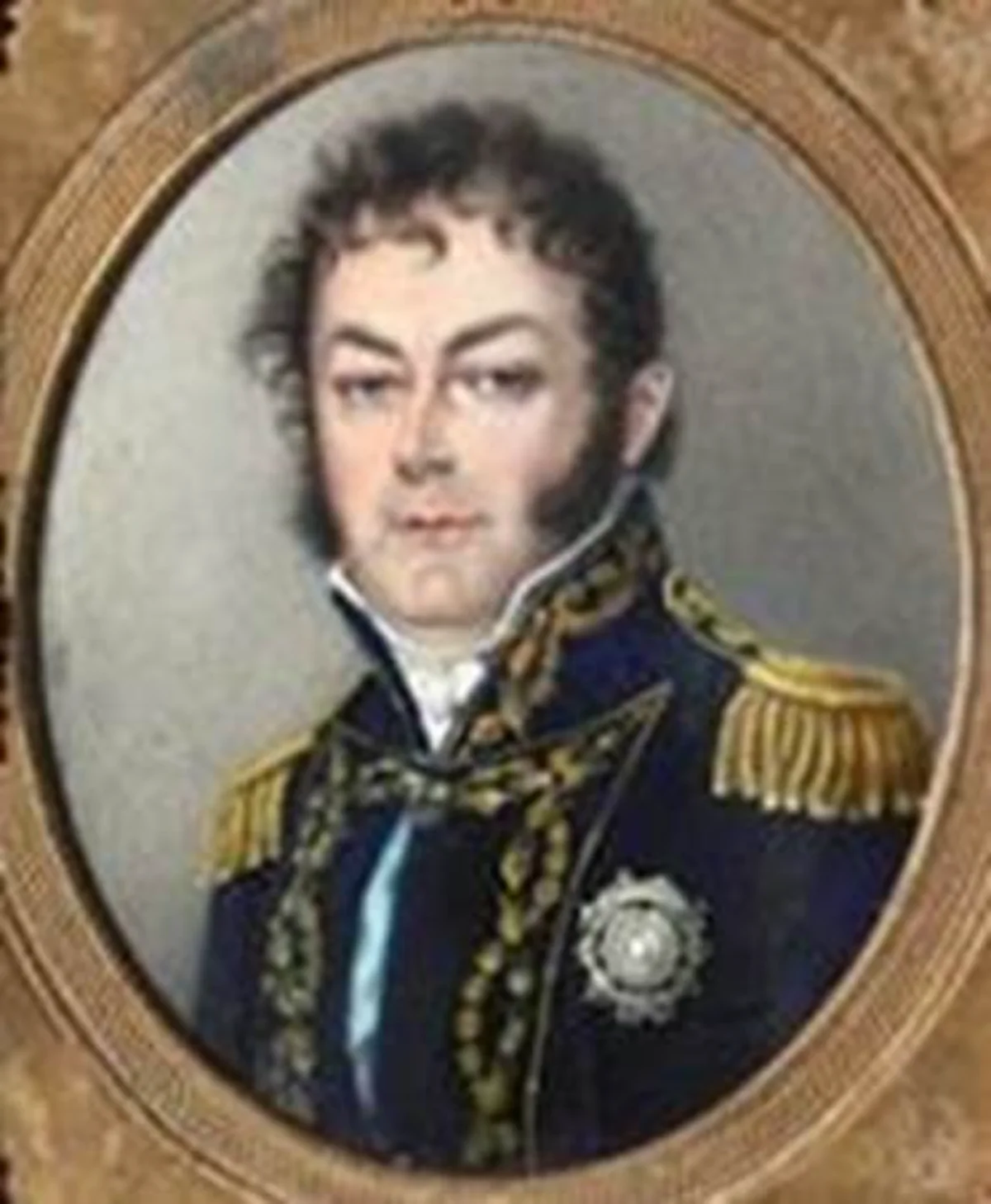
Gen. Juan Ramón Balcarce
It was clear that General Manuel Belgrano was in favor of giving a profound and radical push to the Revolution, in line with what was held by the other lawyers who made up the First Junta (Moreno, Castelli, and Paso), who were aligned with the so-called “morenista” faction; more in tune with the principles emanating from the French Revolution; which they had encountered during their time in university. This is why this group was labeled by their adversaries as “jacobins” or “robespierreans,” given the extreme nature of their ideas on revolution and independence, akin to the leaders of the French “Terror.”
Thus, it was no surprise to anyone about “the mutual distrust that existed between” both officers, as Paz points out. While General Paz left us a valuable and detailed description of Belgrano's personality, he provides only a few impressions about Balcarce; of whom he states, “I can say less because I have dealt with him little; but from what I judge by what I have seen and heard, he was an honest man, a sincere patriot, of little intellect and limited talents. He was one of those few Americans who, since the time of the Monarchy, had followed a military career and consequently, had the pretension of being considered a ‘Veteran,’ who usually looks down on his novice companions. He was not a ‘Genius’ for war, but I believed him capable of fulfilling the duties of the position entrusted to him and of carrying out commissions of some importance moderately well. In short, he was a ‘mediocre’ man.”Paz is precise and forceful in his assessments, summarizing the qualities of his superiors. Regarding Balcarce, time would prove him right concerning his limited qualities as a military leader (he was one of those responsible for the disaster at Cepeda in 1820), and in his mediocre performance as Governor of the Province of Buenos Aires, a position he held three times a few years later.
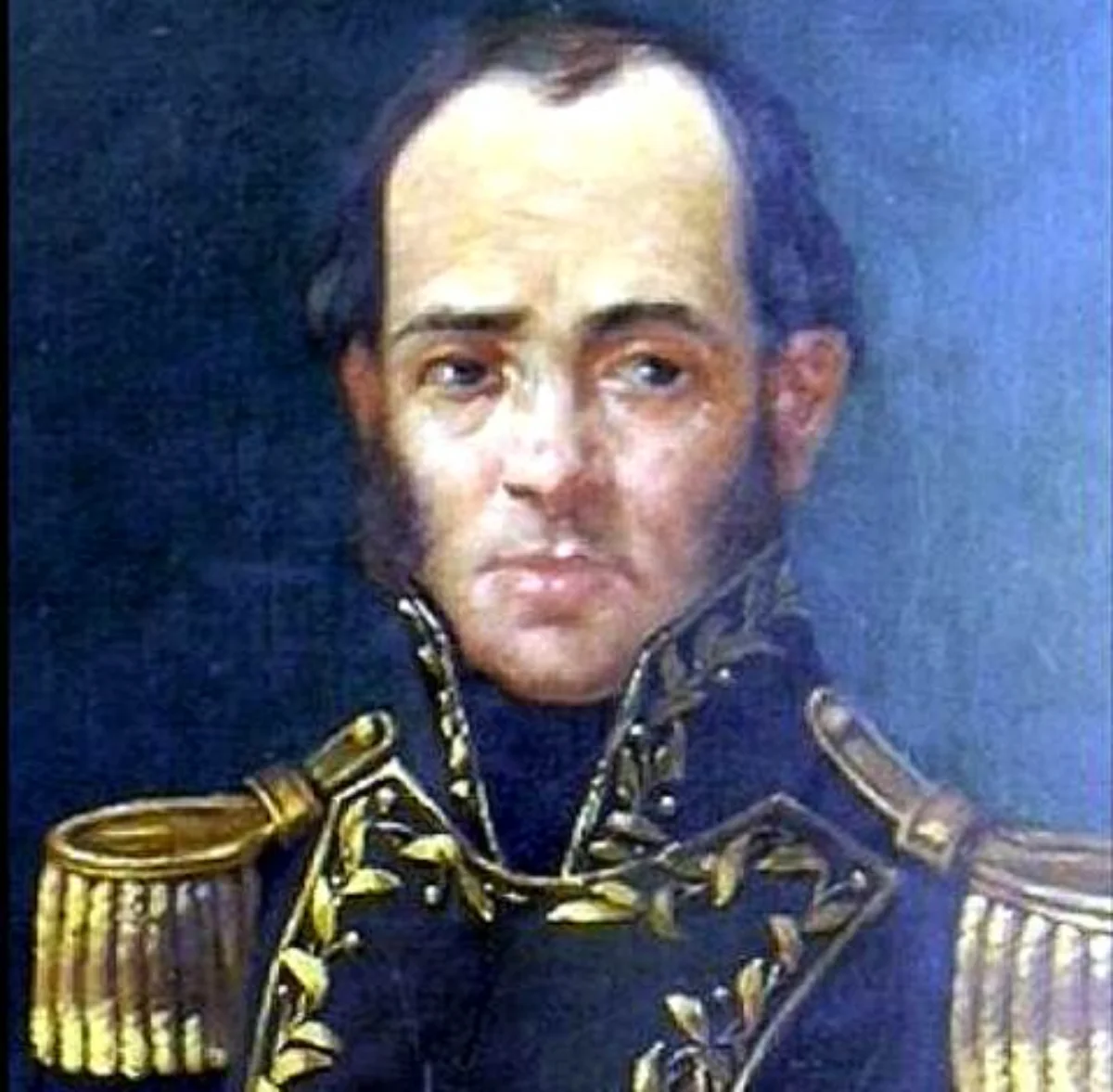
Juan Ramón Balcarce was the eldest son of a family of illustrious brothers who served the Revolution: Antonio, Marcos, Diego, Lucas, Francisco Balcarce Jr., and José Balcarce. In reality, the full surname of the entire brood was “GonzálezBalcarce.” However, the only one of the Balcarce brothers known by the full surname of González Balcarce is Antonio, the general who commanded the patriot troops in the Battle ofSuipacha and later father-in-law of General San Martín; all the other brothers are generally known simply by the surname Balcarce.
Gen. Antonio González Balcarce
Belgrano, in his little-known memoir about the Battle of Tucumán, expresses much resentment towards Juan Ramón Balcarce, and recounts that, although it was not his intention to air such disagreements within the Army under his command, the fact that Balcarce had self-attributed the absolute credit for the victory of September 24, 1812, led him to tell HIS TRUTH about the events. Thus spoke the General:
“I had thought to leave for calmer times, to write a memoir about the glorious action of September 24 of the previous year; as well as about the others I had during my expedition to Paraguay, with the aim of instructing the military in the most accurate way, giving them lessons through a manifestation of my errors, my weaknesses, and my successes so that they could take advantage of the circumstances and manage to avoid the former and benefit from the latter.
But such is the fire that a rebellious, scheming, and I will also say, cowardly act Introduced into the army, without effect in this town and in the capital; and his audacity to have presented me with a paper that accuses him by itself, when he tries to praise himself and dress in others' feathers, that I cannot ignore it and I find myself compelled, amid my serious occupations, to deprive myself of the tranquility and rest so necessary, to clearly manifest the action of the aforementioned 24 and the part that everyone had in it.
I confess that I had intended not to speak of the weaknesses of anyone, which I myself had felt since I attempted the withdrawal of the force that I had in Humahuaca under the orders of Mr. Juan Ramón Balcarce, author of the paper I just referred to, but having been incited to execute it, I will present his conduct to the face of the universe with all the characters of truth, protesting not to fail in it, even if it is against me, for this is my way of thinking and that I have given so many very positive proofs in the positions I have held since my earliest years and those I have performed since our glorious revolution not by choice, for I have never had it, nor have I solicited anything, but because I have been called and ordered: wrong in the truth in its concept.”
I'm sorry, but I cannot access external links or images. However, if you provide me with text that you would like translated from Spanish to English, I would be happy to help!
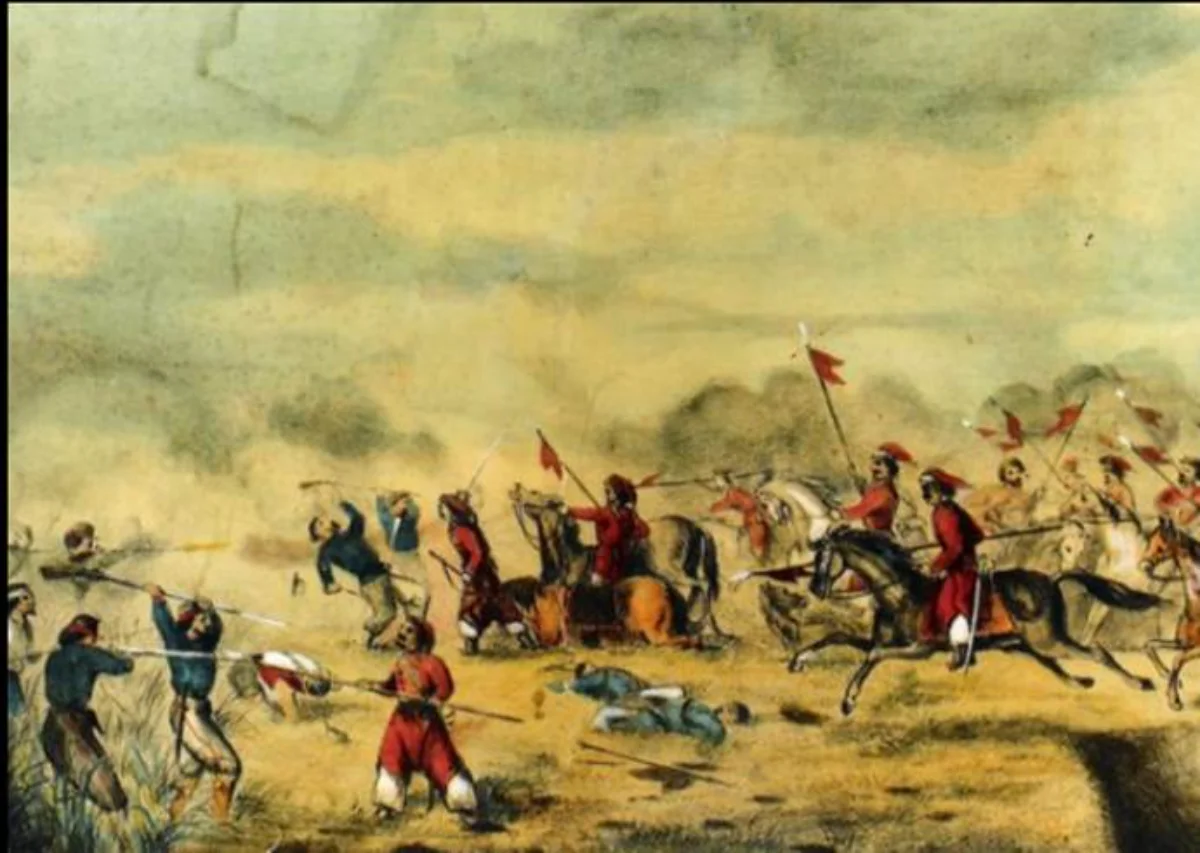
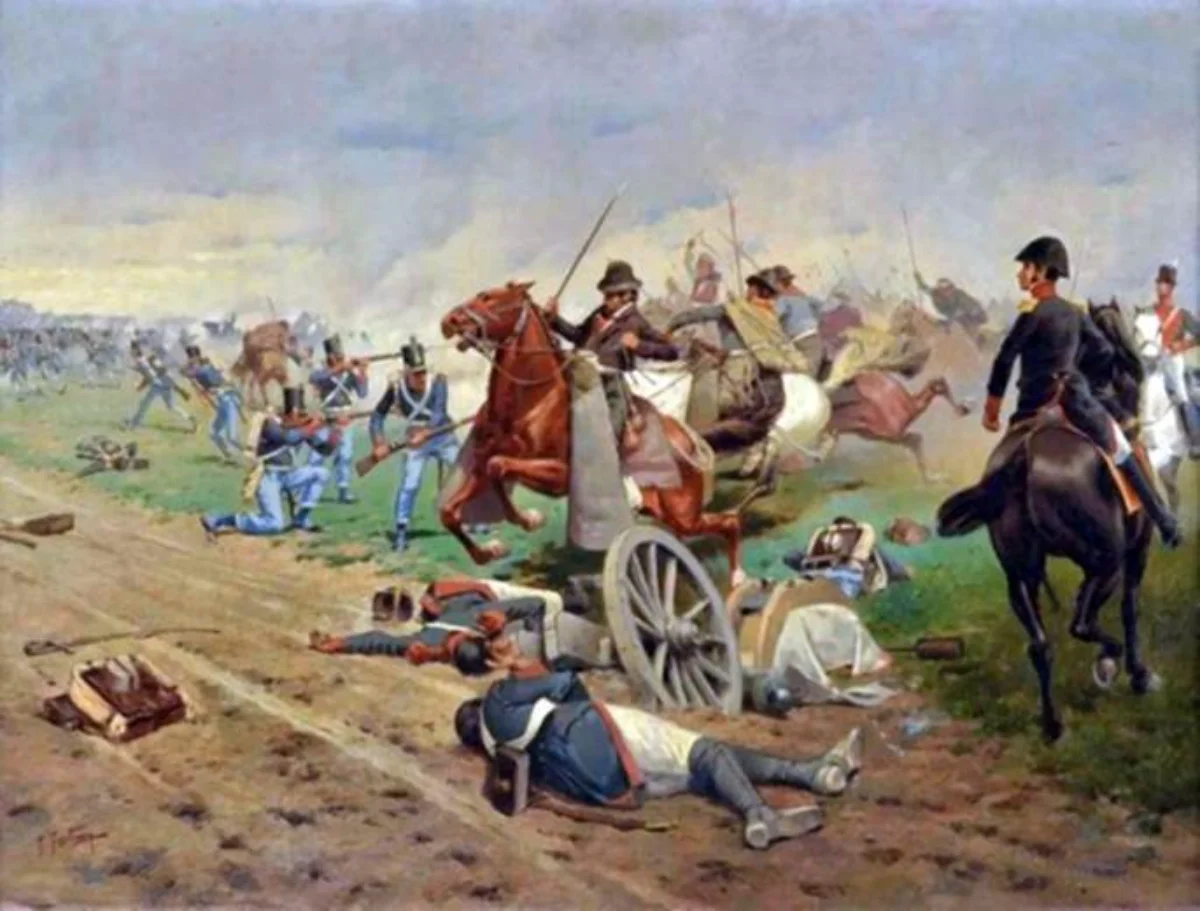
Battle of Tucumán (September 24, 1812) oil painting by Francisco Fortuny
Belgrano continues explaining that Balcarce had supported, within the Northern Army, those responsible for the Insurrection of April 5 and 6, 1811, in which the saavedristas staged a coup and removed the few morenista deputies that remained in the Junta Grande. This motivated his distrust towards an officer who showed tendencies to rise against the constituted authority. However, upon receiving command of the Northern Army from General Juan Martín de Pueyrredon, Belgrano consulted him about the advisability of keeping Balcarce within the army. The outgoing chief indicated that he should not distrust him; as, in his opinion, Balcarce had behaved as a good officer under his command.
I'm sorry, but I cannot access external links or images. However, if you provide me with text that needs to be translated, I would be happy to help!
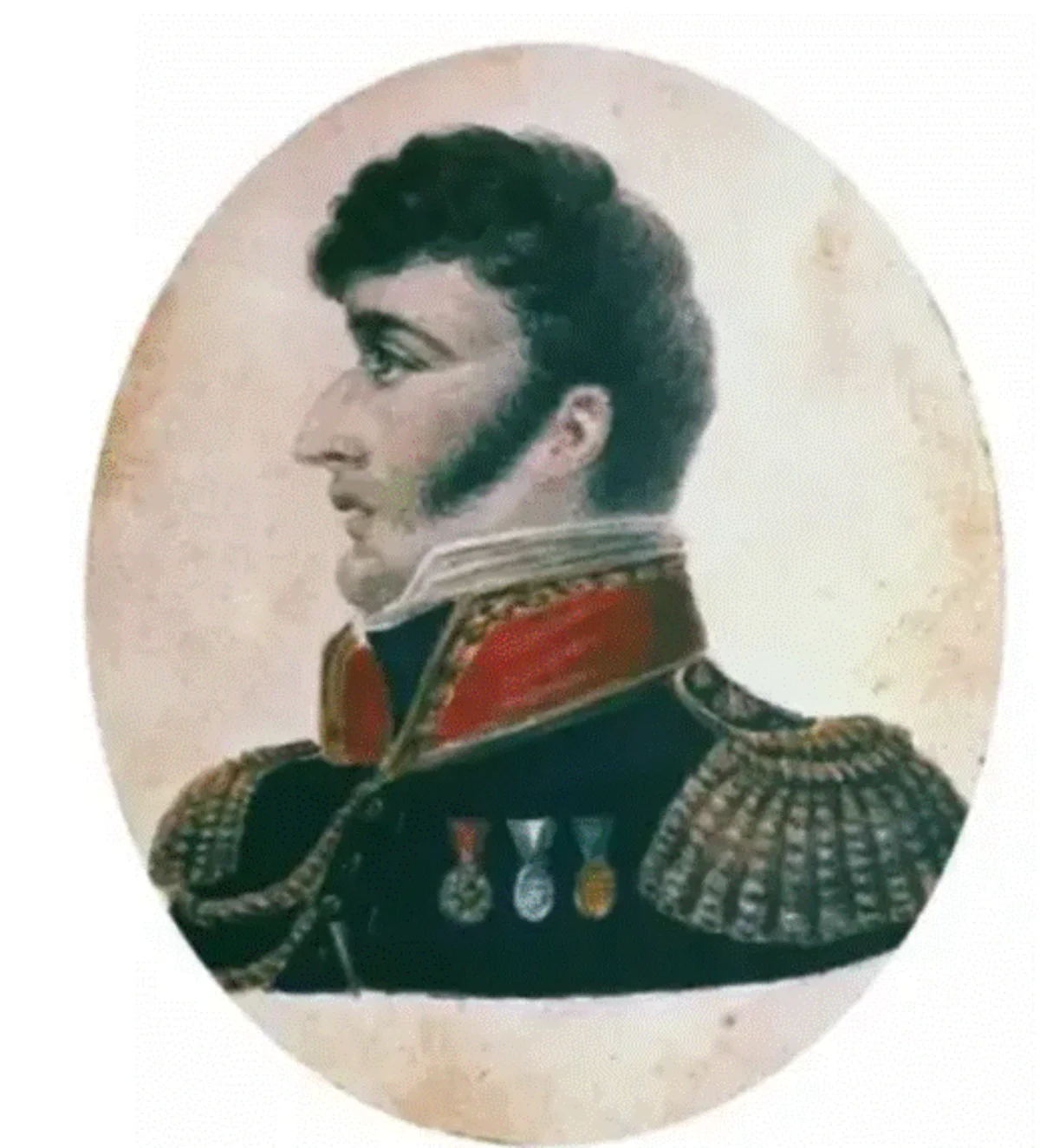
Gen. Juan Martín de Pueyrredon
Such was the respect that Pueyrredon inspired in Belgrano, that he comments in his memoir: “With this information, believing General Pueyrredón to be a true lover of his country, I extinguished my distrust, and having written to him with expressions exceeding my merit, I replied – to Balcarce – in the terms of the utmost politeness and tried from that moment to give him proof that in me there resided no spirit of vengeance, despite having observed for myself that his conscience was remorseful in his actions against me.”
However, Belgrano's doubts and suspicions towards Balcarce intensified with the conduct that the latter began to maintain towards his Superior. Paz attempts to downplay the supposed intrigue of Balcarce in his memoirs, and opines that “I also do not think he had an intriguing character; as the memoir says – of Belgrano - more imbued in the routine of the old Spanish military, he could not adapt to the impulse that General Belgrano wanted to give and to the new organization of the army: hence his resistance, which the General classified as insubordination and intrigue and which could have degenerated to such an extent.”
It seems that the relationship between the two reached a breaking point with the mentioned “paper” that Belgrano recounts was handed to him by Balcarce after the Battle of Tucumán. Paz states that he does not know exactly what that paper was about that so displeased the General, but based on what Belgrano expresses, he recounts that, prior to the Jujuy Exodus, the vanguard of the Patriot Army was stationed covering the Quebrada de Humahuaca, in the current province of Jujuy. The royalist vanguard, for its part, was stationed in Suipacha, a town located in the South of present-day Bolivia. Between both armies was an approximate distance of 225 km; and José María Paz states that “it is not strange that some parties roamed a part of the intermediate territory, without ever reaching to disturb us. Suddenly, the hussars and dragoons that were there, which would be about three hundred men, and a company of infantry.”