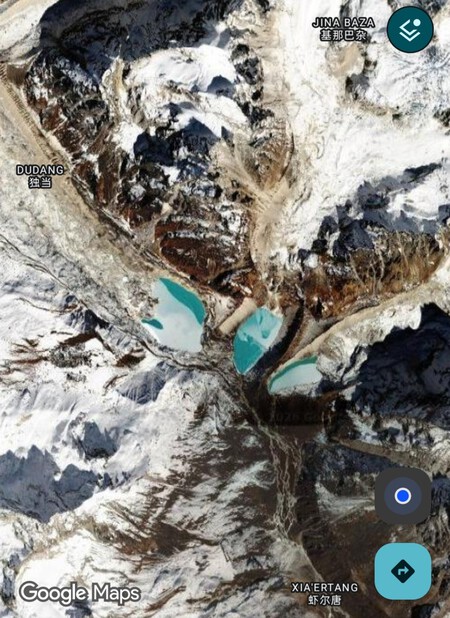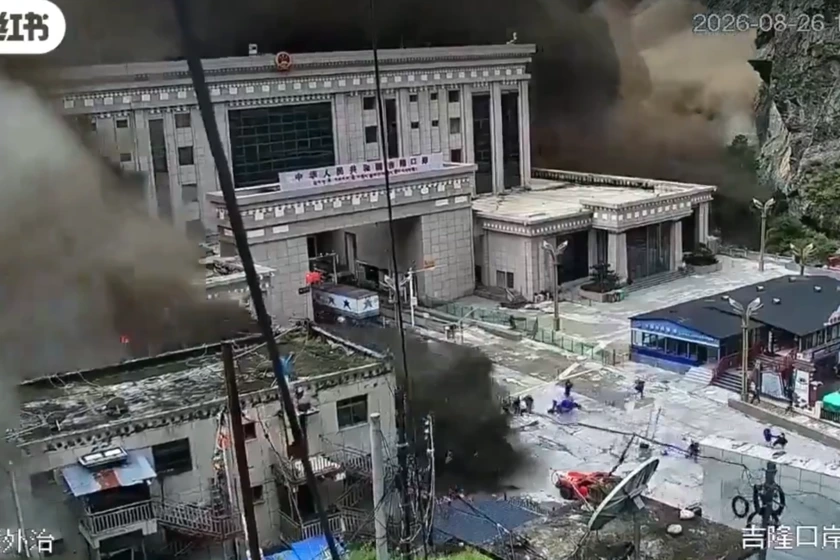

A wave of water and mud swept through the Koshi River valley in the Nepali district of Rasuwa, carrying everything in its path. It occurred at nine in the morning, local time. The market, the customs office, the helipad, dozens of houses, and the bridge rebuilt at the end of last year disappeared under the current.
The first figures report 31 dead and about 400 missing. More than half of the missing are believed to be foreigners. Those watching the videos circulating online feel that the final toll will be much higher. The area has poor coverage and the routes are cut off, so authorities are working with incomplete data.
The most puzzling thing is that it hadn't rained in Rasuwa for days. The water came from the Tibetan side, crossed the border, and descended without warning. Exactly at the same point where something similar had already happened.
On July 8, 2025, a supraglacial lake overflowed due to that torrent and swept away the same border crossing. At that time, there were about 30 dead, one billion dollars in lost goods, four damaged hydroelectric plants, and the bridge destroyed. That reconstruction has just disappeared again.
Three hypotheses about the origin of the disaster
There are still no certainties. Local authorities and images from Sentinel satellites from August 24 point to an overflow of a glacial lake, known as GLOF, on the Tibetan slope. This is the explanation that is most often repeated.
Glaciologist Rijan Bhakta Kayastha from Kathmandu University offers another possibility: an avalanche of ice blocked the Lhende Khola and then burst. “The Lhende River was also blocked last year,” he explained, warning that confirming this could take days.