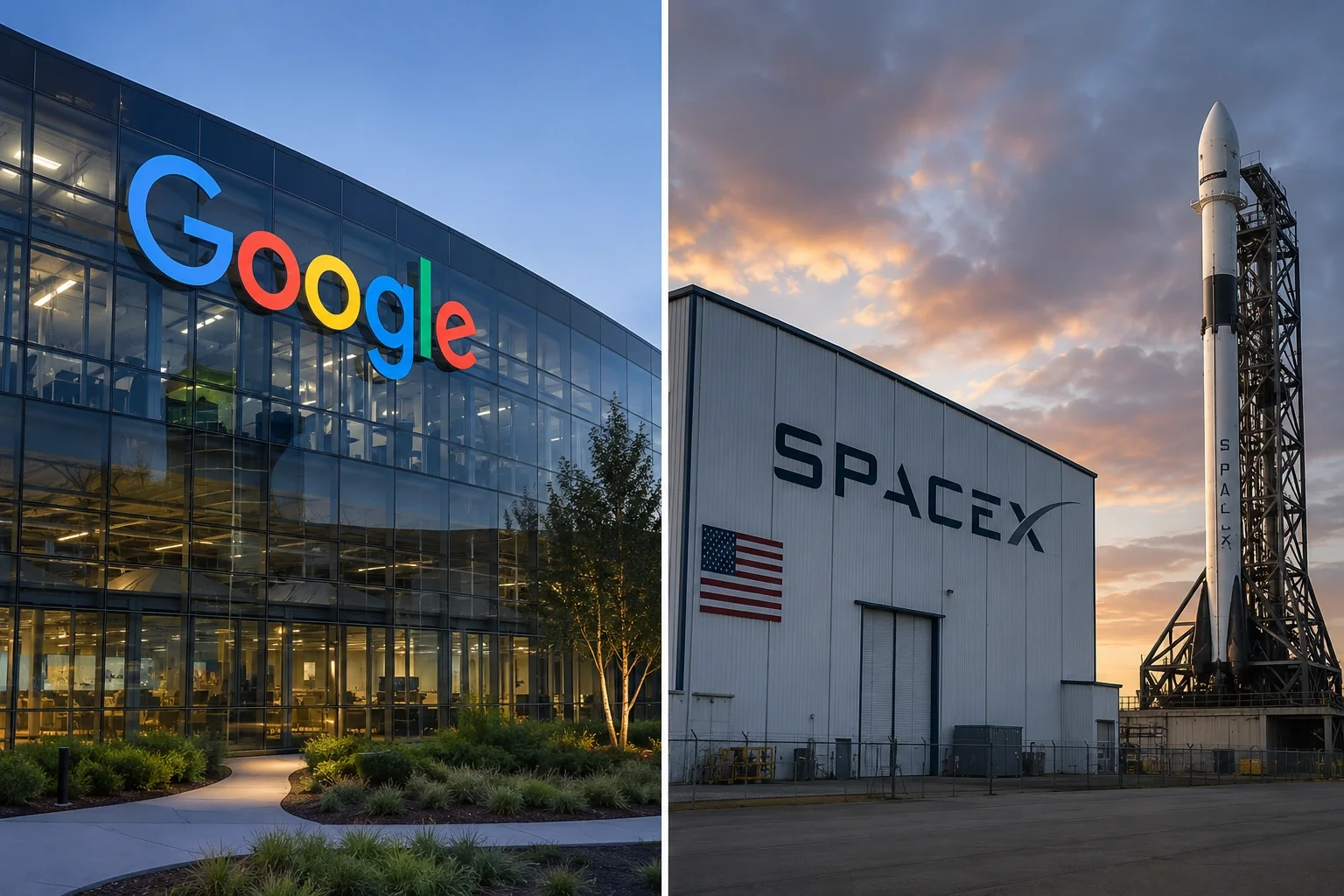
Google is reportedly in negotiations with SpaceX to seek assistance in its initiative to install data centers in low Earth orbit. According to reports, discussions between the two companies could lead to a collaboration between two giants that often compete on various technological fronts.
Google's project, known as Suncatcher, aims to explore the feasibility of these space data centers and was announced last November. This came before Elon Musk revealed SpaceX and xAI's plans to launch a million orbital satellites dedicated to computing.
If an agreement is reached, it would mark an interesting point in the industry, where rivals come together to push the boundaries of technology. In addition to SpaceX, Google is in talks with other space launch companies to advance this ambitious plan.
The company is already collaborating with Planet Labs on the design and construction of the satellites it plans to put into orbit.
 Leaders' Opinions
Both Sundar Pichai and Elon Musk agree that orbital data centers are an inevitable evolution. Pichai stated that in another decade, it will seem normal to build data centers in space, according to his statements to the press in November.
For his part, Musk argued that in three years, satellites could become the most cost-effective way to generate computing power for artificial intelligence.
However, not everyone shares this optimism. Experts consulted have expressed doubts about the real feasibility of performing large-scale AI inference in space.
GPUs installed on satellites would be exposed to constant cosmic radiation, which could lead to errors in calculations. Additionally, cooling these devices in the near-absolute vacuum of space presents a significant challenge, as heat can only be dissipated through slow radiation. 
Technical and Environmental Challenges
Another critical point is the environmental impact. Placing millions of satellites in low Earth orbit could have very negative effects on the planet's atmosphere and complicate space flights for other companies and governments.
Despite these obstacles, Google continues with its explorations. The interest in this technology responds to the growing demand for computing capacity driven by advancements in artificial intelligence.
The possibility of data centers in space offers potential advantages such as access to constant solar energy and lower temperatures in certain orbits, although technical challenges remain significant.
The collaboration between Google and SpaceX, if confirmed, could accelerate the development of this emerging technology and define how the digital infrastructure of the future is built.
For now, negotiations continue, and the tech world is watching closely how these plans, which sound like science fiction, are increasingly seeming closer to reality.