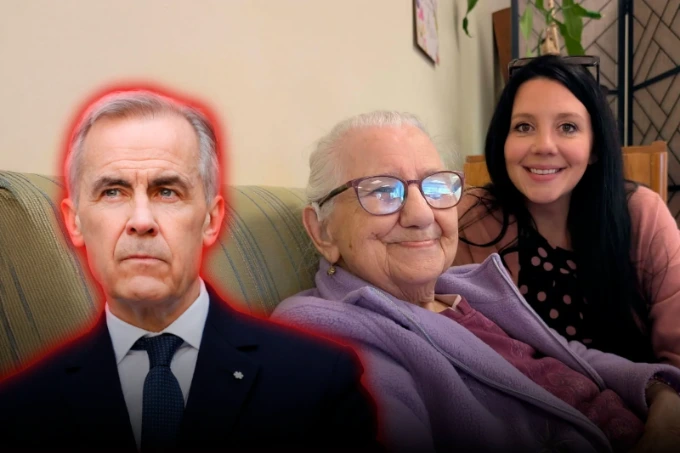
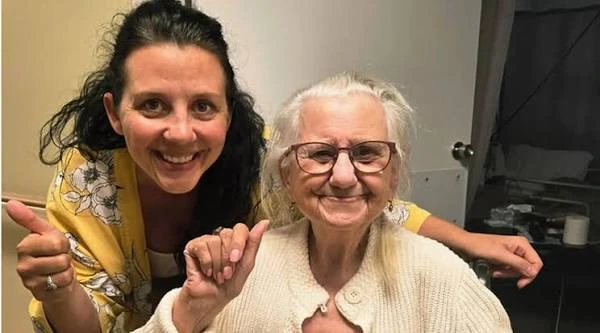
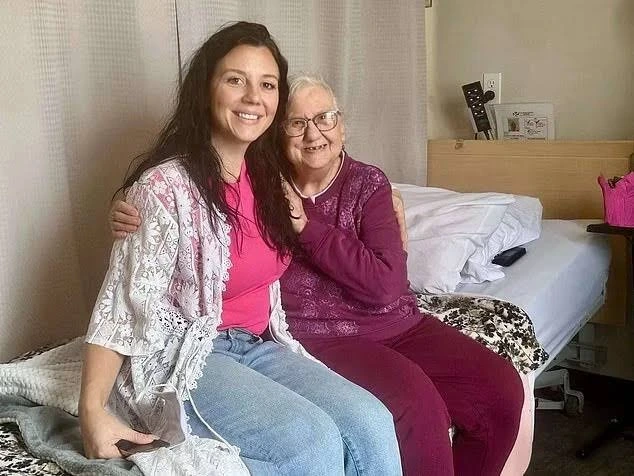
A criminal investigation was initiated in Canada following the murder of Brigitte Stegemann, a 83-year-old Christian grandmother who was subjected against her will to euthanasia despite her family explaining that she had repeatedly stated she did not want to die that way.
Stegemann had been diagnosed with stomach cancer in February of this year. According to her family's account, she explicitly rejected euthanasia because she believed it contradicted her religious convictions.
The family also claims that she was experiencing cognitive issues that prevented her from understanding and making independent decisions on such an important matter.
The grandmother
One of the episodes recounted by her family occurred when Stegemann attempted to remove the catheter while screaming that she did not want to receive “the injection.” Her granddaughter, Brigitte Kranendonk, told the Daily Mail that her grandmother was deeply distressed. “She was crying inconsolably,” she stated.
The family asserts that, despite the grandmother's rejection, a nurse insisted on the procedure and considered the family as a “hindrance.” Two days before her death, Stegemann was inconsolable and had expressed that she had made a mistake.
The situation became even more serious on the day she died. According to the family account, when the staff attempted to confirm her consent, Stegemann did not respond. However, the procedure was carried out just ten minutes later.
Her family also seriously questioned her mental capacity. According to their account, Stegemann had difficulties remembering information and, when a doctor asked her how many siblings she had, she replied that she had one, although in reality she had thirteen.
The grandmother
Family Statements
In a statement following the murder, the family expressed: “Our family did not support euthanasia under GG's circumstances and expresses serious concerns that GG was not mentally capable of making such an important decision independently.”
They added: "GG had lived for many years with what our family knew to be an undiagnosed and lifelong cognitive or developmental disability (which we suspected might be within the autism spectrum), which profoundly affected her processing, understanding, and decision-making abilities.”
The account of the procedure also raised alarm. Family members claim that the nurse had difficulties finding a vein and that she attempted to place the IV several times, alternating between both arms. According to the family, Stegemann ended up covered in blood.
“There was a significant and alarming amount of blood covering GG, the bedding, and the surrounding area; it was the largest amount of blood that Brigitte had ever seen,” the family stated.
In light of these circumstances, the family filed a formal complaint with the Chief Forensic Pathologist of Ontario. They requested an investigation into Stegemann's mental capacity, the omission of her power of attorney, and the absence of clear consent.
Local police confirmed that the case is being criminally investigated. The family is now calling for greater transparency and oversight regarding "assisted death" procedures, especially when it comes to cognitively vulnerable patients.
“We hope that her story serves as a warning and an urgent call for greater clinical transparency, mandatory family inclusion in the case of cognitively vulnerable patients, and strict legal accountability for facilities operating outside the law,” the family concluded.