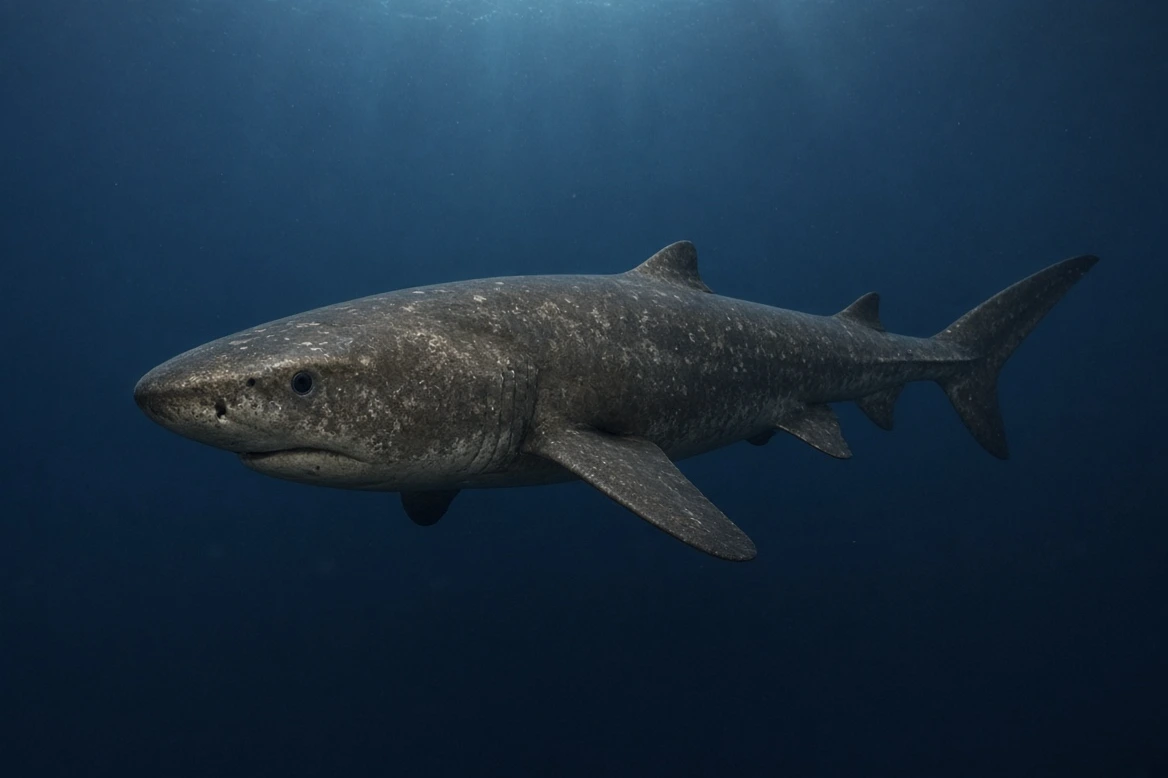
In the depths of the North Atlantic Ocean and in the frigid waters of the Arctic lives a predator that challenges everything known about animal longevity. The Greenland shark can live over 400 years and reaches sexual maturity only around 150. This particular biological rhythm makes it one of the longest-lived vertebrates that science has been able to document.
Its metabolism operates at an extremely slow rate, a direct consequence of living in environments with very low temperatures. This reduced metabolism explains why it grows only one centimeter per year and why it takes so long to develop. Researchers determined its age by dating the lens of the eyes, a method that allowed them to establish that some specimens reach several centuries of existence.
This shark can exceed five meters in length. It moves slowly and does not chase its prey at high speeds like other species. Instead, it takes advantage of feeding opportunities that present themselves on the ocean floor. Its diet includes fish, seals, and other marine animals, according to the remains found in studied specimens.
The living conditions in polar waters mark every stage of its existence. The extreme cold not only slows its growth but also delays the onset of reproductive age. Scientific estimates indicate that females may start reproducing around 150 years, a fact that surprises even those who study other long-lived sharks.
A unique life rhythm among marine predators
What stands out most about this species is the combination of its imposing size and its slow pace of life. While most sharks reach maturity in a few years or decades, the Greenland shark takes over a century. This temporal mismatch places it in a privileged position within marine biology and raises new questions about the limits of life in the oceans.
Scientists emphasize that its ability to live for several centuries is not an isolated fact. It is linked to a set of adaptations: reduced metabolism, minimal annual growth, and a stable but extremely cold environment. Under these conditions, each biological process stretches over time in a way that is almost unimaginable for other species.
Feeding also reflects this survival strategy. By not relying on fast pursuits, the Greenland shark becomes an opportunistic predator. It consumes whatever is available, from fish to marine mammals, allowing it to sustain itself with minimal energy expenditure for decades and centuries.
In summary, this animal represents an extreme case of longevity among vertebrates. Its existence in the cold depths of the North Atlantic and the Arctic demonstrates that life can extend far beyond the usual when metabolism adapts to extreme conditions. The Greenland shark continues to be a subject of study precisely because it offers unique clues about how some organisms manage to live so long on a planet where most species have much shorter life cycles.