The Large Investment Incentive Regime (RIGI), promoted by the Government of Javier Milei, has already achieved almost 100 billion dollars in investments and continues to consolidate itself as a key tool for attracting capital and boosting economic growth.
In recent days, the scheme added two new projects and reached a total volume of USD 94,965 million between initiatives already approved and those that are still under evaluation.
This sustained growth reflects a renewed investment interest in the country, driven by a set of benefits designed by the Milei Government to improve competitiveness.
The main incentives include the reduction of Income Tax from 35% to25%, the exemption from export duties, the possibility of crediting VAT in pre-operational stages and access to international arbitration in the event of possible legal conflicts.
President Javier Milei.
The bulk of investments are concentrated in strategic sectors such as energy and mining, in line with the expansion experienced by both activities and their
export potential.
In this regard, 22 projects are still under analysis, which together represent an additional USD 67,755 million, which could bring the total to historic figures in the short term.
The million-dollar investments
within the mining segment stand out on large scale initiatives such as El Pachón, from Glencore in San Juan, with USD 11.6 billion and more than 12,000 jobs, and Agua Rica, also from the same company in Catamarca, with USD 6,699
million and 8,200 jobs.
In addition to these are developments such as Sal de Vida, promoted by Rio Tinto in Catamarca, with USD 1,380 million and 1,404jobs, and Sal de Oro II, from Posco, with USD 845 million in Salta and Catamarca and the generation of 2,335 jobs.
The momentum also reaches lithium, with projects such as Pozuelos Pastos Grandes, from Lithea in Salta (USD 4,245 million), Jama Solaroz from CNGR Advanced Material in Jujuy (USD 1,151 million) and the expansion of Cauchari Olaroz, operated by Minera Exar, with USD 1,241 million.
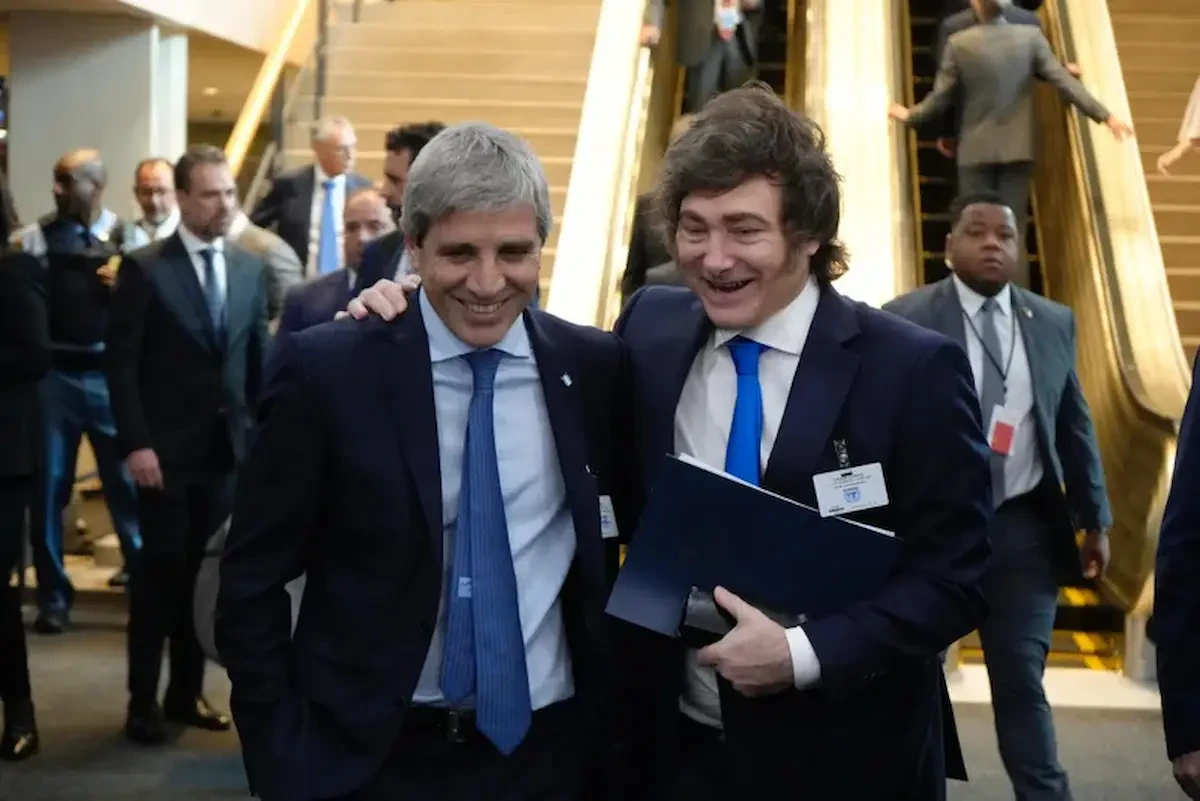
Javier Milei and Luis Caputo.
In parallel, the energy sector presents key initiatives in both renewables and hydrocarbons. These include the Tenaris La Rinconada Wind Farm, with USD 219 million in Olavarría
and 809 jobs.
In Vaca Muerta, Tecpetrol's Los Toldos development includes USD 6.391 million, while Pluspetrol is promoting Bajo del Choique—La Invernada with USD 12.24 billion, the largest project entered so far, with an estimated production of 100,000 barrels per day.
In infrastructure and transport, there are also significant investments, such as the USD 200 million that the company Nueva Central Argentino (NCA) plans to allocate to the railway system in different provinces, as well as key expansions in gas pipelines and midstream projects.
Among the projects already approved, totaling USD 27.21 billion, initiatives such as Vaca Muerta Sur (VMOS), led by YPF together with large companies in the sector, with an initial investment of USD 2.9 billion and the objective of doubling oil exports; the Southern Energy LNG project, with USD 15,156 million; and mining developments such as Los Azules, by McEwen Copper, with USD 2,672million.
In addition, the Minister of Economy, Luis “Toto” Caputo, highlighted the industrial potential of the scheme when referring to one of the new projects: the Pampa Fértil fertilizer plant in Bahía Blanca, with an investment of USD 2.4 billion. As he said, “it's an excellent way to industrialize our Natural Gas.”
With this volume of initiatives under way and under analysis, RIGI is positioned as one of the central pillars of the Milei Government's economic strategy, showing an unprecedented capacity to attract large scale investments and project strong growth in key sectors for the country's development.