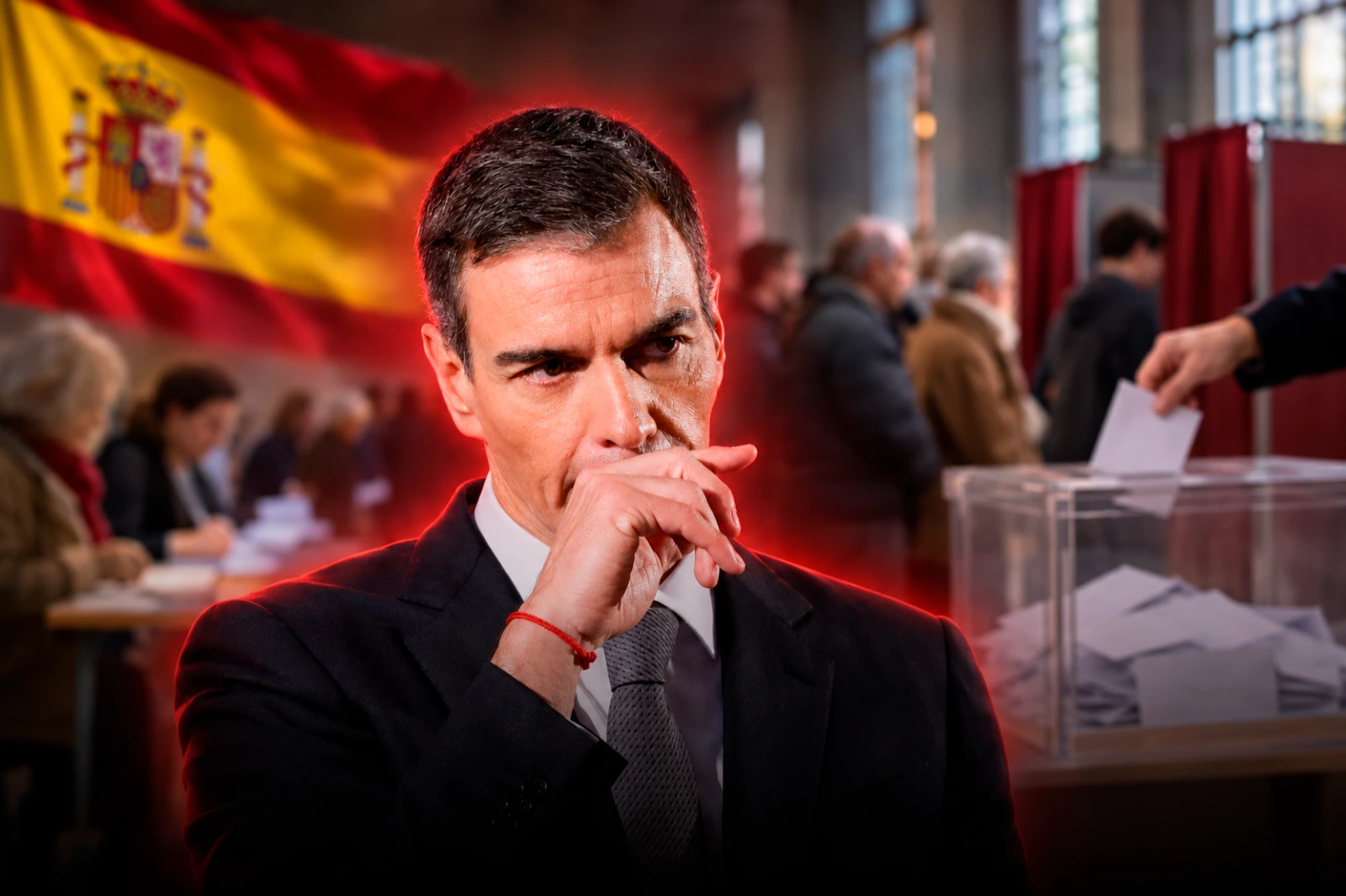

Historic: the Spanish right swept the elections and can form a government

Historic: the Spanish right swept the elections and can form a government

With more than 80% of the votes counted, PP and Vox together have 186 seats and reach an absolute majority in Congress. PP obtains 133 seats and Vox, 51, compared to the 130 seats of the left bloc

Share:

The process of the general elections in Spain has recorded an unprecedented electoral shift in the national political landscape. With over 80% counted, the Popular Party (PP) and Vox achieve a historic upset by totaling 186 deputies, surpassing by ten seats the 176 needed for an absolute majority in the Congress of Deputies and ensuring the formation of a new government. The combined strength of the center-right and patriotic right candidacies concentrates 50% of the votes, delivering a resounding historical blow to the left bloc, which collapses and falls back to just 130 seats accumulating 36% of the votes. This undeniable victory seals a definitive stamp on the popular rejection against the management of the corrupt Pedro Sánchez after a period characterized by socialist deterioration and the ethical and institutional collapse of the outgoing Executive.

The mobilizing leadership of the day was led by the president and candidate for the Presidency of the Government for Vox, Santiago Abascal, who went to cast his ballot at the Pinar del Rey school in the Madrid district of Hortaleza. While exercising his vote at the polling station, the leader urged the Spanish people to take part in “a massive participation so that there will be no regrets tomorrow”.

Spanish Right Wing Bloc

Furthermore, Santiago Abascal emphasized the significance of voting, proclaiming to the media that “mass participation legitimizes democracy, it is the greatest exercise of sovereignty that Spaniards can undertake” and adding that “mass participation overrides any type of trick, big or small, of any type of intimidation”. The patriotic formation Vox, which deployed over 20,000 people coordinated by Ignacio Garriga to oversee the ballots and put an end to “the nightmare they have lived through during these eight years of Pedro Sánchez”, experiences decisive growth by consolidating 51 deputies and 15.89% of the votes.

For his part, the candidate of the Popular Party, Alberto Núñez Feijóo, strengthens the power of the conservative space as the most voted list in the elections by totaling 133 deputies and 32.30% of the votes. Born on September 10, 1961 in Os Peares (Ourense), holding a degree in Law from the University of Santiago de Compostela (1979-1984) and a civil servant of the Superior Body of the General Administration of the Xunta de Galicia since 1985, Alberto Núñez Feijóo brings institutional solidity backed by his 4 absolute majorities in Galicia between 2009 and 2020. During this process, the popular leader mobilized the electorate under the slogan “DO NOT VOTE OUT OF FEAR, VOTE WITH MEMORY” and defended democratic regeneration proclaiming that “decency has no ideology; you enter clean and you leave clean”.

Pedro Sánchez
Pedro Sánchez

The collapse of the Executive of Pedro Sánchez translates into a dramatic retreat of the Spanish Socialist Workers' Party (PSOE), which sinks to 117 seats with 29.12% of the votes. The socialist leader, a doctor from the Camilo José Cela University (2012) who reached the Presidency of the Government in 2018 after a motion of censure against Mariano Rajoy and maintained power through systematic concessions to separatism, was labeled by Santiago Abascal as heading a “criminal mafia led by a ruthless boss”.

This sinking also affects the candidate of the Broad Front, Ada Colau, former mayor of Barcelona (2015-2023) and activist of the Platform of Those Affected by Mortgages (PAH), whose extreme left coalition (composed of Comuns, United Left, and More Madrid) has not managed to stop the advance of constitutionalism. With the resounding figure of 80% of the count, the victory of the patriotic and conservative bloc inaugurates a new era of stability for Spain