The Kirchnerist narrative has made "public works" and the "right to housing" two of its most repeated banners. However, when the data is analyzed precisely, the contrast between the discourse and reality is as evident as it is alarming. The Procrear program, one of the main initiatives of the movement during the administrations of Cristina Fernández de Kirchner and Alberto Fernández, ended up revealing itself as an inefficient, opaque, and deeply politically biased mechanism.
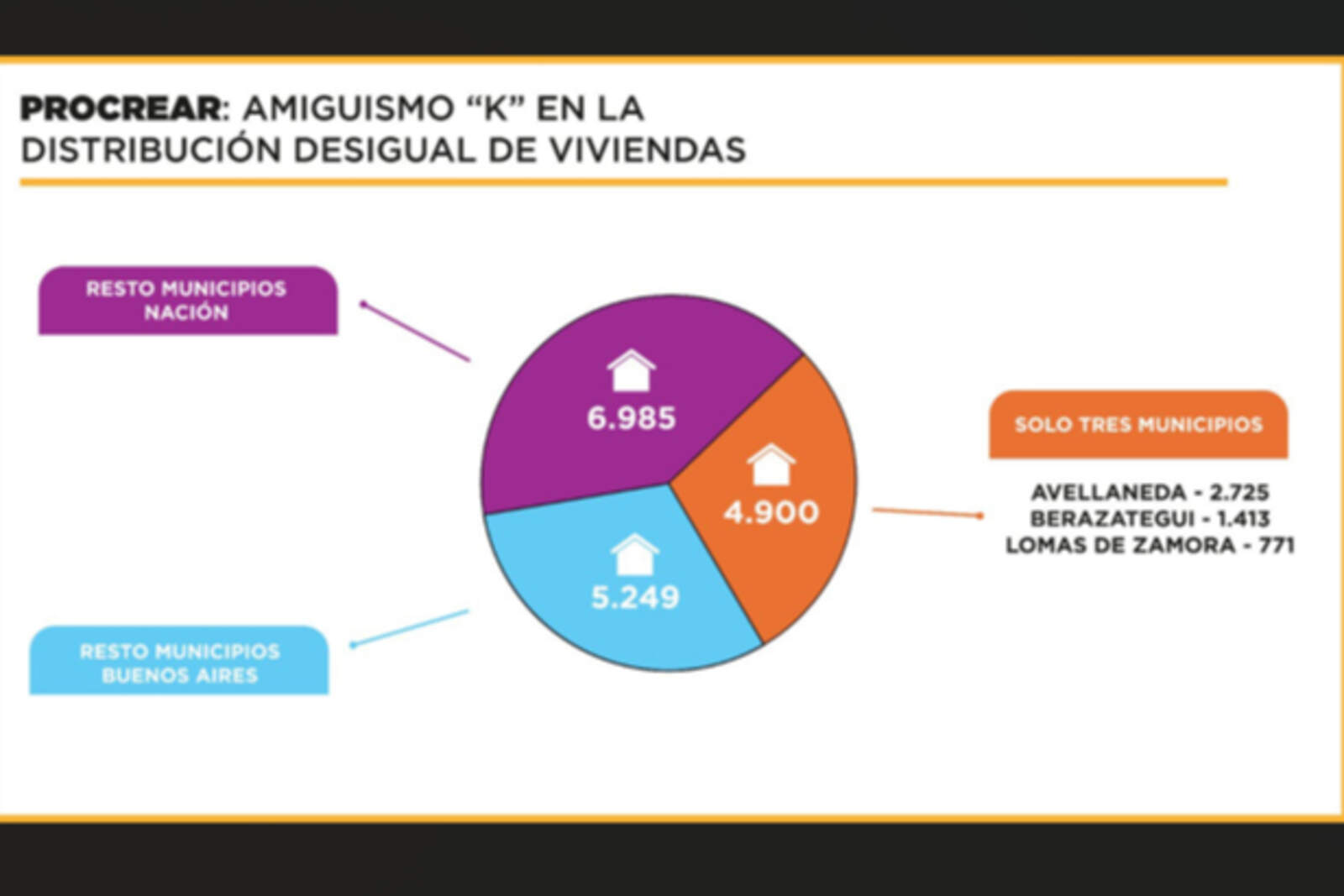
An eloquent example is the distribution of housing under the plan: only three municipalities in Greater Buenos Aires—Avellaneda, Berazategui, and Lomas de Zamora—concentrated 30% of the housing units assigned nationwide, according to official information. These three districts share a common denominator: all were governed during those years by mayors openly aligned with Kirchnerism. In figures: Avellaneda received 2,725 housing units, Berazategui 1,413, and Lomas de Zamora 771, totaling 4,900 units, a scandalous number when compared to the distribution in the rest of the country.
Meanwhile, the rest of the municipalities in the province of Buenos Aires received 5,249 housing units, and the rest of the country barely 6,985. In other words, three allied districts took almost a third of the national total, which clearly demonstrates the discretionary and politicized use of the program.
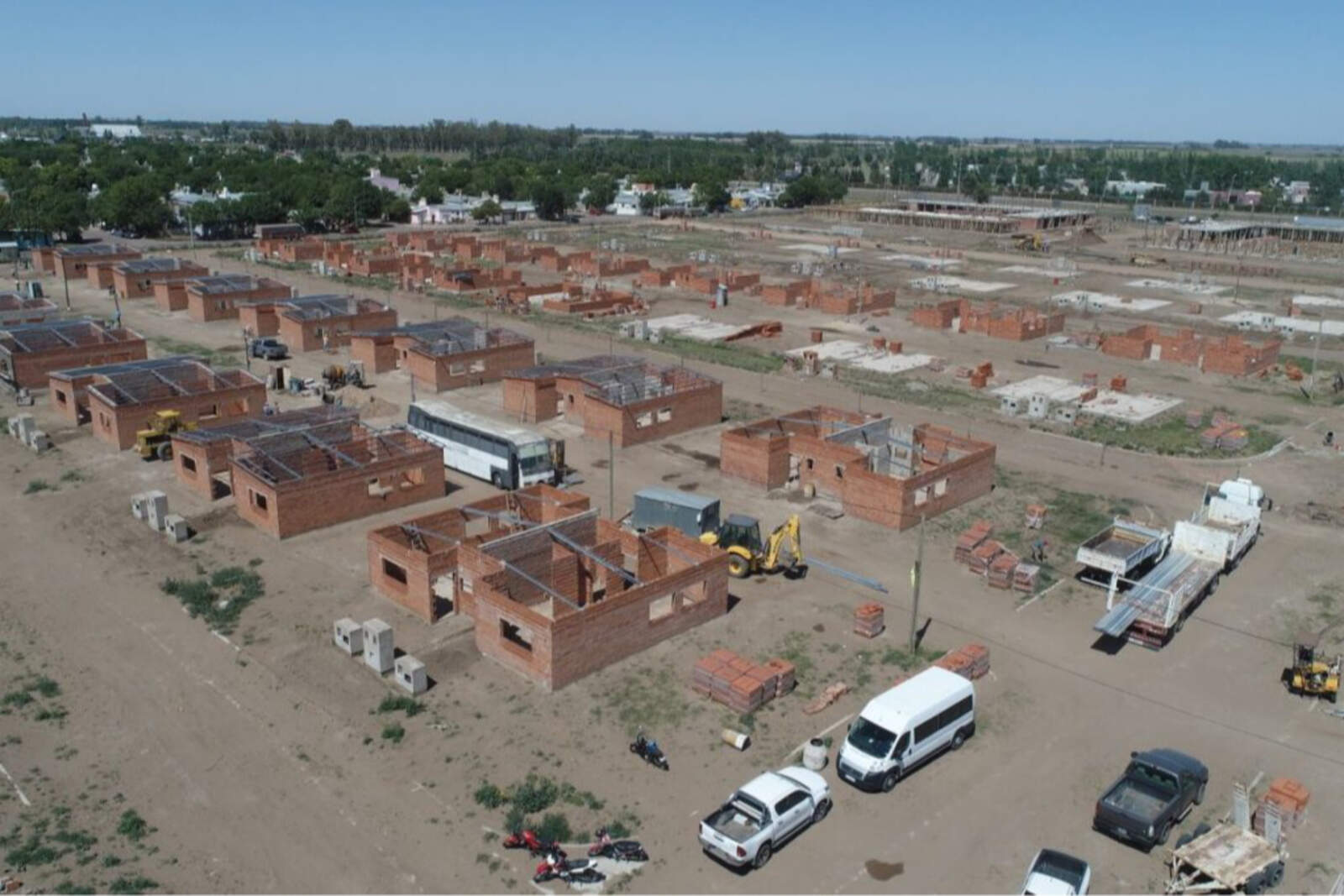
The problem doesn't end with the concentration. During the years of greatest implementation of Procrear, between 2012 and 2015, ambitious goals were announced: 400,000 mortgage loans and 30,000 housing units in urban developments were promised. But the real numbers told a different story: only about 120,000 loans in total were granted (the majority intended for renovations) and only a fraction of the planned neighborhoods were completed. Worse still: by the end of 2023, more than 17,000 Procrear housing units remained unfinished, many of them completely paralyzed.
The case of Berazategui is paradigmatic: there, 1,403 housing units were budgeted that, according to journalistic investigations, were not inhabited, not even a single unit. The land remained vacant and the funds were not returned.La condenada por corrupción, Cristina Kirchner.
In addition to geographic favoritism, there are also allegations of administrative irregularities and lack of transparency. An audit by the General Syndicate of the Nation (SIGEN) found that $468 million were transferred to housing construction agreements that were never started, without oversight or reimbursement.
It also revealed that the trust in charge of the program did not present essential financial statements and accumulated a loss of $52 billion, a direct consequence of inflationary financing and opaque management. The official reports do not spare criticism: they admit that a lot was invested, but it was invested poorly, with inefficient management, without planning or transparency, and in many cases with clientelist criteria.
Datos sobre Procrear.
In this context, various analysts reached a conclusion as stark as it is forceful: at the pace of state construction without access to credit, Kirchnerism would have taken more than 880 years to solve Argentina's housing deficit, estimated at 1.6 million new housing units plus another 2.2 million urgently needing renovation.
Society still suffers the consequences of this inefficiency. While public funds were used to reward allied local leaders and feed clientelist structures, thousands of families across the country continued waiting for the promised roof over their heads.