The defense of the right to life against abortion, a struggle that does not allow for indifference and has no expiration date
In 2018, while the Senate was discussing the abortion legalization bill, I wrote an article titled with that phrase from Galileo “Eppur si muove”. That bill was rejected. Two years later, at the end of 2020, Congress passed Law 27.610.
Today I revisit that text, updated, for a simple reason, the right to life is not a seasonal issue nor a discussion that closes with a vote, it must be taken into account every day.
The incomplete phrase
In that note, I started with a half-finished phrase: "I hope society reacts to make it clear that the scientific evidence is solid and compelling regarding…".
I left it incomplete on purpose. I wanted to show how those who defend abortion invoke science as indisputable truth when it suits them and how they silence it when that same science shows a face they do not want to see.
I am neither a doctor nor a scientist, so I went to look for Langman's embryology manual, which is studied in medical schools, explaining that once the sperm enters the female gamete, the male and female pronuclei come into contact and replicate their DNA. This union generates a new cell, the zygote. Each gamete contributes 23 chromosomes and together they form a cell of 46, with all the genetic information of a new human being, distinct from the father and the mother.
If I had been the author of that phrase, I would have completed it like this: the scientific evidence is solid and compelling regarding that there is human life from the moment of fertilization.
But the phrase was said in 2018 by then Health Minister Adolfo Rubinstein, and he completed it by talking about the condom, asking society to react to defend scientific evidence. He did not ask the same in the face of the most basic evidence of all, that there is human life in the womb from the very first moment.
What the Constitution says
The respect for the right to life and the defense of the weak are the most basic guarantees that a State can provide. That is why the constitutional reform of 1994 granted constitutional hierarchy to the San José Pact of Costa Rica and the Convention on the Rights of the Child. Furthermore, Argentina established that it understands a child to be any human being from conception. No lower norm (law, decree, or resolution) can be above that protection.
Constitutionalist Néstor Pedro Sagüés warned about this during that debate. According to him, it was not just about decriminalizing, but about stating a sort of "right" (in fact, an anti-right) to end the life of the unborn child, ignoring that child's right to live.
The public health argument, five years later
In 2018, we were told that legal abortion was a public health issue. There was talk of hundreds of thousands of clandestine abortions and thousands of hospitalizations. I argued then that statistics were being used as certainties and that one cannot solve a problem by causing greater harm than that which is intended to be avoided.
Today we have numbers that are no longer estimates. According to the 2025 Annual Report of the Mirar Project, prepared by CEDES and Ibis Reproductive Health, page nine, last year 87,603 abortions were recorded in the public health sector of 20 provinces. That’s almost ninety thousand per year, funded with state resources. The same survey indicates that there are no updated figures on maternal mortality, which was precisely the indicator used to justify the law.
Behind each of those numbers is a child who was not born. A State that should protect the weakest has become the one that guarantees their elimination. And human rights organizations still say nothing about this.
In 2018, I used a comparison that I still uphold. Thousands of people die or are left with sequelae from traffic accidents. That constitutes a public health crisis, and the response must be to educate, prevent, invest, and strengthen the capacity of our hospitals. No one would think of solving the lack of beds by stopping treatment for the injured. However, in the face of an unwanted pregnancy or one complicated by difficult circumstances, the Argentine State chose a radically different response, instead of protecting both lives involved, it made the elimination of one of them a legal response.
What is happening today
The debate is not closed, in the framework of the Day of the Unborn Child, a group of national legislators from La Libertad Avanza signed a commitment act to promote the repeal of Law 27.610; Argentina also adhered to the Geneva Consensus on the Promotion of Women's Health and Strengthening the Family, and the president again expressed himself against the law.
But a law is changed by building majorities, with work and with a society that does not resign itself. That is why this discussion cannot be reserved for a date; it must be on a permanent agenda.
And yet, there is a child
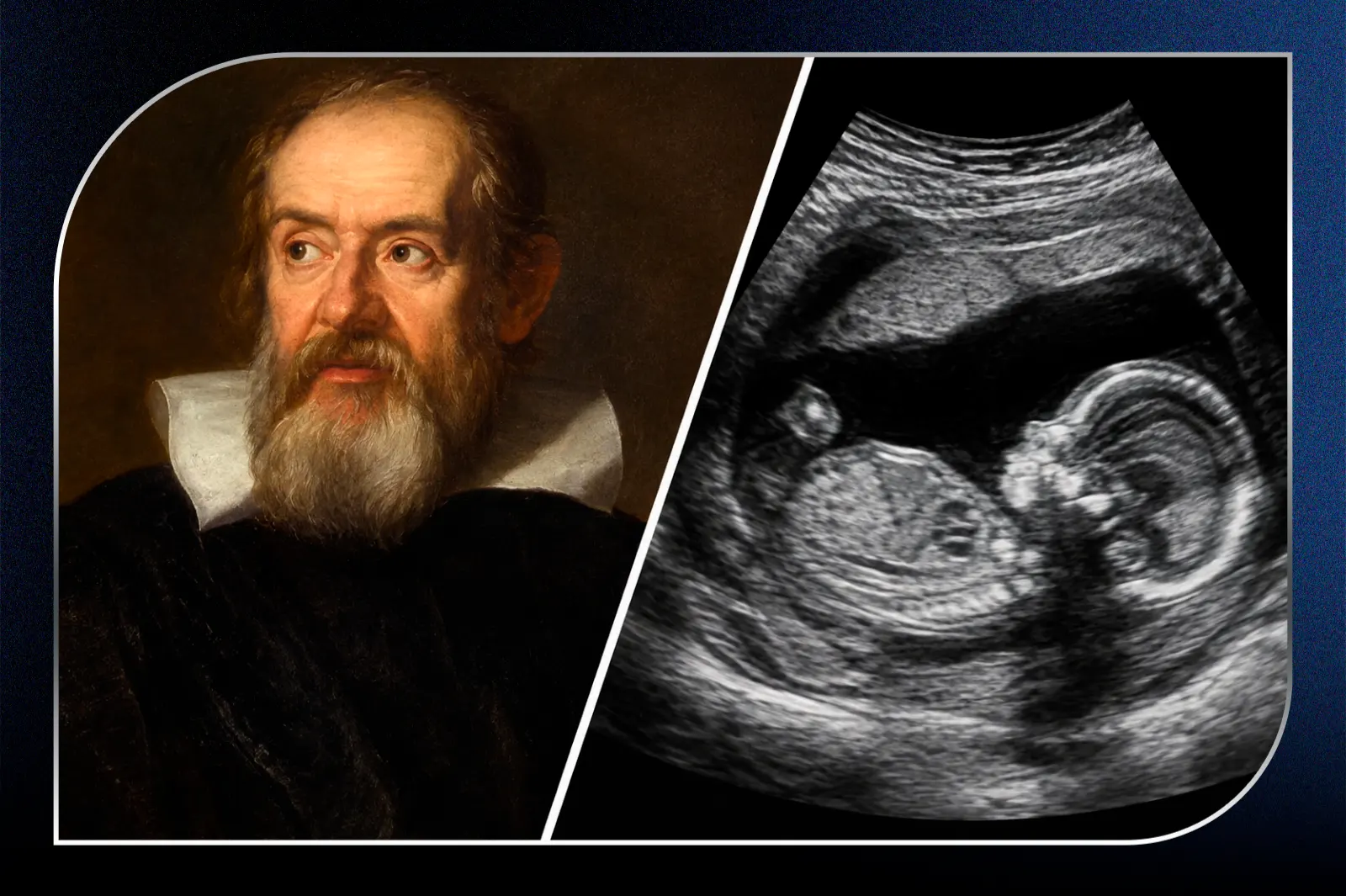
Galileo was tried by the Inquisition in 1633 and forced to abjure his assertion that the Earth moves around the Sun. Tradition holds that, after retracting, he murmured "Eppur si muove" (But it moves). Historians still debate whether he said it or not. What no one disputes is that he was right and that the centuries confirmed it.
Today we have another piece of evidence that is not wanted to be seen. There is an attempt to dehumanize the discussion by calling it a thousand different ways, embryo, fetus, "product of conception". We will say it anyway, regardless of what they say and even if they do not want to see it, “and yet, there is a child.
Doctors who vowed to protect life cannot be forced to perform this practice; well-known professionals have defined it as the abuse of power of a strong person over the weakest of human beings.
Above extreme positions, we must find ways to support pregnant women in situations of violence or vulnerability and give them more protection, more support, and more alternatives. But never at the price of legalizing and financing the death of an unborn child.
May God enlighten us all so that, in every circumstance, we know how to choose and defend life, health, dignity, for the transcendence of human existence.