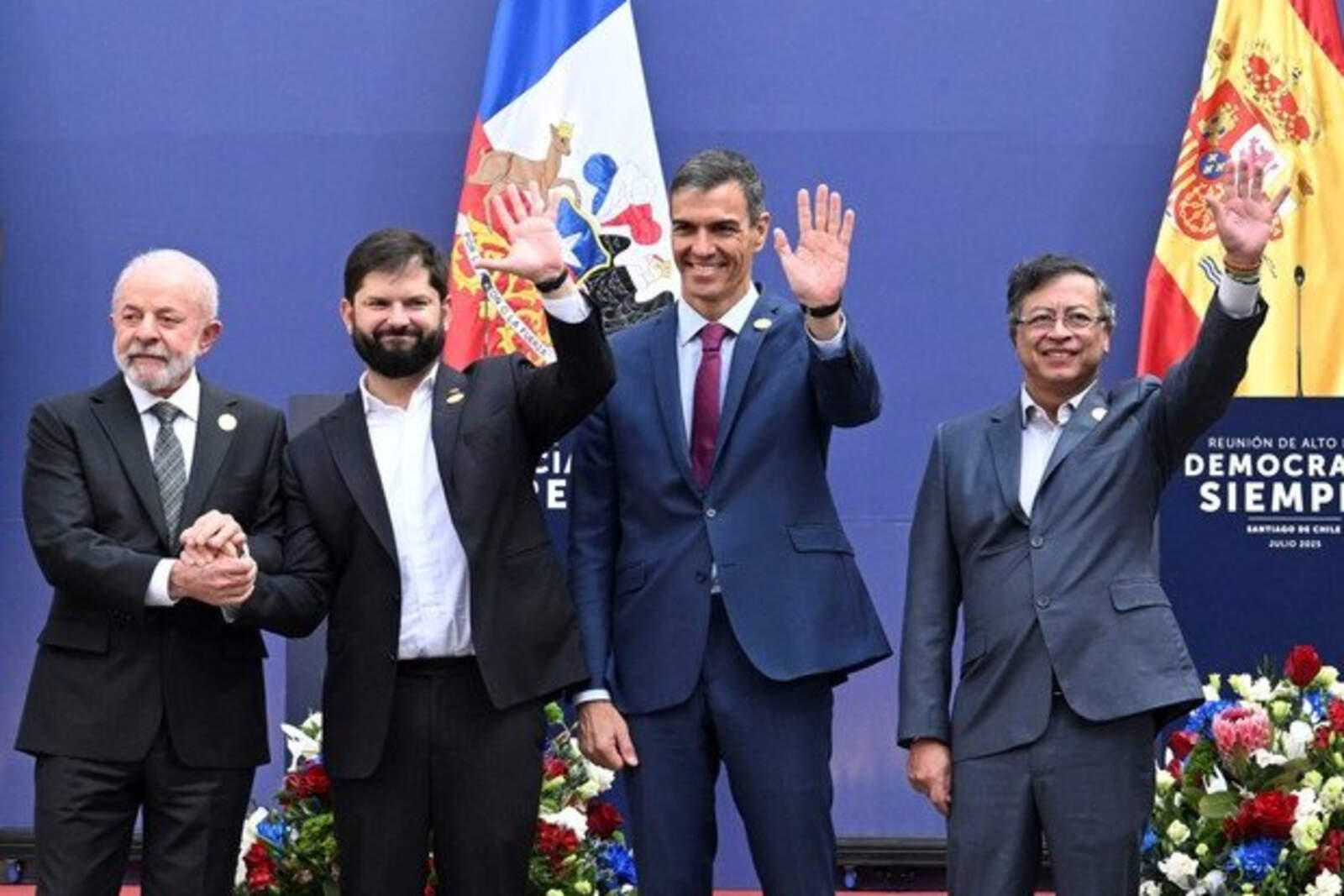

Santiago de Chile was on Monday the venue chosen by the leaders of the Ibero-American far left to meet and launch an alliance against "authoritarianism," "disinformation," and the rise of the "far right," as well as to promote social media censorship to put an end to freedom of expression.
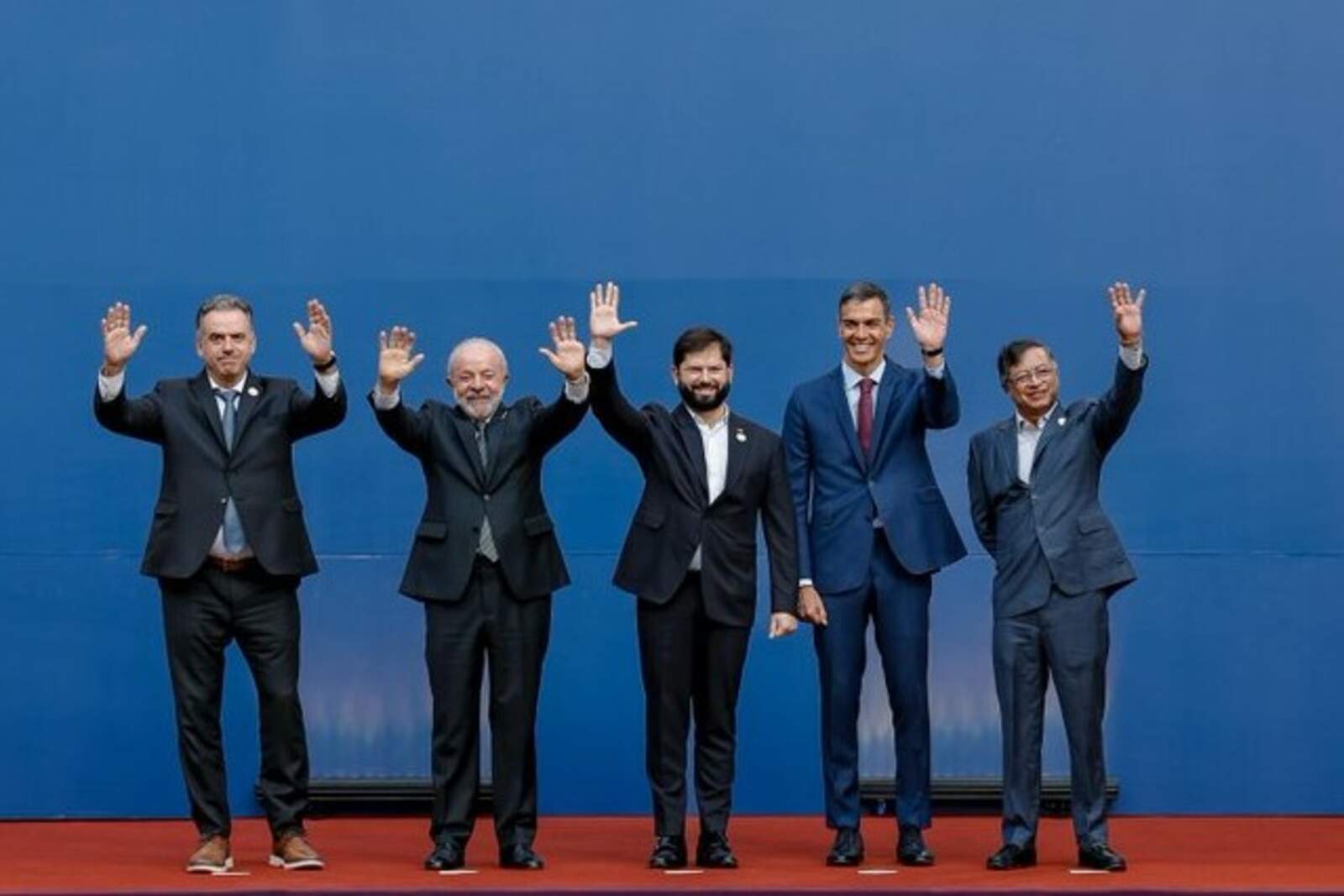
The Chilean communist president, Gabriel Boric, received at the Palacio de La Moneda his counterparts from Brazil, the dictator Luiz Inácio Lula da Silva; from Colombia, Gustavo Petro; from Uruguay, Yamandú Orsi; and the head of the Spanish government, Pedro Sánchez. The "high-level meeting" revolved around three main axes: the alleged "defense of democracy" and "multilateralism," the fight against "disinformation," and the struggle against "extremism."
"We believe that it is an ethical and political imperative to promote a common strategy to address global phenomena such as growing inequality, disinformation, the challenges posed by digital technologies, and artificial intelligence," the far-left leaders stated in a joint communiqué.
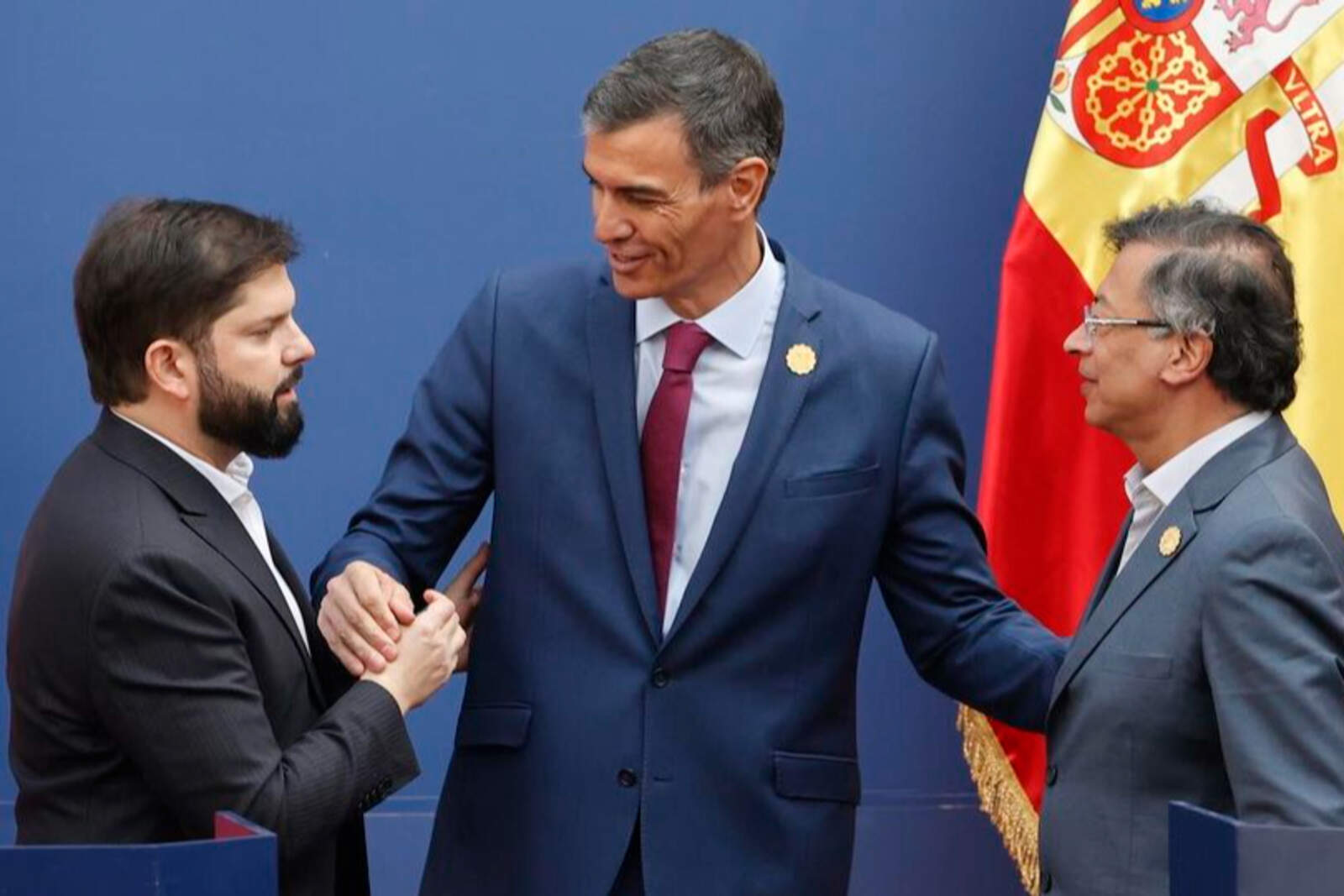
They also emphasized the need to move forward with the reform of the international governance system, with special emphasis on the United Nations, in order to "restore its capacity for action and legitimacy," and to strengthen diplomacy in the face of "institutional deterioration" and the advance of projects that, according to them, are authoritarian, regressive, and exclusionary, even though it is the left that defends those systems.
This meeting took place several months after a similar gathering promoted by dictator Lula and Sánchez during the 78th United Nations General Assembly, which laid the groundwork for a common agenda seeking to unite progressive governments worldwide.
The advance of the right
Similarly, this space emerges as a poor attempt at coordination among far-left forces to confront the solid advance of the right, which for several years has been gaining increasing support both in Europe and Latin America.